Fred Wilson 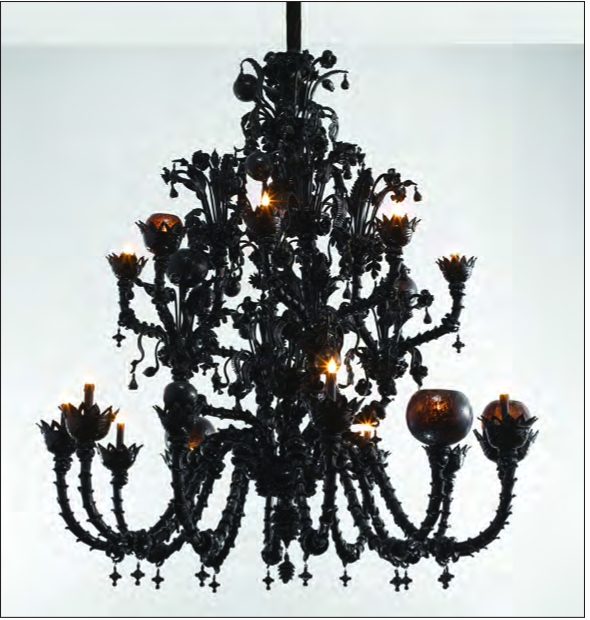
Fred Wilson, “No Way But This,” 2013, Murano glass
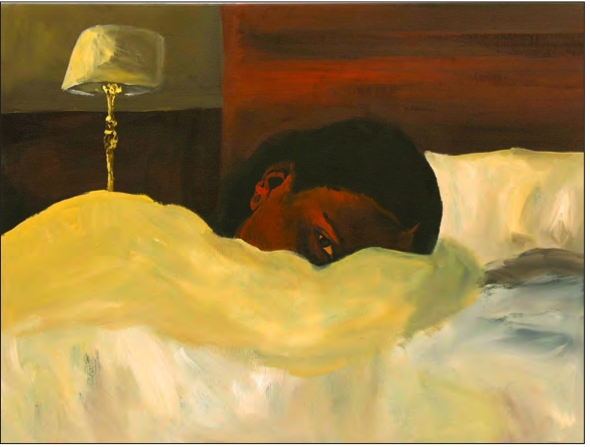
Danielle Mckinney, “Reading Room,” 2021, acrylic on canvas
‘Danielle Mckinney: Tell Me More’ also on view
Entering “Fred Wilson: Reflections” at the Rose Art Museum in Waltham feels a bit like walking through a portal into an alternative universe. The room is adorned with elaborate chandeliers, intricate glass mirrors and classical statuary but the deep dark tones and congested design of each piece give everything an eerie, off-kilter feel. This is intentional.
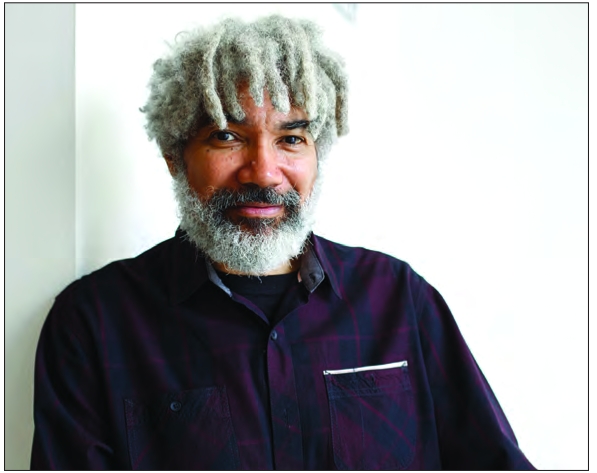
Fred Wilson is an acclaimed artist working in glass, sculpture, photography and installation. He represented the United States in the 50th Venice Biennale and has received a MacArthur Foundation genius grant. “Reflections” is the first major museum survey of his work in more than a decade.
That first room showcases Wilson’s work in glass, a practice he honed while preparing for the Biennale. As he immersed himself in Venice’s beauty and history, Wilson noticed that there were few Black figures and those he could find were often caricatures of Moors, North African people who had migrated to Italy, like the title character in Shakespeare’s “Othello.” In the play as in the artwork Wilson was finding, Othello was perpetually mistreated for his skin color.
With this research as a foundation, Wilson began making intricate Murano glass, a famed product of beauty in Venice, in a deep black color. Typically presented in bright, colorful hues, the glass takes on a very different tone when produced in black. “Act V. Scene II —Exeunt Omnes, 2014” is a large 10-foot black mirror with a beautifully appointed trim and four different sections. Looking through it, the gallery reflected behind the viewer looks like a completely different world, a parallel
universe. The unsettling result produced by these works represents the
often-ignored trauma of the African diaspora.
This
idea of reinterpreting the historical representations of Black figures
is mirrored in the neighboring exhibition, “Danielle Mckinney: Tell Me
More,” the artist’s first solo American museum show. Here, Mckinney
presents beautiful portraits of Black women resting in lavish
surroundings, a sight rarely seen in art history, where Black women are
almost always portrayed working or operating in subjugation.
In
another section of “Reflections” hangs a wall of black-and-white flag
paintings. Here Wilson has represented flags of African countries
without the color, except for black, showcasing how these cultures are
stripped of their vibrancy, autonomy and nuance when viewed only as
Black nations.
“I feel
the lack of color in the African ‘Flag’ paintings expresses a feeling
of loss — the loss of human potential in the wholesale theft and abuse
of thousands of children and young adults abducted by slave traders,”
reads a quote from Wilson at the start of the exhibition.
The exhibition concludes with the debut of a new installation from the artist titled “Black Now!” Here are featured
more than 2,500 objects Wilson has collected since 2005. They are all
related to Black culture, or they include the word black. The objects
run the gamut from grocery store black beans to Kamala Harris campaign
signs. Wilson encourages audiences to reflect on how attitudes towards
race are reflected in consumer culture.
“My
work asks people to look closely at what they think they know and
reconsider the stories we tell about our history, culture and
ourselves,” Wilson said.
“How
do seemingly banal and benign objects — books, trinkets, clothing —
carry the weight of that history, oppression and identity?”
“Fred
Wilson: Reflections” and “Danielle Mckinney: Tell Me More” are on view
at the Rose Art Museum through January 4, 2026. The museum is free and
open to all.
ON THE WEB
Read more about the exhibitions at brandeis.edu/rose/exhibitions


