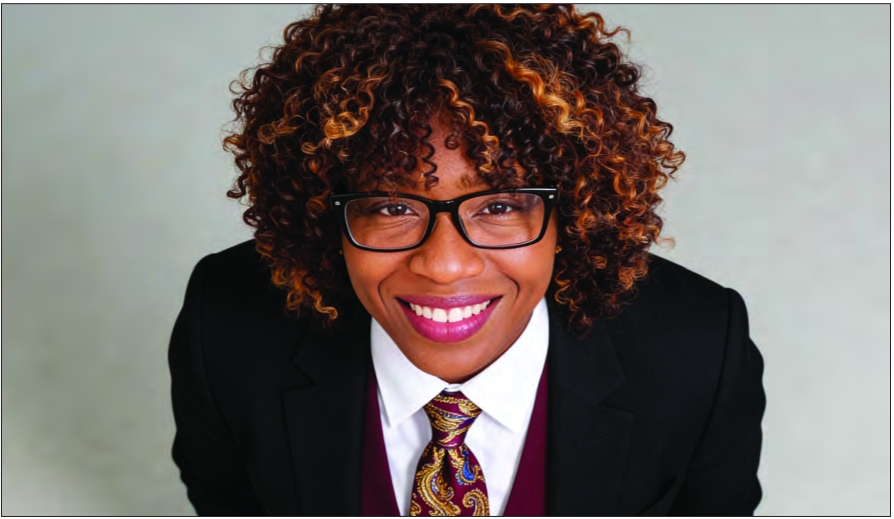
Dr. Martin started her company, All Aces Inc. in 2017. After many years of working for the city, Atyia Martin and her husband had become familiar with the needs of fellow Dorchester residents.
“We just kept coming across community members, either through work or through neighbors, just folks that we knew, who had gotten these amazing opportunities for themselves. But they had these hurdles in their way that a lot of people take for granted,” Martin told the Banner.
“Things like ‘I got myself a job, but I don’t have money to get back and forth to work,’ or ‘I don’t have money to buy the work attire or uniform needed to go to work,’” she said.
Through collective and mutual aid, she and husband found ways to support neighbors in need, ultimately establishing Next Leadership Development Corporation in 2003. The nonprofit works to build resilience in Black households and communities and now helps them in the wake of emergencies.
They supported a number of young people heading to college in need of transportation, computers, books or daily spending not covered by scholarships.
After doing so for many years, Martin began incorporating what she was learning in the emergency management field as a certified emergency manager and chief resilience officer for the city of Boston, into another business — this time focused on a larger scale, supporting businesses and organizations..
Founded in 2017, All Aces Inc. is a professional development company and “alternative” to traditional diversity, equity and inclusion consulting. Given her decades of experience in both the private sector and local and federal government agencies, Martin brings expertise regarding systems reorganizations and innovation.
Much of All Aces’ work is helping organizations look at signals of inequities to figure out what the systemic or structural problems that are the cause.
“I just wanted to do something that brought all of my worlds together in a way that had meaningful impact in real people’s lives, and I could feed my family. …That was kind of the genesis,” she said. “You can do trainings and all those things, but that’s one tiny piece of a much larger approach to how you help organizations address the real issues that are leading to Black people, Indigenous people and people of color having certain experiences in organizations.”
For both businesses, Martin works to overcome funding restrictions. With Next Leadership Corporation, there has been less funding available to address food insecurity for elders and families in the city. They deliver just over 150 meals in partnership with the Red Cross Food Bank and the after-school and summer programs with young people who predominately live in Roxbury, Dorchester, Mattapan and Hyde Park.
However, they are still able to sustain the work through partnerships.
“We’ve been navigating that, as well as the priorities, especially under this current [presidential] administration. When you start talking about Black people or specific things in Black communities, people are kind of uncomfortable doing that kind of work, even though they have said that that’s a priority. That’s the reality on the nonprofit side,” she said.
While Martin said it is easier to navigate the local level, it is harder for them on the national level, as the work they do nationally is through the Black Resilience Network. The network supports Black community organizers or organizations after natural disasters.
“These are people who have never played a leadership role after a disaster. They don’t know anything about emergency management. All they know is that community members trust them and this horrible thing has happened to their community and their people looking to them for answers. They’re trying to navigate something that they are completely unfamiliar with,” Martin explained. “So, we’ll come in, we’ll help translate the alphabet soup of FEMA and their local emergency management and the state emergency management, and help them understand the funding sources that come immediately after disasters.”
Martin’s organization focuses on long-term recovery and funding so that communities can get back on their feet with resources.
Through the network, her business can help impacted community leaders build and host websites, set up infrastructure to fundraise and help them find a fiscal agent that can receive money for them to continue doing their work if they are a 501c3. They also help organizations understand disaster recovery systems, where decisions get made about how the big dollars that come for recovery get spent.
If they can’t get plugged into these systems, her business also helps them to advocate and influence groups for funding.
They have worked across the country in Mississippi; Weed, California, in the mountains of Siskiyou County; Chicago; Eaton Canyon; and Asheville, North Carolina.
“We’re talking about what health, wealth and cultural resilience looks like for them. So we’re trying to do work that is post disaster — helping Black communities get access to the resources that become available…during the recovery process is a very unique opportunity to help people connect the dots between the day to day challenges in Black communities and how these disasters amplify those things,” she said.
Martin advises aspiring Black entrepreneurs to deeply understand the nitty gritty of administrative responsibilities, and to stand firm in their values.
“The most important lesson for me has been being clear about who I am as a person, what I believe in,” she said. “In the world of business strategy, it is about what we’re going to say no to, [what] we’re making choices about, about the kind of work we do.
This article first appeared in The Afro news: afro.com.