Immigrant business owners share their paths in the face of revenue challenges, empty storefronts and deportation fears
It’s been exactly 63 years since the first presidential proclamation of National Small Business Week in 1963, and nothing deserves more celebration than the tenacity, hard work and dedication of American entrepreneurs. Yet few entrepreneurs have shown more resilience in recent months than immigrant entrepreneurs, who have experienced not only business challenges but also personal ones, as the federal government has led an unprecedented campaign against many local communities.
Fear of deportation? Foot traffic decline? Revenue drop?
All of the above. Mom-and-pop business owners told the Business Journal they’ve stared at their empty stores all day as customers and employees — who also are often friends and family — were too scared to leave their houses.
Deportations, street-level raids and even challenges to birthright citizenship are policies bearing the signature of the Trump administration, while at the same time, tax cuts, fair trade and deregulation are the policies it says it is pursuing as it stands with America’s small businesses — all against the backdrop of our nation’s 250th anniversary.
There are over 91,400 immigrant entrepreneurs in Massachusetts, generating $3.1 billion in total business income, according the American Immigration Council. Overall, more than 1.2 million immigrants call the Bay State home, meaning that roughly one in every six (18%) Massachusetts residents is foreign-born.
Massachusetts small businesses — those with fewer than 500 employees — number just over 756,000, but account for 99.5% of all Bay State businesses. They mostly provide professional, scientific and technical services, transportation and warehousing services, or are active in the construction and real estate businesses, according to the U.S. Small Business Administration’s 2025 Small Business Profile of Massachusetts.
Immigrants who now own a small Massachusetts business began their one-way trips from Brazil, China, the Dominican Republic, India and many other parts of the world. Here are some of their stories.
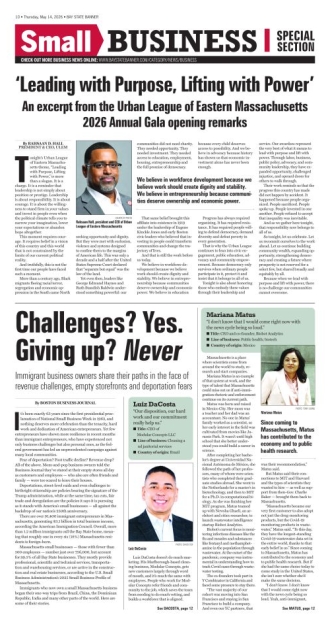
Luiz DaCosta
Luiz DaCosta
“Our disposition, our hard work and our commitment really help us.”
- Title: CEO of Modular Concepts LLC
- Line of business: Cleaning and janitorial services
- Country of origin: Brazil
Luiz DaCosta doesn’t do much marketing. His Marlborough-based cleaning business, Modular Concepts, gets new customers largely through word of mouth, and it’s much the same with employees. People who work for Modular Concepts refer friends and community to the job, which saves the team from needing to do much vetting, and builds a workforce that is aligned.
It wasn’t intentional that 100% of Modular Concepts staff are Brazilian immigrants, but it’s worked out because, DaCosta said, a strong work ethic and pride in work is deeply entrenched in Brazilian culture. DaCosta himself emigrated from Brazil to the U.S. in 2007 and has been building Modular Concepts since 2015.
“Culturally, our disposition, our hard work and our commitment, really helps us,” he said.
DaCosta’s Modular Concepts enables customers to customize how they work with their cleaners. They can choose what services, what areas, and what frequency on a case by case basis. It allows them to be both affordable for who they work with, and profitable, DaCosta said.
It’s simple work, DaCosta said, but essential — and executing it well makes a difference. DaCosta said his employees’ work ethic means “we can execute that basic entry level of service with such enthusiasm and gratitude that the results speak for themselves.”
The company now has roughly 160 customers, but many have multiple facilities that need cleaning. Modular Concepts doesn’t require long-term contracts from customers, but instead, DaCosta said, relies on their satisfaction with the work to keep them on board.
“There’s no risk at all working with us, because the proposal is very simple: If we are delivering what we promised, you have no reason to get rid of us. And if we’re not delivering, then you should get rid of us. You should not keep a service that’s not performing just because we are tied by a contract,” DaCosta said.
This approach, according to DaCosta, eliminates the barrier to entry for new customers and keeps Modular Concepts’ attrition rate much lower than industry standard — about 3% compared to 25%, he said.
“My entire business is based on relationships and our commitment. That’s our main brand,” DaCosta said. “But our main mission is helping people.
Cleaning is just the way we do it.”
— Isabel Hart
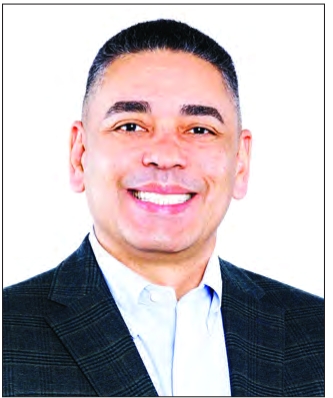
Mariana Matus
Mariana Matus
“I don’t know that I would come right now with the news cycle being so loud.”
- Title: CEO and co-founder, Biobot Analytics
- Line of business: Public health; biotech
- Country of origin: Mexico
Massachusetts is a place where scientists come from around the world to study, research and start companies.
Mariana Matus is an example of that system at work, and the type of talent that Massachusetts could miss out on if anti-immigration rhetoric and enforcement continue on its current path.
Matus was born and raised in Mexico City. Her mom was a teacher and her dad was an accountant. No one in Matus’ family worked as a scientist, so her early interest in the field was cultivated from movies like Jurassic Park. It wasn’t until high school that she better understood you could build a career in science.
After completing her bachelor’s degree at Universidad Nacional Autónoma de México, she followed the path of her professors, many of whom were scientists who completed their graduate studies abroad. She went to the Netherlands for a master’s in biotechnology, and then to MIT for a Ph.D. in computational biology. As she was finishing her MIT program, Matus teamed up with Newsha Ghaeli, an architect and cities researcher, to launch wastewater intelligence startup Biobot Analytics.
Biobot’s current focus is monitoring infectious diseases like the flu and measles and substances like fentanyl and methamphetamine in the population through wastewater. At the outset of the pandemic, company was instrumental in understanding how to track Covid cases through wastewater testing.
The co-founders took part in Y Combinator in California and faced some pressure to stay there.
“The vast majority of our cohort was moving into San Francisco and staying in San Francisco to build a company. And even our YC partners, that was their recommendation,” Matus said.
But Matus said their connections to MIT and Harvard and the types of scientists they wanted to hire — as well as support from then-Gov. Charlie Baker — brought them back to Massachusetts.
“Massachusetts became our very first customer to also adopt not just the drug-monitoring products, but the Covid-19 monitoring products in wastewater,” Matus said. “To this day, they have the longest-standing Covid-19 wastewater data set in the entire world, thanks to that early belief in us.” Since coming to Massachusetts, Matus has contributed to the economy and to public health research. But if she had the same choice today to come study in the United States, she isn’t sure whether she’d make the same decision.
“I don’t know. I don’t know that I would come right now with the news cycle being so loud. Yeah, anti-immigrant, yeah,” Matus said.
As fears increase at the national and state level of a brain drain, Matus is an example of what happens when talent comes and stays in the U.S.
“I think at the end of the day, probably I am an example of that kind of immigrant talent being attracted to a top university, and then benefiting the economy because I stayed here to build a company,” Matus said. “I think that’s something good. We should try to do more of that.”
— Hannah Baratham-Green
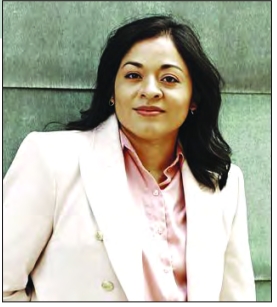
Sola Ajao, owner of Destiny African Market.
Sola Ajao
“The proudest moment in my life? When I opened my store.”
- Title: Owner of Destiny African Market
- Line of business: Food, retail
- Country of origin: Nigeria
The proudest moment in Sola Ajao’s life came in 2021, when the Nigerian immigrant was well in her 50s. It was the grand opening of Destiny African Market, the African grocery store Ajao said was in her “destiny” to open and run in Randolph after over 10 years in the catering business.
Nowadays, Ajao is the sole owner of Destiny African Market, but her daughter Adebukola Ajao — who has her own marketing agency — promotes the shop online. A handful of other people work at the store part time.
The store sells everything from chips, chocolate, carrots, fruits and cassava (a starchy root vegetable also known as yucca or manioc) to soap, bags, jewelry and body products. The food is widely known among the Caribbean and African communities, and interestingly those same items are familiar to the many Asian customers who often walk into the store, although sometimes under a different name. The secret to make things work is nomenclature, according to Adebukola.
“In Destiny, you’ll see that a lot of products have three names on it, to help other people identify what it is,” she said.
Adebukola said that between November last year and February this year, people in the Nigerian community were scared to leave their houses, as they heard ICE was conducting raids. For Destiny African Market, that withdrawal led to days when revenue was just $50 — a miserable payout for a business that keeps its lights on six days a week from 8 a.m. to 9 p.m.
“We’re not an e-commerce business just yet, so that hurts,” Adebukola said.
The revenue shortfall came on top of another challenge that the store has faced: the price increase driven by tariffs, which have directly impacted the store’s suppliers. Destiny African Market had no choice but to raise its prices as well, Adebukola said, and some products, like grains and shea butter, doubled in price.
“I don’t foresee those things going down … things are just getting more and more expensive, and that puts a strain on us,” she said. “Even a $3 difference makes it different for the consumer.”
Adebukola is aware that her mom’s store is in a very volatile market, and says she’s grateful to their local community who “believes in our mission and wants to see not only this business win, but to see African food be heralded as a top cuisine.”
But she also believes that the name of the business put a target on their back in the days ICE was around.
“Especially ‘African market,’” she said. “You can’t even hide.”
— Lucia Maffei

Wendy Estrella
Wendy Estrella
“I’m just so grateful to be an immigrant.”
- Title: Co-founder of Estrella Enterprises
- Line of business: Real estate
- Country of origin: Dominican Republic
Wendy Estrella didn’t wait long to start on her path toward being a multifamily property owner. She was 19, newly wed to Jose Estrella, and the couple lived in one unit in a four-family building and were the landlords to the other tenants.
More than three decades later, the Estrellas have a portfolio of more than 300 units, and they’re all in Lawrence, the Merrimack Valley city where the two natives of the Dominican Republic met while in high school.
Today, they own and operate Estrella Enterprises, and Wendy Estrella has served as chair of the Lawrence Partnership, a nonprofit for economic development and workforce development in the city. Estrella, who grew up as the youngest of nine, considers her life today to be a dream — one that is far more successful than she could have expected when she arrived in Lawrence, she said.
Estrella was learning English as a second language, so most of her classes were in Spanish. She said she didn’t realize the challenge she’d later face learning in English — until she got to UMass Amherst, and failed out.
“I realized this English thing was not as easy,” she said.
Estrella stuck with it, and later earned degrees from Merrimack College and the Massachusetts School of Law. She and Jose happen to be from the same small town, Tenares, in the Dominican Republic. They met through a quirk of multifamily real estate: Her mom was renting in one of his uncle’s properties. That uncle introduced the couple.
They’ve built their company incrementally, not moving too fast or taking on too much debt, and rarely straying from Lawrence — their American hometown. They are determined to offer better conditions for their tenants than are often found with absentee landlords.
“This is where the opportunity was at the time that we were growing, and we’re super blessed about that,” she said. “We also feel like we’re making a difference.”
At an exceedingly difficult time for many immigrants, Estrella said she remains optimistic and grateful. Current federal policies and attitudes won’t last forever, she tells herself and others who need to hear it. She focuses on herself and what she can control, she said.
“Had I not come to the United States,” Estrella said, “I wouldn’t be living the dream that I’m in right now. My focus has always been that I’m just so grateful for being able to be an immigrant.”
— Grant Welker