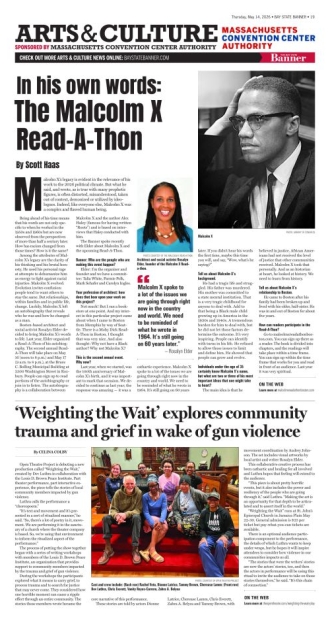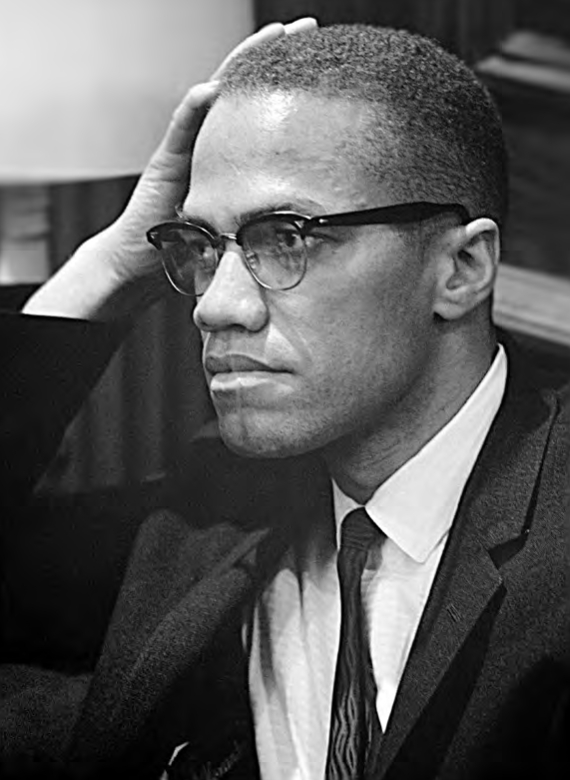
Malcolm X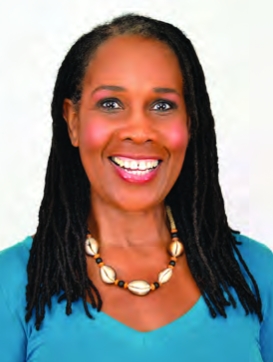
Architect and social activist Rosalyn Elder, founder of the Malcolm X Read-a-thon.
Malcolm X’s legacy is evident in the relevance of his work to the 2026 political climate. But what he said, and wrote, as is true with many prophetic figures, is often distorted, misunderstood, taken out of context, demonized or utilized by ideologues. Indeed, like everyone else, Malcolm X was a complex and flawed human being.
Being ahead of his time means that his words are not only specific to when he worked in the 1950s and 1960s but are now observed from the perspectives of more than half a century later. How has racism changed from those times? How is it the same?
Among the attributes of Malcolm X’s legacy are the clarity of his thinking and his brutal honesty. He used his personal rage at attempts to dehumanize him as energy to fight against racial injustice. Malcolm X evolved. Evolution invites confusion: people tend to want others to stay the same. But relationships, within families and in public life, change. Luckily, Malcolm X left an autobiography that reveals who he was and how he changed as a man.
Boston-based architect and social activist Rosalyn Elder decided to bring Malcolm X’s words to life. Last year, Elder organized a Read-A-Thon of his autobiography. The second annual Read-A-Thon will take place on May 16 (noon to 8 p.m.) and May 17 (9 a.m. to 8 p.m.), at the Bruce C. Bolling Municipal Building at 2300 Washington Street in Roxbury. People can sign up to read portions of the autobiography or join in to listen. The autobiography is a collaboration between Malcolm X and the author Alex Haley (famous for having written “Roots”) and is based on interviews that Haley conducted with him.
The Banner spoke recently with Elder about Malcolm X and the upcoming Read-A-Thon.
Banner: Who are the people who are making this event happen?
Elder: I’m the organizer and founder and we have a committee: Talia White, Parmie Polk, Mark Schafer and Carolyn Ingles.
Your profession of architect: how does that bear upon your work on this project?
Not much! But I ran a bookstore at one point. And my interest in this particular project came about when I came to Boston from Memphis by way of Seattle. There is a Moby Dick Read-A-Thon in Boston. I thought that was very nice. And also thought: Why not have a Black author? Why not Malcolm X?
This is the second annual event. Why now?
Last year, when we started, was the 100th anniversary of Malcolm X’s birth, and it was important to mark that occasion. We decided to continue as last year; the response was amazing — it was a cathartic experience. Malcolm X spoke to a lot of the issues we are going through right now in the country and world. We need to be reminded of what he wrote in 1964. It’s still going on 60 years later. If you didn’t hear his words the first time, maybe this time you will, and say, “Wow, what’s he saying?”
Tell us about Malcolm X’s background.
He had a tragic life and struggled. His father was murdered.
His mother was committed to a state mental institution. That is a very tragic childhood for anyone to deal with. Add to that being a Black male child growing up in America in the 1930s and 1940s. A tremendous burden for him to deal with, but he did not let those factors determine the outcome. It’s very inspiring. People can identify with turns in his life. He refused to allow those issues to limit and define him. He showed that people can grow and evolve.
Individuals under the age of 35 certainly know Malcolm X’s name, but what are two or three of his most important ideas that one might take to heart?
The main idea is that he believed in justice. African Americans had not received the level of justice that other communities received. Malcolm X took that personally. And as an historian at heart, he looked at history. We need to learn from history.
Tell us about Malcolm X’s relationship to Boston.
He came to Boston after his family had been broken up and lived with his older, half-sister. He was in and out of Boston for about five years.
How can readers participate in the Read-A-Thon?
Go to malcolmxreadathonboston.com. You can sign up there as a reader. The book is divided into chapters, and the readings will take place within a time frame. You can sign up within the time frame that works for you and read in front of an audience. Last year it was very spiritual.
ON THE WEB
Learn more at malcolmxreadathonboston.com