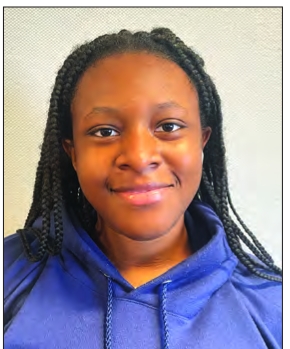
Deborah Fauche Fun fact: Teaching Black history is not federally required in the U.S. According to The 74, an education news site, only 12 states — Arkansas, Colorado, Delaware, Florida, Illinois, Mississippi, New Jersey, New York, Rhode Island, South Carolina, Tennessee, and Washington — mandate Black history in K-12 public schools. As a result, many students receive only a limited
understanding of Black history, leaving them in the dark about key
truths of American history. This gap in education impacts their
perspectives, opinions and actions for the rest of their lives.
While
Black History Month is widely recognized, it often focuses on honoring
historical figures who paved the way for racial equality. However, Black
history is still being made every day. With the rise of social media,
influencers and educators are bringing greater awareness to Black
culture, history, and current contributions. Platforms like TikTok and
Instagram have created spaces for people to learn about Black history
when their schools or communities may not provide that opportunity.
Social media not only helps us celebrate the past but also shines a
light on the present achievements of Black excellence.
On
average, people spend about two hours and 23 minutes daily on social
media, with some using it for as long as 8 to 10 hours. While many see
it solely as a tool for entertainment
and communication, social media is also a powerful space for education
and community building. It allows people to share knowledge on a wide
range of topics with diverse audiences. This is especially important for
celebrating Black History Month. Many influencers and authors, such as
Rachel Elizabeth Cargle and Ibram X. Kendi, use their platforms to
educate people about Black history and its continued impact on society
today.
For
me, social media has become my Black history teacher. In school, Black
History Month discussions often focus on historical leaders like Dr.
Martin Luther King Jr. and Rosa Parks — figures who played crucial roles
in the Civil Rights Movement. While it’s important to honor those who
paved the way, it’s just as essential to recognize Black excellence in
today’s world. In every industry — business, entertainment, literature,
and beyond — Black individuals continue to break barriers and redefine
success.
Social media
spotlights modern-day changemakers like poet Amanda Gorman and activist
Alicia Garza, alongside influential Black actors like Michael B.
Jordan
and Angela Bassett. Musicians like Kendrick Lamar, with his symbolic
Super Bowl halftime show, and Beyoncé, the first Black woman in 33 years
to win Album of the Year at the Grammys, are pushing Black culture
forward on global stages. Platforms like The Shade Room Teens provide a
space for young people to stay informed about Black excellence and
cultural achievements.
Through social media, I’ve also discovered the rich Black history within my own community.
I’ve
learned about activists like Melnea Cass, Elma Lewis and Mel King —
figures who have shaped my city in profound ways. Social media has also
introduced me to local events celebrating Black history, from museum
exhibitions to sports initiatives and educational programs. It’s been
eye-opening to realize how many opportunities exist for me and my
friends to engage more deeply with our culture.
Black
history should be celebrated year-round, not just in February. Thanks
to social media, this ongoing celebration is possible. It serves as a
bridge between the past and the present, allowing Black excellence to be
recognized, appreciated and shared with the world — every single day.
Deborah
is a junior at Brooke High School who loves reading and watching drama
series. In the future, she hopes to become either an author or a nurse.


