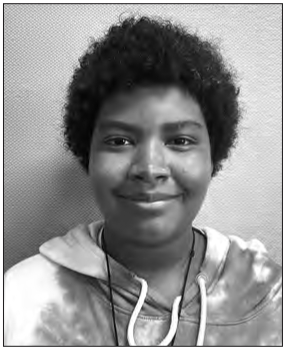
Cimmaron HolmanThis Black History Month, the Banner is teaming up with Write
Boston’s Teens-In-Print Program, highlighting young voices of color.
Each week, we will feature the work of three new students, who will
deliver their perspectives on Black History and what it means to them.
Names are the pinnacles of cultures, they can really mean the world to a person and/or family. This is something that inspired me and I wanted to write about it. I thought more on the topic, and I realize it resonated with me a lot because I’m a person of color who happens to have a pretty unique name and I know people of color are often ostracized for having “ghetto names.” And while, thankfully, my name has never been called that, it still had me wondering why our names are so unique.
I did some research and saw there was a rumor that during slave times enslaved people
would name their children such unique names so that if ever separated
they would be able to reunite because their name would be so unique.
Then, hearing it would allow them to find their child. But this isn’t as
cut and dry as I just described. I looked for sources to back this
claim up, yet I found none that were credible. So I went to a
professional in this field. And what I found was something that I never
even imagined to be.
I
interviewed Ms. Chastidy Rubin, who has been a history teacher at
Brooke High School for four years. She has two degrees in history and
history education, with a concentration in marginalized group’s
interpretations of U.S. history. She is currently teaching world history
and AP African American studies. This is what I learned from that
interview. Black history is something that is mainly written down by
other people, history that is often valued in the West. In America,
history is written down and documented throughout time periods, which
contrasts with traditional African history, which is usually taught
through oral tradition.
As
we spoke more on the topic of names for enslaved people, I found out
that Ms. Rubin herself has a hard time finding the idea of Black people
naming their kids unique names during enslaved times. There were two
possible reasons for this, she stated.
Reason
number one is that simply during the time no one cared to write it down
and as time moved forward and progressed this historical fact died
along in the past. Reason two is simply the way and the fashion African
American people were naming themselves during enslavement had no
correlation.
We looked
at the naming records of enslaved people in South Carolina. As we
looked together, we saw that there were other naming patterns that were
pointed out by the author of this article. One pattern that was pointed
out was pretty similar to the original idea for this article — that it
was an act of resistance. Now it didn’t show itself in the form of
naming unique names to be able to identify their children if ever lost,
it showed itself in a very different manner. They
did it as a way to show resistance to the forced assimilation put upon
them by the white colonizers. By naming their children after their home
tribes, it allowed them to keep and maintain their identity.
Another
pattern that appeared was the large number of names that were
Christian. This was done to help give their children the best
opportunities in life that they could, while even still being enslaved.
It was done as an act of survival by putting their children in this more
American setting to help give them the best life possible.
One
thing that Ms. Rubin helped me find is the reason Black people might be
called Shaniqua and Ashanti and all these other names of uniqueness
actually started during the Black Power Movement. It’s due to the
wanting of pride for one’s culture, which African American people were
simply robbed of by being taken from their homeland,
brought to a new country and assimilated through years upon years. It
then manifested itself as people started to name their children names
that connect to African roots, for example, Ashanti, which is named
after an African tribe and kingdom to which some people might trace
their lineage back, as a way to have that culture that they were robbed
of and try to scrape up any little bits that they can. From here on, the
name Ashanti can easily be played on and twisted and turned to become
its own unique variation of the name, which is why we have so many
unique variations of it.
So
the next time you hear a name of a person of color, don’t say, “That’s a
ghetto name.” Think of the history behind it, think of the struggles,
the heartache, and never ending fighting. Names aren’t just names. They
have history, they have meaning, and they have power. So, next time you
hear Ashanti, Jamal or Shaniqua just remember that it’s someone’s
history that has meaning to someone, and that’s someone’s power.
Cimmaron
is a student at Brooke High School and has been a reporter at Teens in
Print since 8th grade. He explores various forms of journalism,
including podcasts, print, and public relations.


