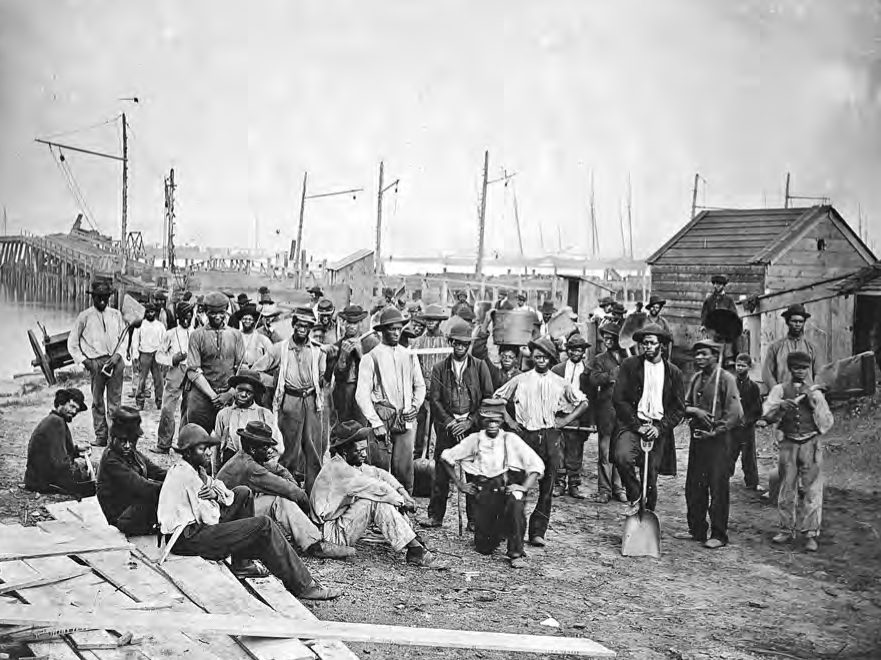
Laborers at Quartermaster’s Wharf, Alexandria, Virginia When it comes to Black history and culture, work is central to it
Whether talking about the unpaid labor provided by enslaved Africans to today’s focus on entrepreneurship and fighting against economic injustice, labor is an important part of the discussion.
This year’s theme for Black History Month 2025 is “African Americans and Labor,” highlighting the intersections of work and the collective experiences of Black Americans.
The Association for the Study of African American Life and History (ASALH) explains, “The 2025 Black History Month theme … focuses on the various and profound ways that work and working of all kinds — free and unfree, skilled, and unskilled, vocational and voluntary — intersect with the collective experiences of Black people.”
This year’s theme invites reflection on the historical and contemporary roles Black Americans have played in shaping the labor force and their fight for equity and dignity in the workplace.
Labor has been a defining force in Black history, beginning with the horrors of enslaved labor in the United States. Millions of African Americans toiled under inhumane conditions, building the economic foundation of the nation. Even after emancipation, systemic barriers continued to exploit Black labor through practices like sharecropping, convict leasing and segregation in the workplace.
In 2025, we celebrate the centennial of the Brotherhood of Sleeping Car Porters and Maids (BSCP), the first Black-led labor union chartered by the American Federation of Labor. Founded in 1925 under the leadership of A. Philip Randolph, the BSCP marked a turning point for African Americans in organized labor. Porters, who worked long hours for low wages while enduring racist treatment, united to demand better wages, improved working conditions, and dignity. Their efforts transformed labor relations and played a pivotal role in the broader civil rights movement.
Over the decades, Black labor activism has left an indelible mark. From the Pullman porters to Black women leading strikes in the garment industry, to recent organizing in service and retail sectors, African Americans have consistently fought for justice and equality in the workplace. These efforts are part of a broader legacy of resilience and innovation, as African Americans excelled in skilled trades, professions and entrepreneurship despite systemic barriers.
Today,
labor remains central to the Black experience. Issues like wage gaps,
discrimination and lack of representation in leadership persist,
underscoring the continued relevance of this year’s theme. Black History
Month 2025 honors the past while looking to the future, inspired by
those who turned labor into a powerful force for progress.
Through
this theme, ASALH encourages everyone to reflect on the interconnected
histories of race, work and equality, and to honor the contributions and
sacrifices of African Americans who shaped the labor landscape we know
today.