Planes, trains and trucks
Decatur’s Midwest Inland Port turns transportation into economic development for the whole region
ECONOMY | Patrick Yeagle
It all began with a napkin.
The international food-processing company Archer Daniels Midland was paying $250 per shipping container to transfer its goods between two railroads in Decatur, and they were looking for a way to cut that cost. Scott Fredericksen, ADM’s president of transportation, and Mark Schweitzer, then the company’s director of intermodal freight, began sketching out a solution on a napkin. What started as a simple doodle has developed into a 280-acre facility capable of shipping freight across the globe. It is part of a powerful economic development tool benefitting the whole region.
The Midwest Inland Port is a collection of sites in and around Decatur devoted to transporting goods and materials to and from the rest of the world. While ports are usually located on water, the Midwest Inland Port is linked to the U.S. coasts by rail, giving it the potential to make central Illinois a transportation hub while offering new business opportunities to communities surrounding Decatur.
For years, Decatur has worked to rehabilitate its image of a manufacturing town left in the dust as the U.S. economy increasingly becomes rooted in services instead of industry. The signature “Decatur smell” emitted by global food-processing company ADM has long been a source of mockery for people outside of Decatur, but that soybeanprocessing odor represents a strong economic force, and it is now taking on the scent of a new opportunity.
Why central Illinois? Illinois plays a major role in the transportation of goods across the nation. The state has the second largest rail system in the U.S. with more than 7,000 miles of railroad tracks, according to the Illinois Department of Transportation. It’s third for the most public road miles at 144,300 and third in freight tonnage with more than 1.2 billion tons passing through the state annually. Illinois has more than 7,200 trucking companies, more than 40 railroads, and one of the world’s busiest airports – O’Hare International Airport – serving dozens of freight airlines and carrying nearly 1.6 million tons of cargo in 2014. Transportation and warehousing employment in Illinois ranks third nationwide, with an annual payroll of $9.9 billion.
Much of Illinois’ freight transportation prowess is due to Chicago, which is the busiest rail hub in the U.S. The Chicagoland region handles a quarter of the nation’s freight rail traffic, with about 500 freight trains passing through every day. Seven interstate highways meet at Chicago, more than any other city in the nation, making it a crossroads for truck freight. Chicago is also a port of call for ocean-going cargo ships, thanks to Lake Michigan.
However, Chicago is also a chokepoint for freight because of the massive volume of goods entering and leaving the city at any given time. In the next 30 years, the demand for freight rail service in Chicago is expected to nearly double. Statewide, the Illinois Department of Transportation projects that Illinois will handle 1.7 billion tons of freight by 2040 – more than a third of the nation’s total freight tonnage.
“Chicago is a hot mess,” jokes Allison Fayfich, a transportation logistics coordinator for ADM. She says getting a truck from one point to another in Chicago can take anywhere from 30 minutes to three hours, and that kind of unpredictability and delay poses real problems for companies depending on a shipment.
The Chicago bottleneck creates an opportunity for central Illinois to position itself as a transportation hub capable of reaching the entire world. While the Department of Transportation studies how to fix the bottleneck, companies are already looking for alternatives to shipping goods through Chicago, and Decatur hopes to attract some of that traffic.
Jennifer Bennett, a transportation business analyst with ADM, says developing the port is partly about helping Illinois retain its spot as a transportation leader.
“We don’t want to lose it to Indianapolis, to Memphis, to Kansas City and so forth,” Bennett said. “We have to do something if Chicago is going to be
congested because, at some point, that freight is going to find another
path. We’re hoping that here in central Illinois, we can help alleviate
some of that so it doesn’t have to go through Chicago.”
Making
their move Those involved with the Midwest Inland Port are quick to
point out that it’s not just one physical address; instead, it’s more of
a marketing concept. The port is a collection of existing
transportation-related facilities and sites ready for development in the
Decatur metro area. It’s jointly developed by a consortium of companies
and the Economic Development Corporation of Decatur and Macon County.
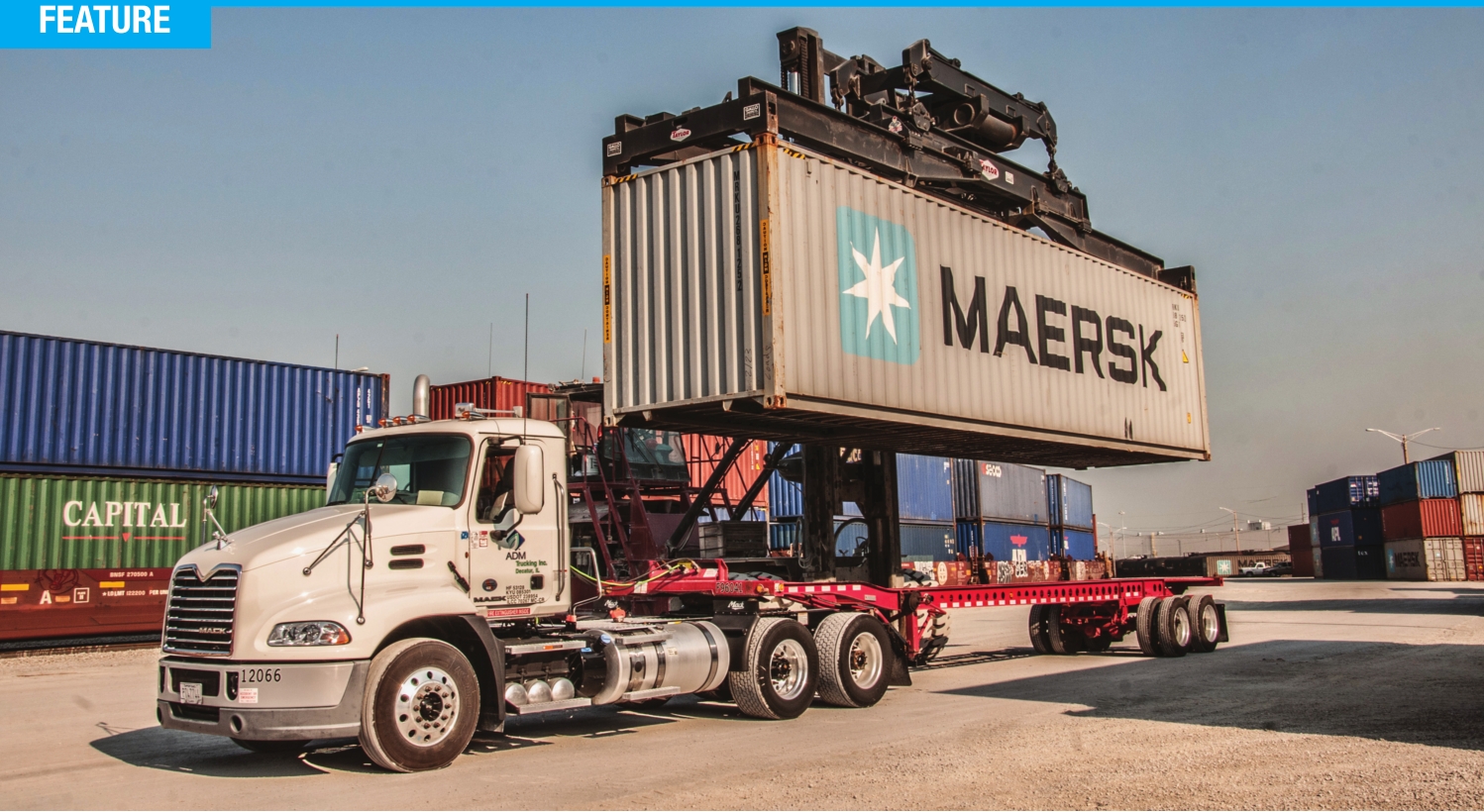
The crown jewel of the port is ADM’s Intermodal Ramp, a 280-acre
facility dedicated to transferring shipping containers – standardized
53-foot-long steel boxes – from trucks to trains and vice versa.
Allison
Fayfich believes so strongly that the Intermodal Ramp and the Midwest
Inland Port as a whole represent a game changing innovation that she
quit her previous job with a railroad and went to work for ADM to help
develop the project. She often leads tours of the Intermodal Ramp, which
isn’t actually a ramp, but rather a section of railroad track
surrounded by 18- to 22-inch-thick concrete which supports shipping
containers weighing up to 120,000 lbs.
Fayfich
explains that, as trucks arrive at the ramp, an automated system of
cameras photographs each shipping container to record serial numbers and
any preexisting damage. A large, mobile crane moves the shipping
containers onto trains heading to ports like Los Angeles and Norfolk,
Virginia, where they are picked up by large cargo ships and sent to
places like Indonesia, China, Canada, the Netherlands and a handful of
African nations. The containers are filled with everything from fructose
and processed protein to machinery and waste paper, Fayfich says,
adding that waste paper is the United States’ number one export.
 Right now, the
Intermodal Ramp only handles international shipping and is operating at
about 50 percent of capacity, but Fayfich says ADM is considering an
expansion into domestic intermodal shipping for other companies, which
could greatly increase the amount of freight passing through the Midwest
Inland Port.
Right now, the
Intermodal Ramp only handles international shipping and is operating at
about 50 percent of capacity, but Fayfich says ADM is considering an
expansion into domestic intermodal shipping for other companies, which
could greatly increase the amount of freight passing through the Midwest
Inland Port.
Jennifer
Bennett, the ADM transportation analyst, says the inland port helps
relieve congestion at coastal ports by allowing freight companies to
spend less time separating shipments as they are unloaded from cargo
ships. Instead, the freight can be hauled inland by train, where it can
be broken up at the less congested inland ports and trucked to its final
destination.
Ryan
McCrady, president of Midwest Inland Port LLC, the private-public
partnership overseeing the port, says the MIP is working to become a
“point of entry” for international shipments through the U.S. Customs
Bureau. Other than some marketing done by the Economic Development
Corporation for Decatur and Macon County, the project has been privately
funded, he said.
Although
it is mostly marketing, the idea of a “port” neatly sums up what
Decatur offers in terms of transport capacity, including service by
three major railroads, several trucking companies and a 2,000-acre
airport with a U.S. Customs office and the ability to accept widebody
aircraft. With easy, uncongested interstate access, trucks leaving the
port can arrive at cities as far away as Minneapolis, Cleveland, Detroit
and Little Rock within 10 hours, which is the limit for how long truck
drivers can stay on the road at a time.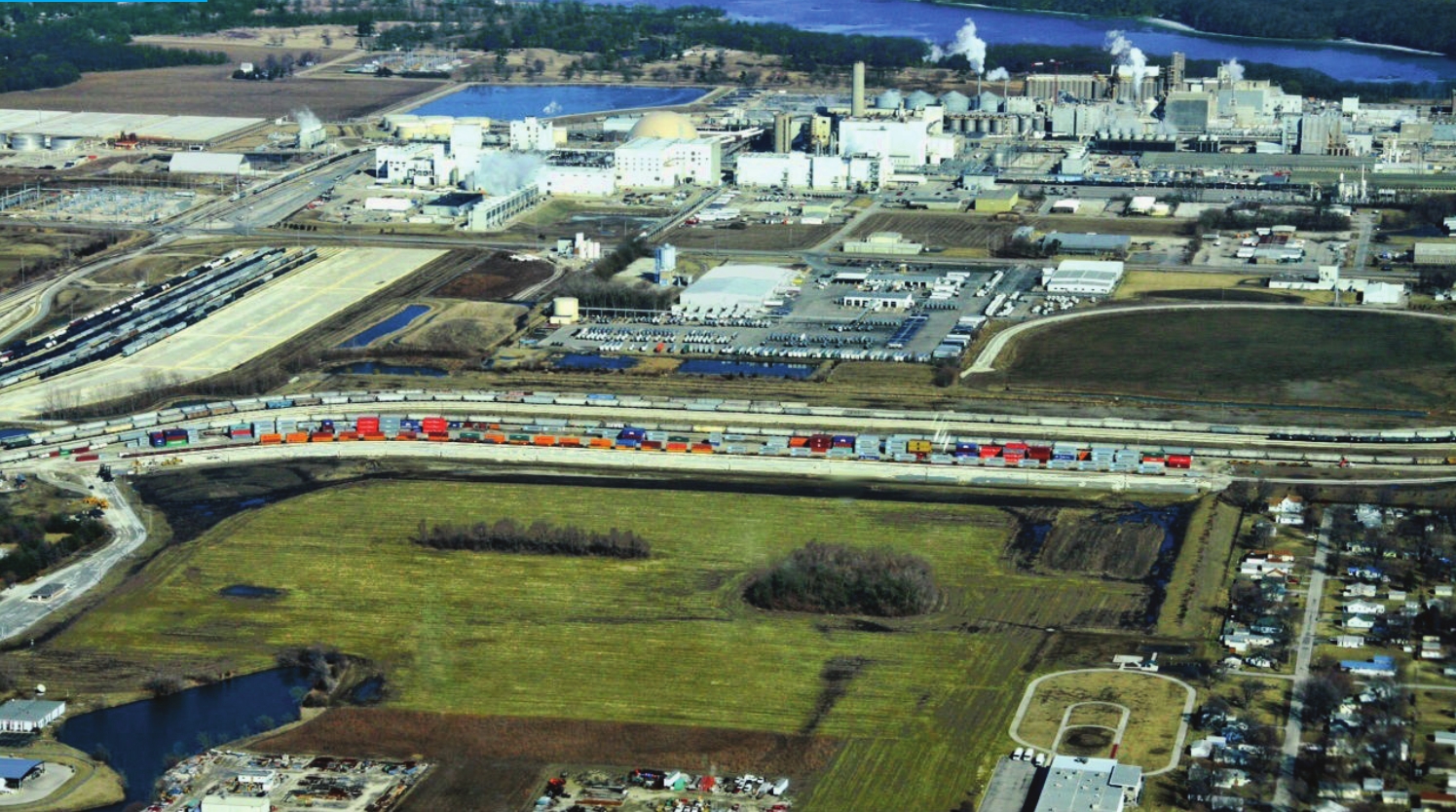
By
marketing Decatur’s transportation capabilities as a port, the group
has managed to create something that is more than the sum of its parts.
Rather than being merely a city with a few trains and trucks, the port
designation positions Decatur as a waypoint for freight.
Lessons
for Springfield Allison Fayfich, the ADM transportation coordinator,
says the anticipated growth of the consumer economy holds opportunity
not only for Decatur’s burgeoning transportation hub, but also for the
surrounding communities.
“It is going to come, and we don’t want it to just be Decatur that benefits,” Fayfich said.
How
can Springfield get a piece of the action? Fayfich says facilities that
support trucking operations will soon be needed, meaning Springfield
could easily host warehouses or “drop yards” where trucks drop off and
pick up containers.
Larry
Altenbaum, executive of the Midwest Inland Port, says the potential for
development extends beyond warehousing. Because the port offers
companies an easy way to ship their goods across the globe, high-demand
industries like chemicals, machinery and manufacturing should be courted
to set up shop nearby.
Ryan
McCrady, Midwest Inland Port president, previously served as Sangamon
County administrator until 2008. He says the MIP in Decatur is already
working with communities like Champaign-Urbana to develop economic
development plans that benefit each community, something he says can
also happen with Springfield.
“We
can be something that Springfield can offer up to businesses as a
recruiting tool,” he said. “We can build a very profitable central
Illinois region.”
The
Midwest Inland Port is also part of a larger joint effort by the
Economic Development Corporation of Decatur and Macon County, the City
of Decatur, Grow Decatur and other groups to make the city workable,
livable and attractive by addressing issues like housing, declining
population, the city’s water supply, education, workforce development,
beautification and more.
A
delegation of Springfield business, nonprofit and government leaders
visited ADM’s Intermodal Ramp last week, hosted by John Farrell, CEO of
the Chicagobased nonprofit Illinois Ventures for Community Action, and
Sheila Stocks- Smith, president and founder of the Urban Action Network,
a new nonprofit aimed at spurring revitalization in Springfield’s urban
core. The delegation included Springfield mayor Jim Langfelder, Karen
Davis, director of the Office of Planning and Economic Development for
the City of Springfield, Ward 2 Ald. Herman Senor, state Rep. Sue
Scherer, D-Decatur, and others.
Springfield
entrepreneur Bruce Sommer, who also serves as a visiting lecturer at
the University of Illinois Springfield, attended the presentation on the
Midwest Inland Port last week. He says the port adds a “valuable node”
to the regional economic development network which should focus
Springfield’s efforts on recruiting and growing local businesses.
“I
think Springfield economic development organizations can take a couple
pages from the Decatur playbook and start actively engaging with other
regional economic growth generators, starting in central Illinois by
clearly defining the value of what we can bring to the region and
identify our aligned interests in collaborative action,” Sommer said.
Jeffrey
Sommers, a principal at Square Root Architecture + Design in
Springfield, says what he took away from the presentation was less about
the port itself and more about the cooperative effort it
represents. By focusing on “livability” issues like housing and urban
planning, Sommers says, Decatur is addressing the most important aspects
of building a sustainable community.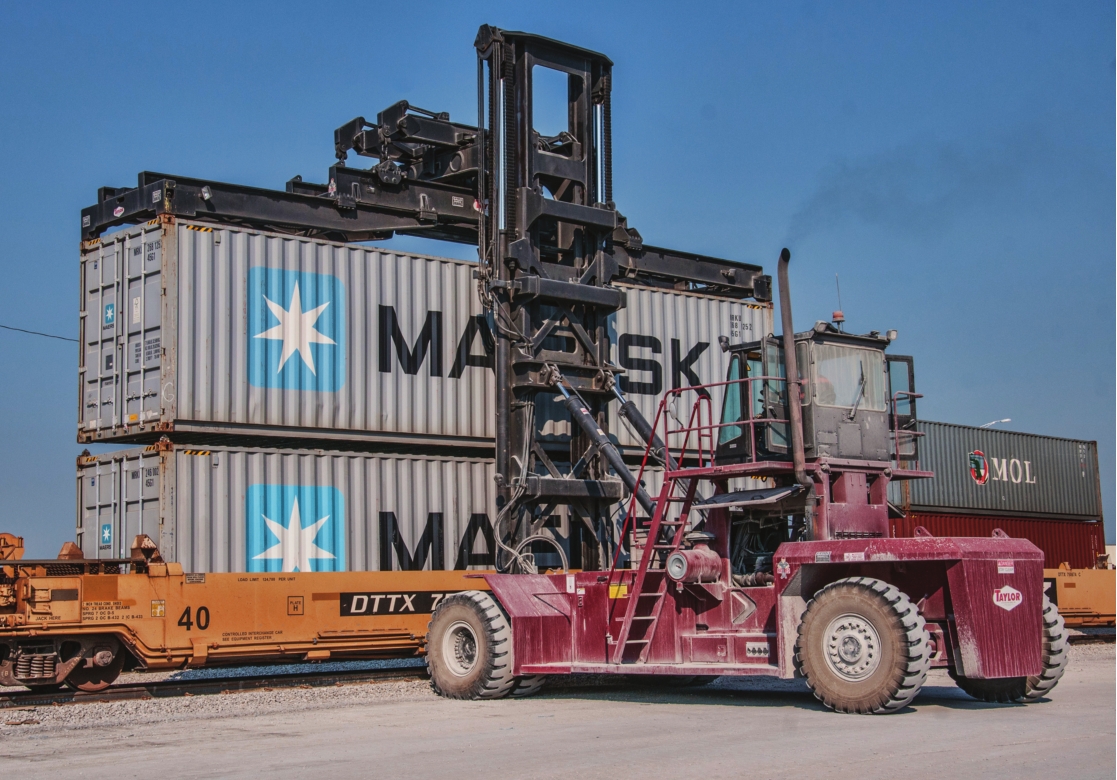
“We’re
not planning on replicating the Midwest Inland Port here, but I think
that if we’re going to talk about creating a city that’s attractive to
businesses and potential residents, those livability issues are what we
should be focusing on,” he said. “I just feel like that’s the paramount
issue behind all of this. Livability is economic development. It’s
building a city for our citizens. When you do that, you build a place
people want to live, spend their money and socialize. That’s what’s
attractive to corporations.”
During the tour last week, state Rep.
Sue Scherer said that the Midwest Inland Port has been working with and learning from a similar port in Joliet.
“They’re
working in conjunction, not in competition,” Scherer said, adding that
it should be the same way between cities in central Illinois.
“Products
come here and can go anywhere in the world,” she said. “This is an
opportunity for growth that we can’t look away from.”
Contact Patrick Yeagle at [email protected].


