Midwest supper clubs
FOOD | Julianne Glatz
Supper clubs. They’re a blast from the past that are struggling to compete with national chain restaurants even as they’re experiencing a renaissance with a resurgence of customers that love their retro-cool. They’re an iconic Midwestern tradition. Supper clubs share certain characteristics. However, each is uniquely individual, a reflection of its location, local owners’ taste and, often, ethnic background.
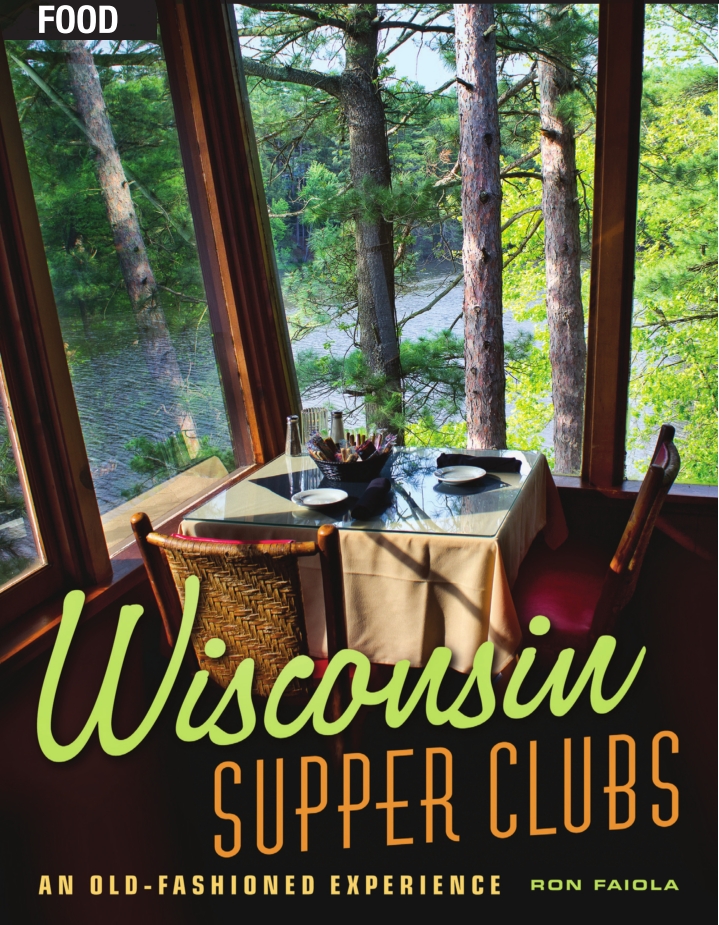
So what exactly makes a supper club a supper club? There’s not really an exact definition, but to paraphrase Supreme Court Justice Potter, I know one when I see one. In the last couple years, two books have been written about Midwest supper clubs: The Supper Club Book, A Celebration of a Midwest Tradition by David Hoekstra and Wisconsin Supper Clubs, an Old Fashioned Experience by Ron Faiola. Both books offer checklists of what defines a Midwest supper club; of course, there are exceptions to them all. Here are just a few:
• A good supper club has a dark setting. It is an organically cool place. (Hoekstra)
• Friday night fish-frys and Saturday prime rib or surf and turf specials. (Both)
• Pre-supper relish tray, preferably served on stainless steel. (Faiola)
• Sometimes these days has morphed into an appetizer/salad bar.
• A good supper club is filled with… lots of Naugahyde. Very important. Many supper clubs have held onto equipment and furniture from the 1960s with heirloom passion. (Hoekstra)
• Manhattans, Old-Fashioneds and even martinis are automatically made with brandy. (Both)
• Waitresses (No unisex labeling permitted) who call you “Hon” and are likely to be named Helen, Sally or Gloria (Both)
• Dessert options include (and are sometimes exclusively) alcoholic ice cream drinks such as Grasshoppers, Brandy Alexanders and Pink Cadillacs, often large enough to share. (Faiola).
The heydays of Midwest supper clubs were in the 1950s-60s, not coincidentally when America was “sitting on top of the world” and the middle class was prosperous enough to “dine out” on a regular basis. There were countless supper clubs throughout the central and upper Midwest. But
eventually oldschool supper clubs became passé, eclipsed by fancier,
trendier establishments and fast food. Traditional supper clubs became
things of the past in the central Midwest. But a surprising number have
held on, especially in Wisconsin. As Faiola says, “The Arbor
Vitae/Woodruff area, known as the ‘Crossroads of the North,’ should
really be called the ‘Crossroads of the Northern Supper Clubs.’ It has
more than 20 clubs within a 30-mile radius.” Faiola’s book lists 50
Wisconsin supper clubs; Hoekstra’s includes 24, 15 of which are in
Wisconsin; the rest in Iowa, Minnesota, Michigan and one in East
Dubuque, Ill.
My first
encounter with a traditional Midwest supper club happened just outside
Iowa City, Iowa, more than a decade ago. My husband and I were just
passing through and looking for a good meal. Scanning the options, I saw
“The Lark, in business since 1940.” We found the place, complete with a
full parking lot and people lingering outside while they waited for a
table. The crowd tempted us to both move on for a faster meal, and wait
for what could be a special experience. We decided to stay.
“Do
you want smoking or non-smoking?” the hostess asked us when we finally
got to the front of the line. She was brusque, but not unfriendly. “Uh… I
guess first available,” said my husband. We always asked for
non-smoking (back when it was a choice), but wanted in this case to eat
ASAP. “Good” the hostess replied, nodding her head. Obviously she had no
patience with the no-smoking crowd, and we knew we’d made her approved
list.
It got even
better once we were seated. The light fixtures looked exactly like one
of my mom’s hats from the 1960s, and the ambiance something I hadn’t
experienced since going to Springfield’s Stevie’s Latin Village as a
child. The steaks, with a house-made béarnaise sauce, were exceptional,
as was the wedge salad. Wedge salads have made a comeback but I hadn’t
had one for ages. Ditto the grasshopper parfait Peter and I shared for
dessert.
We made it
back to The Lark a couple years later and enjoyed it as much. But then
they had a fire, and the landmark supper club closed.
Peter
and I had fond memories of The Lark. So we were excited to find that
oldschool supper clubs even still existed, and in such a rich variety.
Hoekstra, who was finishing his book) and I made presentations at a
Greater Midwest Foodways Alliance Symposium (mine was on horseshoes).
Yes,
supper clubs are meat/protein predominant. There’s usually a vegetarian
option, but it’s also usually generic. On the other hand, although
steaks and fish/seafood predominate, specialties abound, including
ethnic ones in those founded by Greeks, Germans or Italians. Locally
sourced items also appear, oftentimes in the form of duck or whitefish
preparations. Meats are also likely to be sourced, and things ranging
from soup to appetizers to entrées and dessert made from scratch,
in-house, often handed down from age-old family recipes.
If
you’d like to try an authentically Midwestern dining experience,
there’s no better place than visiting one of the supper clubs in
Hoekstra’s or Faiola’s books. Our northern neighbors not only offer the
unique experience of traditional supper clubs, but this time of year,
displays of fall color that are only equaled (in some places) by New
England.
There’s even been a murder mystery centered on supper clubs. Murder to Order, written
by Chris Dinesen Rogers, is the tale of a retired cop who buys a
defunct supper club, planning to re-open it, then begins to investigate
the suspicious death of the previous owner. It’s Rogers’ first (and as
far as I can find, only) book, but, although a bit rustic, still better
than most first-time authors.
When
I contacted Faiola, he was on the road, working on his second book
about Wisconsin supper clubs. “So is this the B-list,” I asked. “No, not
at all,” he replied. “Everywhere I go people tell me about supper clubs
that I haven’t heard of.” I had one to add to his collection:
Schultzies’. I hadn’t eaten there, but had just noticed it on my way to
southwestern Wisconsin. Who knows how many there really are?
Faiola
says, “The aptly named Old- Fashioned was created long before
Prohibition. Originally just whiskey, bitters and sugar, it has
undergone much iteration throughout its tenure as a standard cocktail.
In Wisconsin, where the Old-Fashioned is the unofficial state drink (I’d
have said state cocktail; beer is probably the more logical choice, but
I have no statistics that say so), the overwhelming preference is to
serve it with brandy instead of whiskey.”
“Non-muddled
brandy Old-Fashioneds (Though Faiola doesn’t say so, these are clearly
sub-par) are made with sugar or simple syrup (sugar dissolved in water),
bitters and 7UP or with a ready-made old fashioned mix. In addition to
the orange slice and cherry, garnishes sometimes.... also include a
wedge of pineapple.”
A Midwest Old-Fashioned – hand-muddled brandy Old Fashion sweet
Courtesy of Ron Faiola
• 2 maraschino cherries
• 2 1/2 slices (seedless) orange
• 1 sugar cube or 1 tsp. sugar
• 2-3 dashes of bitters
• Ice
• 1 1/2 -2 oz. brandy
•
7UP In a 10 or 12 oz. tumbler, combine one maraschino cherry and one
orange slice, the sugar and bitters. Muddle/mash together with a
muddling tool, pestle (from a mortar and pestle), back of a spoon or
other suitable object.
Add ice, then the brandy, and top off with 7UP. Garnish with the remaining cherry and orange slice.
Variation: Sour brandy Old-Fashioned
Substitute
lemonade or sour mix or half 7UP and half plain soda water. Garnishes
for a sour Old-Fashioned include green olives stuffed with either
pimentos or blue cheese, marinated mushrooms, pickled asparagus, etc.
And, usually, still a maraschino cherry.
Contact Julianne Glatz at [email protected].


