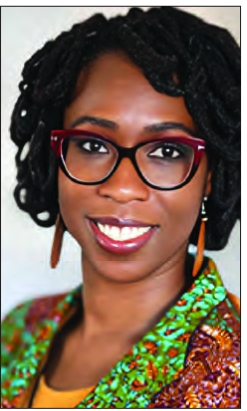
Aba Taylor, president and CEO of YW Boston According to last Friday’s monthly U.S. jobs report, the unemployment rate reached 4.3%, the highest it has been since 2021.
It’s even worse for Black American labor. As reported by the U.S. Bureau of Labor Statistics, that national rate among Black or African American workers age 16 and over is currently 7.5%, and has hovered above a discouraging 6.2% since the beginning of 2025.
Furthermore, according to an examination of the situation for women workers of color conducted by Aba Taylor, president and CEO of YW Boston, the plight is gender-wide. Amid the restrictions (if not elimination) we have seen aimed at DEI programs across the country this year, there’s been an equally discouraging increase in layoffs among these female workers. What about here? The sad truth is that despite a collective effort by state and local lawmakers and political leaders to resist these dire federal impositions, Boston is not much different than the rest of the country for the Black workforce.
You may know YW Boston, which is located at 140 Clarendon Street in Boston, by its former name,
the YWCA. But as of 2016, the CA was dropped to promote the
nondenominational organization’s embrace of people of all faiths (in
2010, the YMCA similarly rebranded itself as “The Y.”).
With
a stated mission to eliminate racism and empower women, this
(un)employment trend is certainly quite concerning to YW Boston, as
Taylor explained this week to the Banner.
“In
July it was reported that 300,000 Black women had exited the
workforce,” she said. “There is correlation with this startling
statistic and the slashing of the federal workforce (either through
layoffs, payouts or other means).” And since July it has only risen,
currently to 320,000, as other populations have enjoyed more hiring.
“What’s
even more shocking is that, according to gender economist Katica Roy
and reported by The New York Times, while Black women lost 319,000 jobs
between February and July of this year, 365,000 white men were added to
the workforce, the largest increase of any group,” Taylor said, noting
that other groups that saw an increase in this same time period were
Hispanic women (178,000) and white women (142,000).
Only a minimal 22,000 nonfarm jobs were added nationwide.
But
the disparity between the national unemployment rate and that of Black
workers — nearly double — is both disturbing, and increasing. “This is a
big jump from June 2025, when the unemployment rate for Black folks was
6.8 percent,” Taylor noted. “This current unemployment rate for Black
workers is the highest it’s been since October 2021.”
How
did YW measure and arrive at this determination? Taking note of the
grim figures in July’s Labor Bureau report and media coverage of Black
women in the workforce, YW Boston followed media figures including Roy,
Economic Policy Expert and Racial Equity Advocate Jessica Fulton,
BlackWomenThriving. com founder Ericka Haines, media outlets such as The
19th (named for the 19th Amendment) and other major news sources.
“We
understand, and as it’s been cited, Black women are overrepresented in
frontline jobs and the federal workforce, and so they would naturally be
disproportionately impacted by past DOGE [Department of Government
Efficiency] cuts and insidious attacks on diversity, equity and
inclusion [DEI] efforts,” Taylor said.
As
she agrees that systemic racism is a factor in the high job loss rates
among Black women, she also wonders about the current administration’s
immigration policies.
“Oftentimes,
immigration issues in this country are assumed to be primarily related
to Latino communities, but here in Boston we know all too well how these
policies are affecting Black communities, and therefore Black women as
well,” she said, pointing to the high-profile detainment of Paul Dama,
manager of the popular Suya Joint restaurant in Roxbury.
What
is YW Boston doing to specifically counter the downward trend of
layoffs and unemployment among Black female workers? In July, YW Boston
held a webinar on “Black Women’s Mental Health in the Workplace.” Next
month, the “State of Women of Color in the Workplace” will be explored.
“This may include hotoff-the-press data and research findings from our
organizational partners such the Boston Women’s Fund and the Women’s
Workforce Council pay equity report,” Taylor said.
Two
weeks ago, YW Boston launched the Massachusetts Alliance for Equity.
“It’s a cross-sector collaborative which aims to defend, uphold and
advance very legal, very necessary diversity, equity and inclusion
efforts across the state,” Taylor said. And next month, YW Boston will
host an advocacy training for women of color to uplift their civic and
political strength. “We are currently in the process of designing a
women of color advisory council, akin to a community brain trust that
can also guide our strategies,” Taylor said.
Plans
are also in the works for YW Boston to complete its strategic plan,
which will include more programs and initiatives to support women of
color. “This will include a women-of-color leadership program similar to
our flagship LeadBoston program that we will roll out in 2026, and
other capacity-building efforts,” she added.
A key focus will be
economic empowerment, which might include partnerships with like-minded
workforce development organizations and incorporating a Boston-centered
version of the nationwide YWCA Women’s Empowerment 360°, or YW WE360°.
Has
YW programming resulted in positive indications for the future of Black
female workers? “Although we have seen a damaging decline to the demand
for our diversity, equity and inclusion services, namely in consulting
and training, we applaud the clients and organizational partners that
are staying the course and are unwavering in their commitments to build
and maintain equitable workplaces where everyone has the opportunity to
succeed,” Taylor said. “I am extremely proud of and excited by the work
of our F.Y.R.E.
[Fierce
Youth Reimagining Excellence] program that truly uplifts and centers the
voices and experiences of girls and gender expansive youth of color,”
she continued.
“While
these young people may not yet be part of the workforce right now, they
are and will be contributing members of society, and the work we do with
them here and now can have a lasting impact in the future.”
Taylor
added that YW Boston’s LeadBoston work “continues to be deeply
impactful, and for some even life-changing, shaping the experience and
motivations of leaders and decision-makers of all races and genders,
throughout all sectors in Boston.”
Taylor’s
own journey has been marked by determination, and success. A Boston
native, she was raised as the only daughter of immigrant parents from
Ghana. As a young Black woman, she traveled widely and lived and worked
in Africa, Asia, Europe, Latin America and the Caribbean. She’s been
involved in social justice work for 25 years as an educator,
facilitator, organizer, consultant, nonprofit executive and board
member. A born leader, she’s held major positions in mission-driven
institutions that aim to elevate BlPOC communities, women and girls,
immigrants, LGBTQ+ and other disadvantaged groups.
Taylor
has worked internationally at the United Nations, where she advocated
against gender-based violence and advanced civil rights, diversity and
inclusion initiatives and held leadership positions at the Interaction
Institute for Social Change. In the Boston area, she has served as
executive director of a Greater Boston Community Foundation and was
executive director of the Network for Social Justice, chair of the
Massachusetts Human Rights Coalition and deputy executive director of the
Astraea Foundation for Justice. She’s been a board member of Class
Action, the Audre Lorde Project and Community Change, Inc., a
Boston-based, 57-year-old anti-racist organizing nonprofit and is board
president of Neighborhood Schools, Inc.
Taylor
holds a bachelor of arts degree from Columbia University and a master
of arts degree in nonprofit leadership and management from the School of
International Training. A Rockwood Leadership Institute alumnus and
certified trainer with Quabbin Mediation, her writing has been featured
in The African magazine, Q-Zine and The Boston Globe.
It’s
also interesting to note the historic progression of the YWCA, which
began on March 3, 1866, when 30 women met at the Boston home of civic
reform activist Pauline Durant to adopt a constitution that would
reflect their stated mission: “The temporal, moral, and religious
welfare of young women who are dependent upon their own exertions for
support.”
At this meeting the acronym
YWCA was first used. “Today, there are 194 YWCAs around the country,
all of which comprise the federated YWCA USA,” Taylor said, adding that
World YWCA operates in 120 countries. Over the years, the Association
evolved to champion the advancement of women of all races and social
strata. The organization has long advocated for the concepts of racial
justice and social equality.
This
objective became more pronounced in the pivotal Civil Rights Movement
year of 1968 when during its 25th national convention, YWCA USA passed
what is called the One Imperative: “the elimination of racism wherever
it exists and by any means necessary.” That’s some powerful language and
an ambitious goal we’ve yet to reach in our world – but YWCA pushed on,
in 1993 developing the Youth Voice Collaborative after-school and
summer program to engage more than 800 urban students every year to
study social justice concepts, particularly focusing on race and gender.
That same year, the Women’s Health and Wellness Program increased
health care access and literacy for underserved women in Boston
neighborhoods. The Academy of Women Achievers, created in 1995, has
sought to recognize and celebrate community leaders and achievers.
In
2009, amid a concerning increase of racial and ethnic crimes in Boston,
the YWCA incorporated the volunteer-led City Wide Dialogues on Boston’s
Racial and Ethnic Dialogues and its subsidiary Youth/Police Dialogues
Program. The year 2011 saw the formation of the social justice and
leadership development initiatives LeadBoston and InIt (now F.Y.R.E.).
YW
continues to help empower women and address racial and social justice.
“Our work in Boston creates transformative change for women and people
of color through leadership development, organizational development,
youth development and advocacy,” its website states.
Taylor
is an ideal leader to help steer the storied Association through
current challenges in the workplace and indeed all sectors, helping
women of color to continue to achieve and advance — no matter the times.