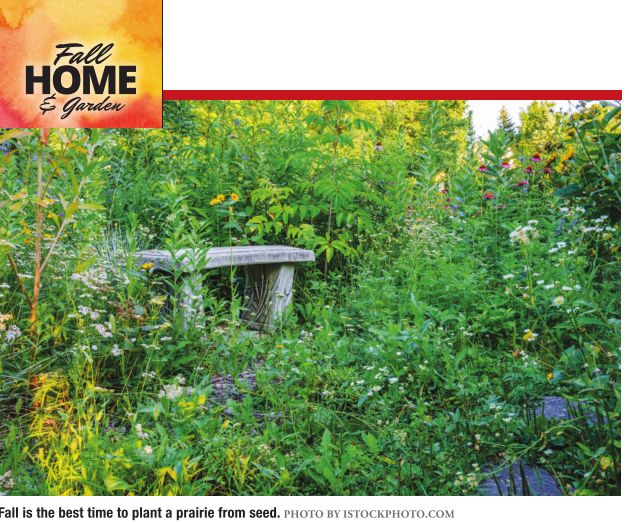
Driving across Illinois in
2017, it can be difficult to imagine what the landscape looked like when
Illinois was nicknamed the “Prairie State.” With the plight of
pollinators in the public mind, many are looking for ways to reestablish
prairies as a habitat for pollinators.
The
prairie is an ecosystem that can support a large diversity of plant,
insect, bird and other wildlife species. In general, for every prairie
plant species, there are 10 insect species that depend on it for
survival.
Establishing
a prairie, whether it be on 100 square feet or several acres of land,
requires good planning and patience. It can take several years for the
perennial flowers and grasses to germinate, develop long underground
roots, and finally become visible above ground.
Diversity
and site suitability are the two most important characteristics to
consider when selecting plant species to include in your prairie. Your
goal is to get a diversity of flowering plants to provide continuous
blooms throughout the growing season, and a variety of grasses and
sedges that create nesting sites and larval food supplies for
pollinators.
Your
source for native plants should be as local as possible in order to grow
the most well-adapted plants for your area. The Illinois Department of
Natural Resources (IDNR) and the U.S. Department of Agriculture’s
Natural Resource Conservation Service (USDA NRCS) provide a number of
useful resources for identifying prairie plants that are native to your
area, as well as tips and procedures for managing prairie habitats.
Seeding
is the most economical method for establishing a prairie, especially
for larger sites. Plant plugs and potted plants are substantially more
expensive to purchase and require more labor to install. However, in
small areas or for plant species that are difficult to propagate by
seed, plugs or potted plants can provide more rapid establishment.”
The
most effective time to plant a prairie from seed is in the fall; many
prairie species require a period of cold and moist weather before their
seeds will germinate. Site preparation prior to planting is critical in
order to achieve success.
During
the summer before planting, you will need to kill out the current
vegetation. Depending on the size of the site, a combination of tillage,
herbicide application and solarization are used to kill at least two
flushes of weeds.
After
the preparation of the seedbed, plant your seed mix by broadcasting and
rolling with a lawn roller in late fall (October-December). Avoid
planting too early, when temperatures are warm enough to allow some
seeds to germinate.
During
the first two growing seasons after planting, mow the site at 8-10
inches high to control seed production in annual weeds. In the third
year, you should begin to see many of your prairie species growing.
At
this stage, you will enter into a longterm management rotation. Some of
the management strategies that are applied include mowing, prescribed
burning and grazing. You should never apply management to the entire
plot in a single year; this allows the insects and other wildlife to
take refuge in the unmanaged portion of the plot and repopulate the area
after management.
For
more information about how to establish and maintain a prairie, contact
your local Extension office. Don’t have a lot of space but still want
to help the pollinators? Visit http://web.extension. illinois.edu/cfiv/pollinators/ to learn about small “Pollinator Pocket” gardens.


