An indescribable yumminess
I first encountered miso nearly four decades ago at a hole-in-the wall sushi restaurant in Chicago. It came in the form of a complimentary bowl of miso soup that preceded my sushi selections. I became instantly fond of miso but I never really understood what it was or what it could be used for besides soup, which probably accounts for 95 percent of its use in the United States.
My recent experience working in the kitchen of Chicago’s Kitsune, a Japaneseinfluenced gastro pub, gave me insight into how miso is made and what it can be used for. Miso, like everything at Kitsune, is made in house and we used it to flavor the ramen bowls. Since then I have marinated meat and fish in miso and have also used miso in salad dressings and vegetable dips.
Miso is a thick paste usually made from steamed soybeans (or sometimes other beans), grain (usually rice, barley or rye) and salt. Fermentation is initiated with a starter known as “kogi” which contains the mold Aspergillus oryzae. Kogi is what turns soybeans into soy sauce and rice into sake. Miso tastes savory and salty, and possesses an indescribable yumminess known as “umami.”
Miso is touted as a “superfood,” rich in minerals and possessing probiotic qualities. Miso’s bacteria promote gut health. A report in the Journal of the National Cancer Institute showed that eating three bowls of miso soup daily reduced
breast cancer risk by half. For maximum health benefit, avoid misos that
have been pasteurized. Overheating miso destroys its probiotic
qualities, so whenever possible, miso should be added after you’ve
turned off the heat. Therefore, if you are using anything that needs a
little cooking time, just do that before you add the miso paste.
Purchasing
miso can be a bit confusing and intimidating. It can be hard to
decipher the Japanese package labeling to find the type your recipe
calls for. Several varieties are available, but for the American home
cook there are basically two categories: light and dark. Light misos are
milder and less salty. They are fermented for a shorter time than the
darker misos. Light misos include “white miso” (shiro miso) and “yellow
miso” (shinshu miso). These light misos actually range in color from
light yellow to light brown. The dark varieties have been fermented
longer, are generally saltier, and have a stronger, more pungent flavor.
Dark misos can overpower milder ingredients and should be used
sparingly. If you are stocking only one kind of miso, chose one of the
light varieties for versatility. For recipes calling for light miso,
dark miso can be substituted, but less should be used.
Miso
can be found in the refrigerated section of Asian and “health food”
stores. If kept tightly sealed, miso should keep for a year or more in
your refrigerator. To keep it from spoiling, I recommend using a clean
spoon when you remove it from the container.
Miso Salad Dressing
This
is a nice dressing for salads accompanying Asian food. I like to add
cucumber slices, sliced scallions, grated carrots and grated daikon
radishes to a lettuce mixture.
Ingredients:
• 3 tablespoons neutral flavored vegetable oil
• 1 tablespoon unseasoned rice vinegar
• 1 tablespoon light miso
• 2 teaspoons grated peeled fresh ginger
• 1/2 teaspoon sesame oil
• 1/2 teaspoon honey or maple syrup
• 1 teaspoon soy sauce
Procedure: Combine the ingredients in a bowl and whisk until smooth, adding more vinegar or honey to taste.
Tahini Miso Dip
This dip can be enjoyed with cucumber sticks, pepper strips, celery and carrot sticks.
Ingredients:
• 1/4 cup water, more to taste
• 1 tablespoon light miso
• 1/3 cup tahini
• 1 clove garlic, finely chopped
• 1 teaspoon peeled and grated fresh ginger
• 1 teaspoon orange zest
• 1 teaspoon lemon juice
• 1 tablespoon finely chopped parsley
Procedure: In a medium bowl, whisk together all ingredients. For a thinner sauce, add more water.
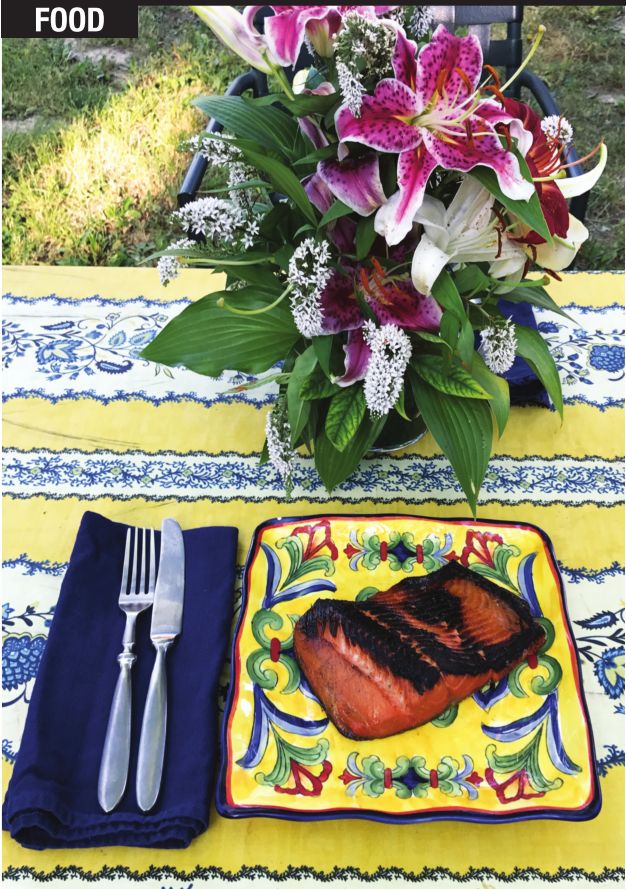
Miso Marinated Salmon
This is excellent with other types of fi rm fi sh, such as cod or halibut. Adjust roasting times to the thickness of the fi sh.
Ingredients:
• 2 pounds salmon
• 1 tablespoon diced fresh ginger
• ½ cup light miso
• 1 cup mirin (Japanese sweet rice wine)
• ½ cup sake
• ¼ cup unseasoned rice wine vinegar
• 2 tablespoons dark brown sugar
• ½ cup soy sauce
• 1-2 tablespoons olive or coconut oil
Procedure:
Place salmon in a resealable plastic bag. Combine all ingredients
except oil in an electric blender and blend until smooth. Pour over the
fish, squeeze out the excess air, seal the bag and refrigerate at least 4
hours and preferably overnight.
Preheat
the oven to 400 degrees. Remove salmon from the marinade. Let excess
drip off, but do not wipe off. Heat the oil over moderately high heat in
a nonstick skillet large enough to hold the salmon in one layer. When
the oil is hot but not smoking, add the salmon, skin side up, and sear
on the one side only until browned and caramelized, 3 to 4 minutes. Turn
the fish over onto a parchment-lined baking sheet, skin side down and
roast in the oven an additional 3 to 4 minutes or until just cooked
through.
Contact Peter Glatz at [email protected].