
Summer lunches for kids
FOOD | Julianne Glatz
Recently I was asked if I had any suggestions for kids’ lunches during the summer. It’s not the first time I’ve been asked that question and probably won’t be the last. But without information on things such as childrens’ specific ages and eating habits it’s a tough question to answer; even tougher to answer in general.
If there’s more than one kid, will they all eat the same thing? Do they eat lunch at home or do they take it to daycare or summer camp or other activities? Do they eat a variety of foods, especially fruits and vegetables? Are they used to mostly eating pre-prepared and fast food? Are they adventurous and willing – hopefully even excited – to try new things? The first time I got the question, I asked for help from my now-adult kids about their childhood summer lunch favorites. All three said, “You know, you really can’t use us as examples.”
They had a point. I’ll be the first to admit that my children’s diet wasn’t exactly conventional. I gave my kids scallions to gnaw on when they were teething. I ignored those who told me to avoid onions and garlic when I was breastfeeding because they would flavor the milk: I figured my kids might as well get used to the flavors of garlic and onions sooner rather than later. Once they began eating solids, they primarily ate the same things as the adults in their lives, except for foods that were excessively spicy or otherwise inappropriate.
For most of my kids’ childhood, my grandparents still operated their produce farm. I worked part-to-full time in my husband’s dental office; if the kids weren’t eating summer lunches at home, they were eating at the farm. Whether in my kitchen or Nana’s, lunch wasn’t necessarily health food in the strictest sense, but it was certainly healthy: lots of vegetables and fruit, almost everything made fresh or leftover from previous dinners. They were free to munch on raw peas or green beans at the stand. (Still one of my favorite ways to eat both.) I wish I’d taken a picture of my oldest, Anne, as a toddler hanging out with her greatgrandfather while he wiped the dust from tomatoes to ready them for market: her bright red hair sticking out at all angles, saggy diaper and goofy grinning face smeared with tomato residue from the ones she’d been “helping” put in boxes. But the memory remains crystal-clear in my mind.
So that’s the perspective from which I come. But I do have a few broad suggestions.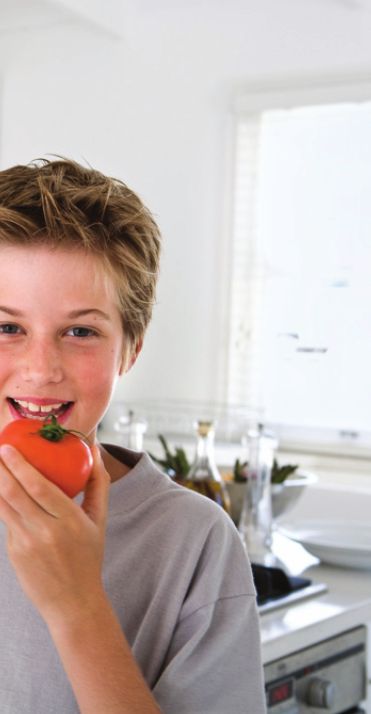
Soup
from leftovers. I’m a big fan of using leftovers for quick and tasty
soup lunches. (Leftovers can work in many other lunches besides soup, as
well as quick weeknight dinners and more, but for now I’ll stick to
soup.) Unintentional leftovers are fine, but with forethought and little
extra work leftovers can be on hand when you need them. Extra mashed
potato? Whisk milk into mashed potatoes to an appropriate consistency,
heat gently for a few minutes, and voilà! Potato soup for lunch. Any kid
who likes mashed potatoes should enjoy it. Leftover broccoli? Mash or
purée half, chop the rest, then add milk as described above for broccoli
soup. Stir in grated cheese and you have potato-cheese or
broccoli-cheese soup. (The cheese must be grated by hand; pre-shredded
cheeses are coated with cellulose that keeps the shreds separate. It’s
harmless but doesn’t let the cheese melt into the liquid.) It also works
to use dehydrated cheese powder (the stuff that’s used on cheese
popcorn, etc.) Look for types that contain little or no additives.
They’re available online and in the cheese packets of Annie’s macaroni
and cheese or similar brands. How about taco soup? Combine a 15-ounce
can undrained pinto or black beans and a small undrained can of salsa
(or leftover salsa), tomatoes or chopped fresh tomatoes. Add seasoned
taco meat, chicken or chopped, grilled meats plus vegetables, peppers,
onions and perhaps the kernels from an ear or two of grilled corn. If
not using taco-seasoned items add taco seasoning or chili powder to
taste. Simmer for a few minutes. Serve taco chips alongside and add
shredded cheese or lettuce if desired.
Involve
your children in growing, buying and preparing their own food as much
as possible. It’s not always easy or convenient, but the advantages and
lessons are substantial – even priceless. If kids grow it, they’ll most
likely eat it. Even if it’s only a single tomato plant it’ll bring them
closer to knowledge of where food comes from. Children who participate
in growing vegetables generally have a healthier diet because they’re
willing and excited to eat what they’ve grown themselves. Take children
to our local farmers’ markets. Groceries try to make products attractive
but they can’t begin to compete with the colorful, friendly hustle and
bustle of the farmers’ market. Most vendors are happy to let kids
inspect their wares and will talk to them if they’re not too busy. Take
children regularly and they’ll begin to understand seasonality: that the
best, fragrant strawberries are only available in June, peaches begin
in July and pumpkins come in late summer. Have your children only
experienced insipid, cardboard grocery-store tomatoes? Purchase a
selection of tomatoes from the rainbow of colors, shapes and sizes at
the market and have a taste contest. Best of all, let your kids pick out
some items to bring home to prepare themselves. Kids are increasingly
interested in cooking. It’s wonderful: Preparing food for themselves and
others gives kids a deep sense of satisfaction and independence, and
gives them a connection to what they’re putting in their bodies and
where it comes from. That connection is too often lost these days.
There
can be a downside for parents: the mess. When kids begin cooking it’s
inevitably messy, even with adult supervision. Without adult supervision
– well, I still remember with horror the concoction my then-8-year-old
daughter Anne created when I was outside gardening. The primary
ingredient was an entire jar of honey that ended up on the floor. I’d
always told my kids, “I don’t care how much mess you make as long as you
clean it up.” Unfortunately, it wasn’t that simple. Anne did clean it
up herself, but the honey had flowed into the floor’s crevices, and it
took well over a week’s worth of multiple daily swabbing before our
shoes stopped sticking. (My apologies to Anne for making her this week’s
recipient of the Mom Embarrassing Her Children award!) Still, it’s
worth it. If children have to clean up their own messes, they hopefully
will eventually become less messy; if they keep cooking, they’ll learn
the importance of organization. Both are valuable lessons, not just in
cooking but in life as well.
Contact Julianne Glatz at [email protected].


