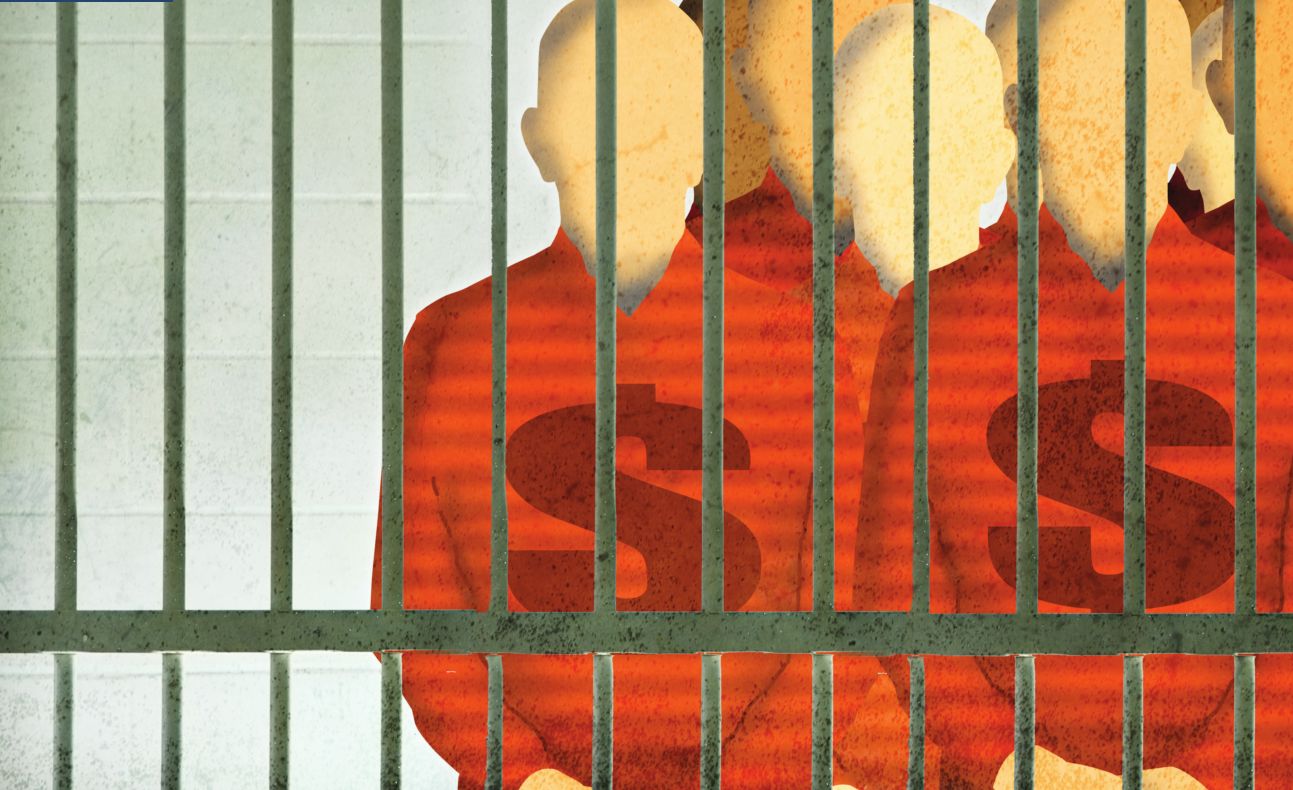
Smart on crime
Put fewer in prison to save money. Get more in rehab to save lives.
PRISONS | Patrick Yeagle
Each year, Illinois spends about $1.3 billion to lock up more than 48,000 prisoners. Nearly half of those who are released return to prison within three years. Parolees in Illinois face significant barriers to getting jobs, finding housing and even obtaining health care, which vastly increases their likelihood of committing new crimes. By all accounts, Illinois’ correctional system does a poor job of correcting anything, and it has been that way for decades.
The good news is that Illinois lawmakers are considering changes to the system which are intended to reduce the number of people who go to prison and the number of people who return there. Experts say that by being smart on crime instead of merely tough, Illinois can improve public safety, foster equality and create a system that actually reforms criminals instead of warehousing them.
That reform could include reducing prison sentences for minor crimes, sending certain criminals to treatment instead of prison and changing the parole system so parolees aren’t sent back to prison for minor violations.
Samantha Gaddy, public safety policy adviser to Gov. Bruce Rauner, says Rauner visited Logan Correctional Center in Lincoln, about 30 minutes north of Springfield, earlier this year.
“The governor was appalled by what he saw at Logan,” Gaddy said during a May 20 panel discussion in Springfield on criminal justice reform. “He wanted reform – quickly.”
The John Howard Association, a prison reform advocacy group, released a report on Logan Correctional Center in December 2014, calling the prison “overcrowded, underresourced, and ill-conceived.” In 2013, former Gov. Pat Quinn attempted to save money by consolidating most of the state’s female prison population into the male medium-security prison at Lincoln, but the move instead created a host of other problems, including extreme overcrowding, failure to meet the needs of female prisoners, lawsuits over mental health treatment and even a spate of suicides at the prison.
In February, the newly inaugurated Rauner issued an executive order creating the Illinois State Commission on Criminal Justice and Sentencing Reform, a bipartisan panel of lawmakers and experts tasked with reducing Illinois’ prison population 25 percent by 2025 without negatively affecting public safety. While this isn’t the first time a high-level state commission has studied potential criminal justice reforms, observers note that there is unprecedented agreement between conservatives and liberals in the Illinois Statehouse on the need for reform. Additionally, Illinois’ perennial budget crisis has both Republicans and Democrats looking to the prison system for cost savings. It appears the time is ripe for change.
The problem During the 1980s and 1990s, Congress and state legislatures across the U.S. passed “tough on crime” laws meant to act as a deterrent against crime. Such laws included increased penalties for even minor crimes, mandatory minimum prison sentences and “three strikes” laws that imprisoned people for life after three convictions, sometimes for minor crimes.
As a result, the prison population in the U.S. now dwarfs that of any other nation. While the U.S. has about 5 percent of the world’s population, nearly 25 percent of all prisoners in the world are incarcerated here. More than 2.2 million people are behind bars in the U.S.
Illinois is a microcosm of this national problem. The state has 29 adult prisons, which were originally built to hold about 32,000 people but currently hold nearly 48,000. The prison population in Illinois has increased 350 percent since the 1980s, and the Illinois Department of Corrections expects that number to continue climbing. In 2014, Illinois spent $22,655 on average per prisoner, and incarceration consumes almost 4 percent of the state budget. [See “Illinois prisons: Standing room only,” March 4, 2010, at illinoistimes.com.]
There are so many prisoners and ex-prisoners in Illinois that the state
has trouble finding places for them to live when released. Most inmates
in Illinois must serve a parole period known as “mandatory supervised
release” after their prison sentence, which requires that the parolee
have a place to live. If the person can’t arrange their own
accommodations or stay with family, the inmate ends up serving out his
or her parole in prison.
Experts
warn that overcrowded prisons are unsafe for both prisoners and guards,
and the U.S. Supreme Court even ruled that California’s prison
overcrowding was unconstitutional, sending a warning to other states
with the same problem.
David
Camic, a veteran defense attorney and senior fellow at the
right-leaning research group Illinois Policy Institute, says one of the
main problems in Illinois is mandatory minimum sentences, in which a
judge must impose a prison sentence for a given offense, regardless of
the facts of a case.

“There are traffic offenses where you must go to jail,” Camic said. “It’s absurd.”
Camic
has represented clients who faced prison sentences for crimes as minor
as stealing an iPhone. Judges often tell Camic that they would like to
impose a lesser sentence based on the facts of a case, but the law won’t
allow them to.
“There
are certain people who everybody agrees ought to go to prison – for
example, if you commit murder or hurt somebody intentionally,” Camic
said. “But when you allow your knees to jerk, and let that reaction
control what you do, you miss a more reasoned, effective solution. There
has to be some realization that we can go too far.”
Todd
Belcore is the community justice lead attorney for the Sargent Shriver
National Center on Poverty Law, based in Chicago. Belcore acknowledges
there is some deterrent value in prison sentences, but he says 40 years
of mandatory minimum sentencing have revealed the limit of deterrence.
“A
grandma carrying a gun for safety in a dangerous neighborhood is
treated the same as a gangbanger in court,” he said. “Mandatory minimums
create victims of the law rather than protecting people. Opposing it
doesn’t mean you don’t want people punished, but that you want the judge
to have access to information and craft a sentence fitting the crime.”
Belcore
says another issue contributing to Illinois’ large prison population is
parolees being sent back to prison for technical parole violations that don’t constitute actual crimes.
According
to data from the Illinois Criminal Justice Information Authority,
between 1990 and 2013, Illinois sent 137,514 people back to prison for
technical parole violations. In the early 90s, the number of people sent
back to prison on technical violations each year never broke 3,000, but
in 2001 and in every year since, that number has hovered between 7,000
and 11,000 people each year. Parolees can be deemed in violation for
something as simple as being late to report to a parole officer or being
around someone else with a criminal conviction.
“In
certain communities, just going to church or the grocery store means
you’ll inevitably have contact with someone else who has a conviction,”
Belcore said. “We need to allow more grace in the process.”
Because
Illinois is so quick to hand out prison time for even minor offenses,
Belcore sees the state’s massive corrections spending as “a blank check
for an ineffective system.”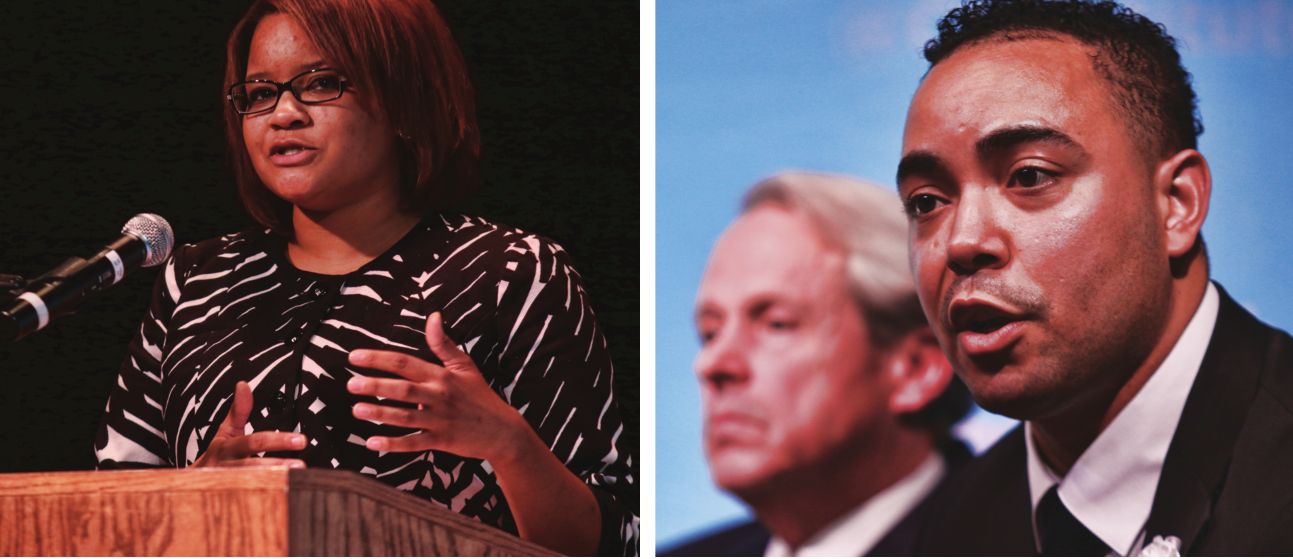
“It’s
not just ineffective,” he adds. “It devastates individuals. It cripples
families. It strips people of the opportunity to access the American
dream.”
Belcore is
also troubled by the disproportionate percentage of people of color
behind bars in Illinois, especially for drug-related offenses. Despite
being 15 percent of the Illinois population, African-Americans make up
57 percent of the state’s prison population. Although research from the
Centers for Disease Control shows that white people and black people use
drugs at similar rates, data from the U.S. Bureau of Justice Statistics
show black people are more likely to be convicted for drug offenses and
be sentenced to prison. In Illinois, the arrest rate between 2001 and
2010 for marijuana possession grew 14 percent for whites but 51 percent
for African-Americans. Statewide traffic stop data also show that black
people are more likely to be pulled over while driving and searched for
drugs.
Belcore says
when Cook County Board president Toni Preckwinkle hosted a delegation of
emissaries from Africa, she took them on a tour of the Cook County
jail. According to Belcore, the emissaries said “We’ve seen the jail for
black people; now where is the jail for others?” Former Illinois
appellate justice Gino DiVito says Illinois must deal with the effects
of addiction and mental illness as part of the reform push. DiVito, a
noted author and expert on criminal justice in Illinois, says addiction
and mental illness are the root causes of a significant amount of crime.
Drug courts aimed at helping addicts have been established in many
courts across Illinois, and mental health courts are also beginning to
spring up, but both are greatly underfunded and limited in scope. [See
“No room at the inn: Alonso Travis died waiting for help,” Jan. 24,
2013, and “Treatment instead of jail: Courts try new approach to mental
illness,” April 23, 2015, at illinoistimes.com.] “What can I as a judge
do with this person who may be selling small quantities of drugs but is
also an addict?” DiVito said. “You know darn well if you release them on
their own recognizance, they’re going to be repeating the same
offenses. Right now, judges don’t have options. We have to address the
root cause.”
The
solutions Illinois has toyed with criminal justice reforms in the past,
and the ideas that were implemented seem to have made a difference. In
2009, Illinois created Adult Redeploy, a program aimed at diverting
certain offenders away from prison toward rehabilitation and treatment
services in their own communities. As of February 2015, the program had
saved the state $50 million by sending more than 2,000 nonviolent
offenders to treatment instead of prison.
The
Sentencing Policy and Advisory Council (SPAC) was created in 2009 to
study the effects of criminal justice policy in Illinois and recommend
changes. SPAC’s past analysis has revealed several trends in Illinois’
criminal justice system. One example is the increase in the catch-all
“unlawful use of a weapon” charge, which contributed to the state’s
increasing prison population but produced only “minimal effects” on
public safety. The UUW charge was created in 2000 to deal with
gang-related crimes, and the penalty for a UUW conviction was increased
repeatedly in the years that followed. SPAC’s research shows that while
recidivism rates for UUW offenders fell slightly between 2001 and 2008,
so did recidivism among other offenders, indicating that the increased
penalties for unlawful use of a weapon had little deterrent effect.
The
legislature has done little with SPAC’s findings so far, but the group
is now providing Rauner’s reform commission with data, expertise and a
slew of recommendations for decreasing the state’s prison population
without endangering the public.
Rauner’s
criminal justice reform commission has met three times since late March
and established subcommittees to discuss possible cost savings, how to
implement changes and other topics. The commission most recently met in
Springfield on June 3 to examine how to develop and fund stronger
rehabilitation services. The commission will send Rauner an interim
report on July 1 and issue a final report in December. That means
reforms which result from the commission’s work may start appearing in
bill form at the Statehouse during the 2016 spring legislative session,
although there’s nothing preventing lawmakers from voting on reforms
earlier than that.
Among
the reforms under consideration are reducing or eliminating mandatory
minimum sentences in criminal cases, expanding programs that divert
offenders to treatment instead of prison and reducing the number of
parolees sent back to prison for technical parole violations. The
commission may also consider reclassifying certain crimes to carry
shorter potential sentences, repealing laws that ban felons from holding
certain jobs or living in certain places, and releasing geriatric
prisoners who pose no public safety risk and whose health care needs
create an outsize financial burden.
Todd
Belcore, the attorney with the Shriver Center, says that felons in
Illinois are banned from holding a barber’s license – an example of the
numerous restrictions in Illinois that prevent people with criminal
convictions from reintegrating into society.
“It
destroys the heart and soul of people who are trying to stay on the
right track,” Belcore said. “These are people who have paid their debt
to society.”
The rub
Despite the promising outlook for criminal justice reform in Illinois,
there are some potential complications which could derail progress.
The
contentious budget showdown between the Republican governor and the
Democratcontrolled legislature has seen both sides seemingly relishing
the battle and spending political capital that may be needed in future
clashes. Rauner has already alienated some prounion Republicans, who
have in turn alienated the unions they support – the same unions which
may fight reform if it means prison closures and the loss of union jobs.
That’s to say nothing of the union anger Rauner himself has courted by
pushing for “right-to-work” zones and other anti-union measures.
Still,
the bipartisan nature of Rauner’s reform commission and the strong
appetite in the Statehouse for systemic changes may be enough to carry
the reforms. Members of the panel include Sen. Kwame Raoul, D-Chicago,
an attorney and leading civil liberties voice in the Illinois General
Assembly, Rep. Scott Drury, D-Highwood, a former Assistant U.S.
Attorney, and Rep. John Cabello, R-Machesney Park, a detective with the
Rockford Police Department and sponsor of a bill to reinstate Illinois’
death penalty.
Reform
advocates will likely have to convince state’s attorneys and certain
lawmakers with law-enforcement backgrounds who may see the changes as
destroying the deterrent effect of prison.
Former
representative Jim Sacia, a Republican from Pecatonica in northern
Illinois, spent 28 years as an FBI agent before being elected to the
Illinois House in 2003. Sacia calls himself a strong advocate for the
death penalty and was considered in the Statehouse to be one of the
toughest of the tough on criminal justice matters.
“The heinous things I saw gave me perspective on the criminal justice system,” Sacia said.
But even Sacia acknowledges that Illinois spends too much money locking too many people up for too long.
“Could we handle people in prison better?
No doubt,” he said. “I believe we overly encumber our correctional institutions, but that’s not to imply that I’m soft on crime.
Quite the contrary.”
Sacia’s
stance may be the key to passing reforms in Illinois, because it
redefines “tough on crime” to mean “smart on crime.” Todd Belcore
summarizes it this way: “Soft on crime means making easy decisions that
make us feel safe but don’t actually stop crime,” while being “smart on
crime” means changing the criminal justice system to “not just
incapacitate but rehabilitate.”
There
are other signs of progress. Last month, both chambers of the General
Assembly approved a bill to decriminalize possession of small amounts of
marijuana. Instead of being a criminal misdemeanor, it would be a petty
offense similar to a traffic ticket. That measure alone, if it earns
final approval from Rauner, could prevent a significant number of
offenders from entering the criminal justice system. However, the narrow
passage of the bill revealed that several Republicans and even some
Democrats in the legislature still have reservations about easing
criminal penalties, especially concerning drug use.
Even
if reforms sail through the legislature, some changes – such as beefing
up rehabilitation services – will depend on funding. Putting fewer
people in prison will mean the state spends less on incarceration, but
those savings won’t appear immediately. In light of Illinois’ perennial
budget crisis, that could mean parole and treatment programs remain
underfunded.
Despite the challenges facing reform, Samantha Gaddy, Rauner’s policy adviser on criminal justice, is hopeful.
“It
is very encouraging to see both sides come together on this issue and
discuss reform in terms of being ‘right on crime’ and ‘smart on crime,’ ”
she said, “instead of just being ‘tough on crime,’ which the data show
just isn’t effective in keeping us safe.”
Contact Patrick Yeagle at [email protected].


