
An end to 30 years of hell
Illinois Innocence Project frees a wrongly convicted man
JUSTICE | Patrick Yeagle
The morning of Feb. 11 started like any other for Christopher Abernathy: wake up at 6 a.m., make coffee in prison cell, then get ready to work on the prison grounds at Stateville Correctional Center in Joliet, where he has spent much of the past 29 years in maximum security lockup. Around 9 a.m., Abernathy received an unexpected call from his attorney that would change his life. He was to be released later that day after spending more than 60 percent of his life in prison for someone else’s crime.
Abernathy was freed last week with help from the Illinois Innocence Project at the University of Illinois Springfield, making him the group’s seventh client released from prison. His case is one of many nationwide in which DNA evidence belatedly ruled out a suspect who had already paid a heavy price.
The case
On the night of Oct. 3, 1984, 15-year-old Kristina Hickey of suburban Park Forest was supposed to walk straight home after singing in a choir concert at Rich East High School. She never made it home that night. Instead, her body was found in the bushes by a department store near the school. She had been brutally beaten, sexually assaulted and stabbed multiple times. Her throat had been slashed, and it was clear from the disturbed dirt around her body that she had fought for her life.
At the time of Hickey’s murder, Abernathy was 17 and had dropped out of high school as a sophomore because of a learning disability. He was working at a restaurant, learning how to be a cook. Abernathy had dated Hickey and had attended her funeral while drunk, where he jokingly told a news photographer that he had a rifle in his car and was going to fire a 21-gun salute in her honor. The police checked Abernathy’s car and found no firearm, but it was the first time his name became attached to the case.
More than a year after Hickey’s murder, the police hadn’t arrested a suspect and were facing significant public pressure to solve the case, says Lauren Kaeseberg, an Illinois Innocence Project attorney. In December 1985, police working on an unrelated case picked up Alan Dennis, who knew Abernathy and was wanted on burglary charges. In exchange for favorable treatment in his own case, Dennis pointed at Abernathy as Hickey’s killer, Kaeseberg says. Dennis told the police that he had asked Abernathy whether he killed Hickey, and that Abernathy said yes and began crying.
After Dennis told the
police about Abernathy’s supposed confession, Abernathy was brought in
for questioning. He repeatedly denied killing Hickey and cooperated with
the investigation, agreeing to let the police search his car and take
DNA samples. He even offered to take a polygraph test or truth serum.
Abernathy later testified that he repeatedly asked for an attorney and
was not given one, but the detective in his case claimed Abernathy never
asked for an attorney while being questioned.
When
Abernathy was picked up for questioning, the police found a card from
Hickey’s funeral in Abernathy’s wallet, right next to another card that
said, “I am so sorry for what I did. I still love you. Christopher
Abernathy.” To the police, it seemed like a confession of guilt over
Hickey’s murder, but Abernathy told the police he had recently had a
fight with his girlfriend, and the card was meant to accompany flowers
for her. The police actually confirmed Abernathy’s story with the
florist, but the detective on the case was later allowed to bring up the
card at Abernathy’s trial as evidence against him.
The
photographer at Hickey’s funeral bolstered the case against Abernathy
when she told the police that he had scratches on his nose and lip when
she encountered him. The police saw the scratches as sure signs that
Abernathy had
been involved in a struggle – the kind of struggle that occurs during an
attempted rape and murder. Again, that seemingly damning evidence had
an explanation: Abernathy told the police that he had been attacked by a
group of teens who threw eggs at him, and he ran into a tree while
trying to escape. The police investigated his story and confirmed that
Abernathy was taken to the hospital by paramedics after running into a
tree, but the photographer’s account of scratches on Abernathy’s face
were still allowed to be introduced as evidence at his trial.
“Chris has been through almost 30 years of hell paying for someone else’s evil.”
“I think Chris has the worst luck in the world,” Kaeseberg said.
After
two days of constant questioning at the police station – possibly
without an attorney – Abernathy signed a confession admitting to killing
Hickey. He was tried and convicted of murder, attempted aggravated
criminal sexual assault, aggravated criminal sexual assault and armed
robbery. For the murder, he was sentenced to spend life in prison with
no possibility of parole, plus two additional sentences of 30 years for
the armed robbery and the aggravated criminal sexual assault. If
Abernathy had been just one year older when the crime occurred,
prosecutors almost certainly would have sought the death penalty in his
case. It’s possible that Abernathy would have been executed for someone
else’s crime.
Seeking justice
Kaeseberg
first encountered Abernathy’s case even before she started working for
the Illinois Innocence Project. In 2009, Kaeseberg was working at a
small law firm in Chicago when a group of journalism students from
Northwestern University investigating the case brought it to her
attention. She says the case had stalled for several reasons, including a
lack of funding to do DNA testing, which she says can cost tens of
thousands of dollars. When she joined the Illinois Innocence Project at
UIS in May 2013, however, she made Abernathy’s case a priority for the organization.
Kaeseberg
says the first time she read Abernathy’s signed statement of guilt, she
recognized the hallmarks of a false confession. In the document,
Abernathy stated that he followed Kristina Hickey home and tried to have
sex with her, but she resisted. At that point, Abernathy supposedly
forgot that he had a knife in his hand and accidentally stabbed Hickey
several times.
“The
statement was just absurd,” Kaeseberg said. “It reeked of coercion.
Having had experience with a number of other innocence cases where a
false confession was in play, you recognize them. You can see how the
police crafted a statement that was just enough for him to feel like he
could sign it and still explain it later. It was just ridiculous.”
When
Kristina Hickey’s murder occurred in 1984, DNA examination was still a
new technology, Kaeseberg says. Even though there was plenty of
potential DNA evidence to examine related to Hickey’s murder, the case
was considered closed by the time forensic DNA became common in the
early 1990s. In 2001, the Illinois State Police tested human cells found
under Hickey’s fingernails, but the results were inconclusive.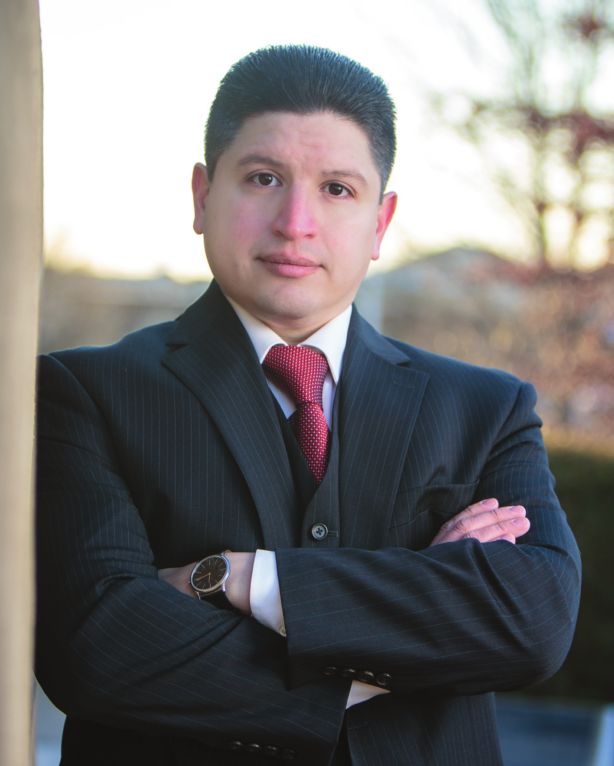
Abernathy’s
big break came in August 2014, when the Illinois Innocence Project got a
judge’s permission to test eight pieces of evidence for DNA. Included
in the samples were a swab from Kristina Hickey and her concert dress,
which had been torn down the front by the assailant and folded over to
expose part of her chest. The DNA profile obtained from the evidence was
not a match to Abernathy, proving that someone else had committed the
gruesome act.
For
several years prior to the DNA testing, private investigator Sergio
Serritella of Chicago had been in contact with Alan Dennis, the
acquaintance of Abernathy who implicated him in the crime 30 years
before. Dennis had recanted his story unofficially before, but in
November 2014, Serritella worked with Dennis to record a formal
recantation of the story Dennis told police in 1985.
“It’s
never easy to get a trial witness to admit to giving false testimony,
but I said a prayer, trusted my instincts and dove into the interview,”
Serritella said. “We talked about everything from how he came to the
attention of investigators more than 30 years ago to the Golden Rule. …
I’m grateful that he stood up and did the right thing.”
Serritella
first started working on Abernathy’s case eight years ago while working
for Northwestern University with the investigative journalism class
looking into the crime. Serritella later took the case on pro bono because he always knew Abernathy didn’t do it.
“Giving up was never an option for me,” he said.
 Serritella
says Abernathy’s confession to the police came after 40 hours of
interrogation of a learning-disabled teenager, and it lacked details of
the crime that the killer would have known. On top of that, Serritella
says his “gut instinct” told him Abernathy was innocent.
Serritella
says Abernathy’s confession to the police came after 40 hours of
interrogation of a learning-disabled teenager, and it lacked details of
the crime that the killer would have known. On top of that, Serritella
says his “gut instinct” told him Abernathy was innocent.
“I’ve never doubted that he was wrongfully convicted,” Serritella said.
A free man
Abernathy,
now 48, spent more than 29 years in prison, but the court hearing to
free him on Feb. 11 took less than one minute at a courthouse near
Chicago. In light of Dennis’ recantation and the DNA evidence ruling out
Abernathy, his signed confession was deemed false, and Cook County
State’s Attorney Anita Alvarez agreed to drop the charges against
Abernathy. Cook County Circuit Judge Frank Zelezinski signed an order
confirming Abernathy’s innocence and ordering his release from prison,
and Alvarez’s office immediately sent an agent to Stateville
Correctional Center in Joliet with a certified copy of the order to
verify Abernathy’s release order.
Abernathy
found out about the hearing around 9 a.m., only about an hour before it
happened, when Kaeseberg called the prison on her way to court.
Abernathy walked out of the prison lobby at 1:48 p.m on Feb. 11. After
more than 29 years in custody, Abernathy was freed in less than four
hours.
Ann Kolus,
Abernathy’s mother, always knew it would end this way. On the day her
son was convicted, she confronted the prosecutor in his case, telling
him he helped convict the wrong man. She recalls the prosecutor replying
that her son would die in prison. She hit him so hard that she knocked
his glasses off.
“Nobody’s
going to tell me my kid’s going to die in prison for something someone
else has done,” she said defiantly after the hearing at the Cook County
Courthouse in suburban Markham.
Throughout
the ordeal, Kolus counted the days of her son’s incarceration: 10,666
days from his arrest on Nov. 30, 1985, until his release from prison on
Feb. 11. She visited him in prison 966 times, and on that final visit,
she walked him out of Stateville Correctional Center a free man.
“This
day is more than 10,000 days overdue,” Kolus said in a public
statement. “I always knew in my heart that Chris was innocent, and I’m
so thankful that my prayers have been answered and he is finally coming
home.”
Abernathy
walked out of the small prison lobby at Stateville in the subzero wind,
wearing only a few thin shirts and accompanied by his mother, his
brother, other family members and his legal team, which included members
of the Illinois Innocence Project. He grimaced in pain at a shoulder
injury sustained while
working in the prison, and although he cradled his disabled right arm
with his left, he still managed to smile and joke with the media swarm
surrounding him. He didn’t make a statement to the throng of cameras,
but he didn’t need to. His smile and his knowing glances to his
supporters said enough.
“Nobody’s going to tell me my kid’s going to die in prison for something someone else has done.”
–Ann Kolus, who visited her son in prison 966 times
Serritella, the private investigator, says Abernathy now faces a tough transition back to society.
“Chris has been through almost 30 years of hell paying for someone else’s evil,” he said.
Reopening the case
Abernathy’s
release raises the question of who actually killed Kristina Hickey.
Lauren Kaeseberg with the Illinois Innocence Project says there were
alternate suspects in the case, and the recently tested DNA evidence may
help identify the real killer or at least eliminate other suspects. In a
public statement, Cook County State’s Attorney Anita Alvarez
acknowledged the mistakes made in Abernathy’s case by her predecessors
and vowed to reopen the investigation into Hickey’s murder.
“It
is my hope that some measure of justice is being served today, but
there are no doubt many extremely sad and difficult aspects to this
case,” Alvarez said. “This is difficult for all parties involved,
including the victim’s family, but I cannot and will not let a wrongful
conviction stand.”
Serritella
says walking Abernathy out of prison was “electrifying,” but as he
drove Abernathy away from the prison, the mood became somber.
“One
of the first things we talked about in the car was how our prayers were
with the Hickey family, who suffered an unimaginable loss,” Serritella
said. “The actual offender can’t be brought to justice soon enough.”
Contact Patrick Yeagle at [email protected].


