Seeking clemency in Springfield
Illinois Innocence Project highlights botched trials for two accused
JUSTICE | Patrick Yeagle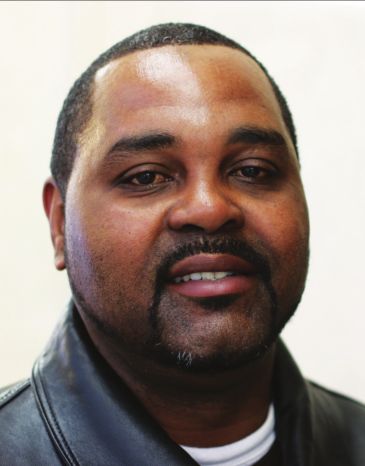
Anthony Murray spent 14 years in prison, and he was facing another 31 years when he was offered a chance to go home. The unusual plea agreement that let Murray out of prison has haunted him ever since.
“I still feel like I’m doing time,” Murray said.
Murray is one of two clients of the Illinois Innocence Project who appeared before the Illinois Prisoner Review Board in Springfield last week, asking for clemency in his case. His plea agreement, called an Alford plea, may end up keeping him from receiving clemency for a murder he says he didn’t commit.
The case began on June 21, 1998, in Centralia, when Seneca Jones was found dead in his car by police. He had been stabbed in the chest and was attempting to drive away when he crashed the car. A purported witness originally told police that she saw the stabbing after an argument over a dice game. Later, she told police the stabbing happened during an attempted robbery. Both versions of the story changed with each telling, sometimes implicating Anthony Murray and sometimes not. Murray was visiting from Chicago at the time, and he says he was not at the scene of the stabbing.
Murray and three other men were charged in the case, and Murray was convicted of first-degree murder and sentenced to 45 years in prison. It was later revealed, however, that a friend of Jones was on the jury in Murray’s trial, leading to his conviction being overturned. At his second trial, the prosecution didn’t call the witness whose story kept changing, but Murray’s defense attorney inexplicably did, leading the witness to implicate Murray in the murder.
On Oct. 30, 2012, Murray agreed to an Alford plea, a rarely-used, paradoxical deal in which a defendant pleads guilty while still maintaining innocence in return for getting out of incarceration. Murray insists he is completely innocent.
John Hanlon, legal director for the Illinois Innocence Project, told Illinois Times at the time of Murray’s release that the physical evidence in his case had been thrown together into shopping bags by the police, contaminating it beyond any usefulness.
Murray says his mother urged him to take the deal so he could get out of prison, but it has left him branded as a murderer with a 2012 conviction on his record. He has had trouble finding work because of that, and he asked the Prisoner Review Board on Jan. 13 to recommend clemency on his behalf to newly inaugurated Gov. Bruce Rauner.
The hearing didn’t appear to go well for Murray, however, with one member of the four-member panel aggressively grilling Murray about his Alford plea and equating it with a normal guilty plea.
“Your client accepted the plea, period,” said Adam Monreal, board chairman, addressing Hanlon during the hearing. “And he admitted…he accepted the plea. That’s the point. When he was before the judge, he accepted the plea and took the sentence, acknowledging his responsibility on the case. And now he’s before this board asking us to issue a recommendation to exonerate him. But it was his determination initially that he accepted responsibility for that act.”
Teshome Campbell The tone was notably different two days later, when the Illinois Innocence Project represented inmate Teshome Campbell in front of four different members of the Prisoner Review Board. Campbell was convicted of a 1997 murder in Champaign, and he is currently serving his 16 th year of a 55-year sentence at Danville Correctional Center.
Board member Donald Shelton, a former Champaign police officer, explained that during his tenure as a cop, he had briefly come across Campbell’s case and later came to know it well. Although Shelton said he won’t be voting on Campbell’s request for clemency, he augmented the testimony of Campbell’s witnesses several times with his own knowledge of the case.
Campbell’s case started in 1997, when James Shepherd was beaten to death after demanding his money back from some neighborhood men for selling him fake drugs. Campbell and several other men were charged in the murder, and Campbell was convicted in October 1998 and sentenced to 55 years in prison.
Erica Cook, a Springfield attorney who represented Campbell before the Prisoner Review Board, said Campbell’s trial was riddled with errors. She said Campbell’s public defender, who still practices law in Champaign, failed to introduce any evidence on Campbell’s behalf and failed to interview several witnesses or incorporate their statements to police into his defense. One such witness was Minnie Hunter, who lived at the scene of the beating. Hunter told police that Campbell was visiting with her at the time of the murder, and she reiterated that testimony to the Prisoner Review Board last week.
“I don’t understand how he even got involved (in the case),” Hunter said. “Of course there’s no evidence against him, because he didn’t touch the man. He was standing in my yard the whole time.”
Cook says the case is one of many similar ones that reveal a disparity in the justice system.
“I think it’s illustrative of society’s neglect of those accused of crimes who don’t have money,” she said. “If you can’t hire an investigator or an expert witness, you’re at the mercy of the court.”
The Illinois Innocence Project asked the board to recommend that Campbell be released from prison and completely exonerated. There is no deadline for the board to act, however, and its recommendations to the governor are not public.
Contact Patrick Yeagle at [email protected].


