Rooting out systemic racism
After a decade of quiet struggle, the Dominican Sisters have started a movement
RACISM | Patrick Yeagle
 The Dominican Sisters of Springfield have a long history. Their congregation was founded in Jacksonville in 1873 and moved to Springfield in 1893. However, some of the women who founded the congregation came from the much older Convent of St. Catherine in Kentucky. That group formed well before the Civil War. Slavery was legal in Kentucky at that time.
“As a congregation, it has taken us a long time to learn our own history,” says Sister Mary Jean Traeger, pastoral facilitator at St. Katharine Drexel Parish. “They lived in the South and they had slaves. The congregation had slaves. The sisters had slaves.”
Traeger says the founding sisters no longer had slaves by the time they came to Illinois after the Civil War, “but that doesn’t mean they left all of their experiences behind them.” As she shares that long-forgotten truth, her voice is penitent but direct. The shame of the past doesn’t hold power over the Dominican Sisters any longer. Instead, the congregation has used its history as a starting point to root out systemic racism within their congregation.
“We’ve always prided ourselves as being in many places where we’ve served people of color,” Traeger said. “Now, we look at that and still want to serve people of color and serve with people of color, but not in the kind of patronizing way that we did in those days because of our ignorance.”
The process of ending systemic racism is complex and sometimes uncomfortable, but it is necessary for equality and racial unification. Enlisting the help of several African-American residents of Springfield, the Dominicans are in their 10 th year of an effort to do that, and their work has inspired and guided other groups in Springfield.
What is systemic racism? In American culture, racism is typically thought of as any prejudice based on race. That popular definition is most often applied to obvious discrimination or hurtful words aimed at people of color. But racism is not a thing of the past which exists only in isolated pockets. There is a much more pervasive form of racism which is often overlooked and dismissed as “just the way things are.”
“The way we as a society have come to treat racism in a post-1960s, post-civil rights movement mentality is that because we’ve changed the laws, there is no more racism,” said Robette Dias, executive co-director of Crossroads Antiracism Organizing and Training, based in Matteson, Illinois.
Crossroads teaches that a more complete definition of racism combines prejudice based on race with the abuse of power in an institution. From the first tragic interactions of Christopher Columbus with the native peoples of the Caribbean to the modern prison system disproportionately filled with African- American people, the history of the United States is filled with systemic racism, which describes an institution set up to favor white people over people of color.
Wielding power allows people to create systems, processes and situations that reward some and deny or punish others. White people in the U.S. have historically held power over people of color, and our national institutions – housing, banking, justice, employment, regulation, education and even the national census – reflect a white worldview because those systems were designed by white people.
In that context, the notion of “reverse racism” and questions like “Why isn’t there a white history month?” are revealed as completely missing the point. A common retort to “Why isn’t there a white history month?” is “Every month is white history month.” The ugly truth is that people of color in the U.S. have historically only held power within institutions created by white people and only when allowed to by white people, so the notion of people of color being in a position to abuse power based on racial prejudice is fantasy. All people have some sort of prejudice, but not all people have the power to oppress others, so systemic racism really only flows one way.
Systemic racism also involves socialization: people of color must learn how to get by in a society not built for them, while white people benefit – often unknowingly – from white privilege. Examples of white privilege include being more readily trusted by authority figures, not having a person’s actions ascribed to the person’s entire race and not facing discrimination when trying to obtain housing, employment or loans.
This view of racism also explains why merely changing obviously discriminatory laws won’t fix the problem. It is deeper and more insidious than many people recognize, because it is built into society.
“We could get rid of all the overt bigots who really do harbor racial hatred,” Dias said, “and we would still have a problem.”
Growing up black in a white world Leroy Jordan of Springfield grew up in Murphysboro, about 130 miles south of Springfield, near Carbondale. He still remembers the day in 1954, following the landmark Supreme Court case Brown v. Board of Education, when his older siblings were allowed to attend the previously all-white local schools.
Jordan says growing up in a society that implicitly tells black children they’re worth less than white children causes black children to blame themselves or even internalize the problem by seeing themselves as inferior.
“If you’re black and living in the United States, it’s almost ingrained in terms of learning to live with racism,” he said. “It used to bug me because I’d see white kids walk around a store, pick up what they want, crawl on the floor, and run up and down the aisle. Boy, you do that as a black kid, and you’ve got big trouble. You go uptown, and you’d better be better than your best behavior. It was part of the whole socialization process.”
Jordan got his teaching degree from Southern Illinois University at Carbondale and began teaching in Hopkins Park, Illinois, a poverty-stricken and predominantly African- American town outside Kankakee.
“People used to call it the armpit of the United States,” he said. “There was only one factory in town, and it was a casket factory.”
He moved to Springfield to teach at Iles School in 1965, making him
the first male African-American teacher in Springfield Public Schools.
At that time, he says, Springfield schools were still segregated,
despite the Supreme Court’s decision. They would remain so until 1975,
when a lawsuit forced the district to begin desegregation.
“Brown v. Board of Education was
1954 and desegregation was 1975,” Jordan said. “You can kind of get a
sense of where Springfield was at the time. It took us awhile. It took
everybody awhile.”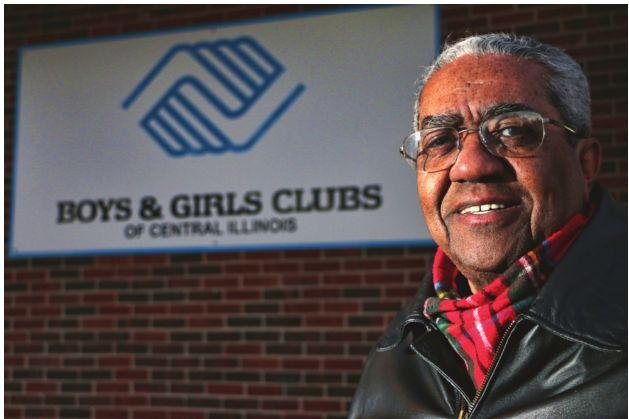
He
says that even though schools are now officially desegregated, it is
not the same as integration. Instead of implementing the decision in
good faith, Jordan says many districts obeyed only the letter of the
law, but not the spirit.
“That’s the way we do it in America,” Jordan said. “Forty years ago, and we’re still dealing with the same issues in education.”
In
the congregation Jordan is co-coordinator of the Springfield Dominican
Anti-Racism Team, called SDART for short. Although the team turned 10
years old in June 2014, for some of the sisters, the anti-racism effort
began about 20 years ago in 1994, when the City of Springfield and the
Springfield Housing Authority were building scattered-site housing for
residents of the former John Hay Homes.
For
many years prior to 1994, the John Hay Homes public housing had been
run down and mostly occupied by African-Americans. The city received
$2.5 million in federal grant money in 1985 to build houses around the
city for low-income families, but the project received intense criticism
from those who didn’t want public housing in their neighborhoods.
The
Dominican Sisters invited congregations of other denominations in
Springfield to join them in standing in favor of housing justice, and it
was around that time that Sr. Mary Jean Traeger says she began to see
the pervasiveness of systemic racism and the need to address it.
“We started to study about racism, and we kept saying ‘We need to go deeper. We need to go deeper,’ ” Traeger said.
Sister
Marcelline Koch, co-coordinator of SDART, says they learned about
Crossroads Antiracism Organizing and Training from another congregation
of Dominican Sisters in 2001. The Springfield congregation eventually
underwent Crossroads’ initial training with several of the
African-American allies they met during the scattered-site housing
controversy.
Robette
Dias at Crossroads says including people of color was essential because
the Dominican Sisters needed a nonwhite viewpoint to make the process
authentic. The congregation had only one person of color at the time,
Dias recalls.
“We knew
it wasn’t going to work otherwise, in terms of accountability and
keeping people honest,” Dias said. “You need the input of people who
have a connection to the real issues, to hear voices of people who live
with the impact of racism every day.”
Koch says accountability is one of the keys to dismantling racism.
“We
try to cultivate that and model that on the team,” she said.
“Everything we do tries to include a white person and a person of color
together, so that the power is shared power.”
Among
the Dominican Sisters’ goals for addressing systemic racism in their
organization are continual study, creating mechanisms for accountability
to people of color, making their language, worship time and ministries
more inclusive, and standing against injustice with nonviolence and
prayer. When it came time to do some construction work on their
facility, they even asked their building contractor to ensure that
people of color were part of the work crew.
Koch
says she has always been interested in social justice through her work
as an educator, and the reconciling influence of the Second Vatican
Council in the 1960s prompted her to examine the world around her and
follow the convictions of her faith. But it was in February 1994 that
she attended a conference and heard about systemic racism for the first
time.
“When I learned the history of all of this, it
just made my heart sad
because how people have been treated and still are treated is totally
against what God made us to be and what God calls us to be,” she said.
“I think Jesus came to really show us how God wants his love to be
operative in our world, and racism is the antithesis of that love. If I
embrace racism and racist practices, I can in no way square that with
who I am called to be.”
Since
SDART began, its passion for racial justice has spread to a handful of
other groups in Springfield, around the state, and even in another
country. The Dominican Sisters have established similar teams at the
three high schools they operate in Illinois – one of which is Sacred
Heart-Griffin High School in Springfield – as well as a hospital they
operate in Jackson, Mississippi, and a community of fellow Dominican
Sisters in Peru. Closer to home, several other efforts are developing as
offshoots of the Dominican Sisters’ work.
Dias says Crossroads wants to replicate elsewhere the ripple effect SDART has created in Springfield.
“It
all started with the sisters just trying to be faithful,” she said,
“but it was the beginning of a really powerful movement.”
In
the community Kenley Wade, a native of Springfield, is no stranger to
racism. Besides being African- American himself, he had a long career in
state government, part of which dealt with minority recruitment and
equality. While working at the former Illinois Department of Mental
Health and Developmental Disabilities in 1994, Wade oversaw an effort to
hire dozens of minority staff at state-run facilities. Before he
started, there were almost no people of color in charge of those
facilities. His team changed that by building a training program and
coordinating with branches of the NAACP in Springfield and Chicago to
find qualified applicants of color.
Wade says without a conscious effort to short-circuit racism in institutions, the problem will never go away.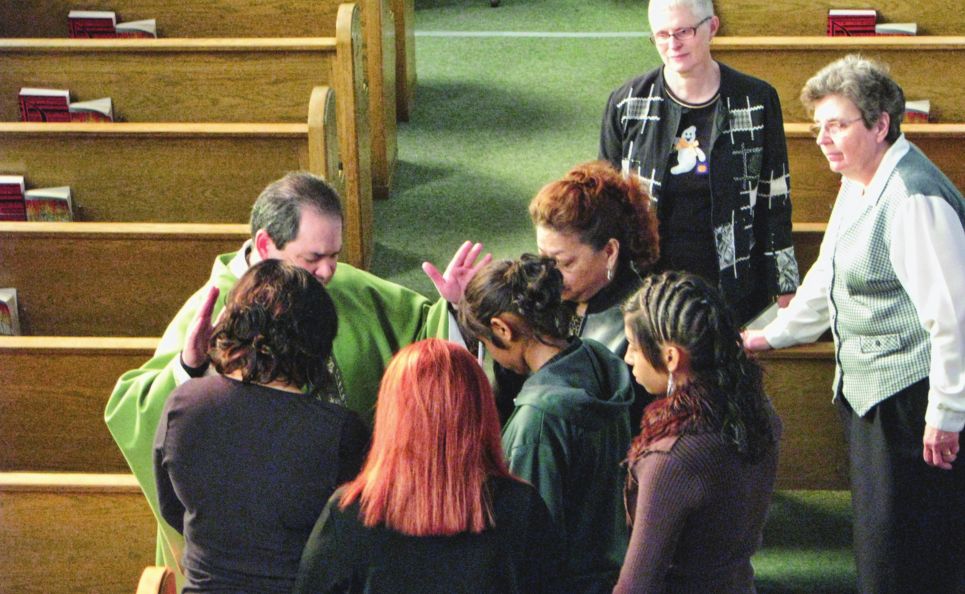
“People
of good will who run our institutions in America actually practice
institutional and systemic racism, because that’s the way the culture is
designed,” Wade said. “It doesn’t take a studious examination of
American history to realize this has been with us since the very
beginning of the country.”
Wade
is retired now, but he spends part of his time as co-chair of the
Springfield Coalition on Dismantling Racism. Called SCODR for short, the
coalition formed about three years ago through discussions on racism
with the Dominican Sisters, the Greater Springfield Chamber of Commerce
and other groups. SCODR’s focus is starting other groups in the kind of
process undertaken by the Dominican Sisters. They invite leaders from
organizations around Springfield to attend Crossroads training and
assist those organizations with developing the relationships and
accountability necessary for transformation. SCODR is responsible for
engaging the City of Springfield, Springfield Public Schools and a
handful of other groups in ongoing anti-racism work.
“Two
days after Mayor Houston was elected – we gave him a little time to
exhale – three of us were in his office,” Wade said with a laugh.
SCODR
is moving from what Wade calls an “ad hocracy” to a more formal
schedule of trainings and outreach. Wade says SCODR is also fundraising
through the Community Foundation for the Land of Lincoln to eventually
provide grants to other groups for training.
“We’re
very excited about the growth we’ve had, some of which has been managed
and some of which has been serendipitous,” Wade said. “It’s all been
very positive, and I think that’s somewhat unique to this city. Are we
there yet? No. Are we at a better place than we were four years ago? In
some small way, the answer is yes.”
In
the city Sandy Robinson, director of the Office of Community Relations
for the City of Springfield, remembers when he first became aware of
racism. Robinson grew up near Washington, D.C., in the Maryland suburb
of Silver Spring. He recalls being about seven years old when he was
bused to nearby Bethesda during school desegregation, and he remembers
the unwelcoming reception he and his fellow black students received.
“It
was a culture shock,” he said. “It was a virtually all-white
environment we were being bused into, and my earliest memories of it are
just turmoil. That’s when I first realized there was something going on
there, and that makes me different somehow.
“Once
that light goes on, it’s not a light that goes out,” he added. “At that
point, you have to see it and confront it on a daily basis. There is
any number of ways, shapes or forms that these issues confront you.
You’re constantly reminded of the color of your skin.”
In
2009, three employees of Springfield City Water, Light and Power hung a
noose in a workspace shared by an African-American employee at a CWLP
water treatment facility. Robinson says he was “less surprised” by the
incident than some of the city leadership at the time.
“I
thought that some of that might be more indicative of the long-term
issues we’ve had at the city than some people wanted to acknowledge,” he
said.
In Robinson’s
role at the Office of Community Relations, he oversees much of the
city’s efforts to purge systemic racism from its processes and culture.
Those efforts were born from the Dominican Sisters’ own work. Robinson
says Springfield Mayor Michael Houston attended the initial Crossroads
Antiracism training with the Dominican Sisters before he was elected,
and after Houston took office, he sent about 50 of his administrative
staff through the same training, including the chiefs of the police and
fire departments. That led to the long-term work of addressing systemic
racism in city institutions.
Robinson
says the process began with a working group that later became the
current volunteer-based diversity council which examines the city’s
policies, procedures and programs, looking for ways to make them more
open and diverse. He says the council has been divided into
subcommittees on contracting, recruitment, education, communication and
others. Meanwhile, a “focus group” at CWLP is examining the utility’s
culture and practices for possible changes. One concrete example of the
diversity council’s work is a city ordinance requiring increased
diversity among contractors who
do work for the city. Meanwhile, several officers with the Springfield
Police Department have been involved in productive community discussions
about race relations through groups like the Faith Coalition for the
Common Good.
“The idea
is to look internally, knowing that those efforts would have a ripple
effect on leadership in other institutions in the community,” Robinson
said. “You change the DNA of your agency over time by putting together
the pieces of the puzzle.”
He actually agrees with criticism that the city isn’t moving as quickly as it should to make changes.
“I’d
say that’s valid,” Robinson said. “We can’t move fast enough. That
doesn’t bother me as a criticism. We would like all of this stuff done
yesterday.”
In the
schools Education has long been a stubborn area from which to wipe the
stain of systemic racism. Standardized testing is one such example,
believed by many to disadvantage students of color even after accounting
for the influence of socioeconomic status. In Springfield Public
Schools, black students consistently score around 30 points lower than
white students on the Illinois Standards Achievement Test for students
in grades three through eight. The district also struggles to recruit
and retain teachers of color, despite being under a longstanding court
order to do so.
Jennifer
Gill, who started as superintendent of Springfield Public Schools in
January 2014, says the district has only “stuck our toes in the water”
of examining systemic racism, but 26 people from the district have
already undergone the initial Crossroads training with the Dominican
Sisters. Among them are members of Gill’s cabinet, members of the
teachers’ union and school board president Mike Zimmers. Gill says the
district is currently forming its anti-racism team, and the first focus
will be understanding how systemic racism manifests in education.
“We’re
very much at the beginning stages of our conversation,” Gill said.
“We’re very excited about it, and we know it’s a very important
conversation to keep alive.”
The guidance and support of the Dominican Sisters and SCODR, Gill says, have helped.
“We’ve
been very happy to know we aren’t the only people in town looking at
this,” she said. “When you have a system of support in the community,
everything you do is going to be stronger and more appropriate.”
Among
families Robert Blackwell of Springfield became aware of racism at an
early age. His family lived in the South during much of his childhood,
and his father would come home from work each night and talk about his
day.
“What I recall is
a daily dose of some injustice that he or one of his colleagues was
experiencing at the hands of someone white,” Blackwell said. “This is
the stuff I would go to bed with.”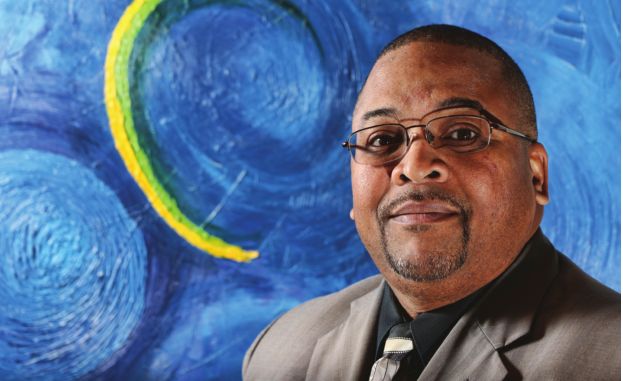
Blackwell says his father taught him “how to behave in front of white people.”
“As
far as people in general, it was always ‘Be respectful. Be courteous,’ ”
he said. “But around white people, there was an extra layer.”
Blackwell
was among the first African- American members of SDART when the
Dominicans began it in 2004. He had been director of the Springfield
Housing Authority in the early ’90s and saw the stance the Dominican
Sisters and others took in support of scattered-site housing. In the
years since SDART began, Blackwell has applied the same approach to his
work as liaison for the Office of Racial Equity Practice at the Illinois
Department of Children and Family Services. DCFS is in the process of
identifying changes to its procedures and culture statewide, which could
have far-reaching ramifications for families in crisis around the
state.
Blackwell says
when a child is taken from his or her family by DCFS, reunification is
the top priority. However, he says caseworkers unconsciously make
race-based judgments about families which can cause the workers to give
up on reuniting families.
“We
don’t run around promoting that DCFS is racist, but rather that there
are issues of inequities in our system that we are trying to address for
the benefit of the families we’re serving,” Blackwell said.
DCFS’
anti-racism team has created a racially informed intervention process
for caseworkers, he says, and training on the new model will begin soon.
Because DCFS often works with contractors and judges, the agency is
creating a training program for those groups as well. Eventually,
Blackwell wants to see the training expanded to police officers,
hospital workers, lawmakers and others who come in contact with the
child welfare system.
“If
we’re going in with biases that we’re not checking, that’s a recipe for
what we’ve got already,” Blackwell said. “We want to see fewer families
dismantled unnecessarily because we’re holding to some standard that is
unreasonable. The problem is trying to establish public policy that
protects and serves but also has some regard for cultural differences.”
Building trust for long-term change The work undertaken by the Dominican
Sisters
and other groups could have a profound effect on Springfield and the
state at large. Although the work is only beginning, the trust being
created between African- American leaders and this city’s institutions
is a welcome change that paves the way for meaningful reforms toward
equality.
Robette Dias at Crossroads applauds the progress made so far.
“Sometimes
when I read the news or watch YouTube or Congress, I can feel hopeless
or defeated,” she said. “But then I go to Springfield and see all the
work happening in Illinois, I really feel like I’ve helped the world
change a little bit today. Maybe I’ve helped save some lives and helped
save someone’s dignity. It’s really gratifying.”
Contact Patrick Yeagle at [email protected].


