 LETTERS
We welcome letters. Please include your full name, address and telephone number. We edit all letters. Send them to [email protected].
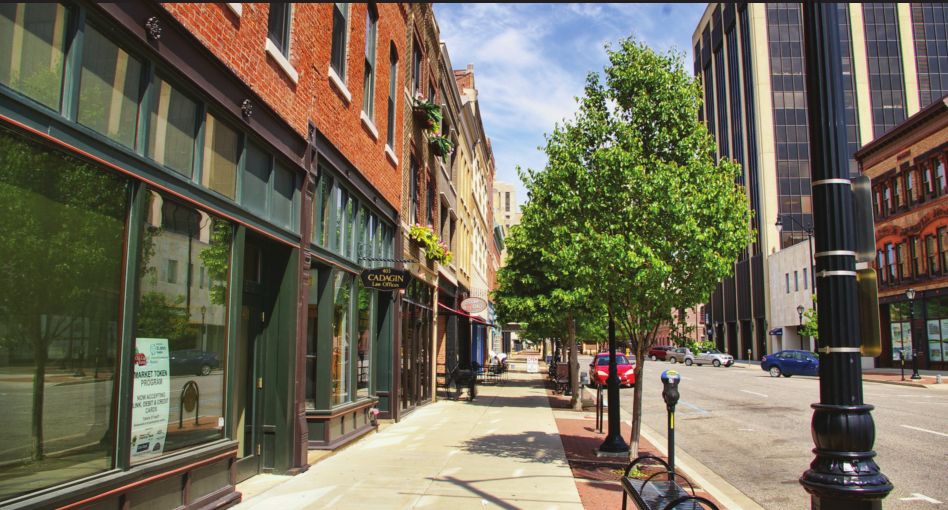
DESIGNING DOWNTOWN Springfield’s history and its future are intertwined. In that sense, urban planning has become a key issue for this city. We are finally taking a hard look at changing what we have done in the past, what other cities are implementing and how to use their experiences to our advantage.
Springfield’s downtown is our core, our standard. As it inspires and thrives, so goes the rest of the city. Just like getting on a scale, we can measure the effects of our planning behavior (or lack of). By openly accepting our mistakes, we can learn from them and put in place effective strategies to prevent the same mistakes from happening again. Springfield made the mistake of not restricting paved surface as it developed and this has cost the city severely. We have yet to put in place a means to measure and decrease this problem.
Throughout the country, cities are setting standards that promote permeable surface area, urban gardens, tree canopy protection and bikeability in their downtown. This directly connects with Springfield’s major issues of flooding, drought and poor citizen health. To temper flooding and heat islands, city planning that tracks and protects permeable/ green space and tree canopy percentages are being adopted in many cities. The tracking software, i-Tree, is nationally recognized and free. Through this satellite program we can track our city’s behavior in percentages of paved surface growth and tree canopy health.
Our personal health directly relates to easy access to fat burning transportation and fresh unprocessed foods which urban gardens and downtown bike lanes provide, therefore addressing Springfield’s health issues.
As George Santayana states, “Those who cannot remember the past are condemned to repeat it.” Anne Logue Springfield
DON’T BLAME WORKERS I had a strong reaction to Phil Bradley’s recent column (“The good old days of patronage,” Phil Bradley, Jan. 1) and here is my response.
Bradley described the old patronage system whereby employees were hired and fired by the political party in power. He thinks things were better then and he yearns to go back to the “good old days.” He blames the Rutan v. Republican Party of Illinois decision and “union rules” for the lack of accountability and efficiency in state government.
As a result of Rutan v.
Republican Party of Illinois, most state hiring is based on merit, not politics. That’s the way it was meant to be in both private and public sectors. This is America,
Phil. Get over it.
Why does Bradley think the state’s problems are caused by state workers and unions? There is little evidence to back that up. Let’s try to find real solutions to our problems. Marty Celnick Springfield
PENSION PROBLEMS Bashing public sector pensions is in vogue, but is the bashing in order?
We spend twice as much per capita for education as the next most expensive country, so are our teachers’ modest pensions causing our schools to close?
We spend twice as much per capita for health care as the next most expensive country, so is my $1,106.82/month, 30 th in the nation state pension that I may never draw denying medical services to millions of Illinois residents?
The various proposed “reforms” only increase the chances we’ll retire into poverty so if our pensions are indeed the problem, the solution is simple: die! Don’t retire, civil servants, just die! Some kids might have to wait a little longer to get our jobs, but the pensions will be funded as long as the kids can do a better job of keeping the prancing ponies from plundering our paltry pension funds for their pet projects than we did. After all, the pension language was included in the 1970 Constitution for a decades-old reason. Bob Zoch Springfield


