A story of bravery
Shot down, Springfield man evaded Nazis and joined Dutch Underground
GUESTWORK | Dr. Mark DePue
Kenneth “Tuck” Belton of Springfield didn’t give much thought to tulips while he was growing up in rural Tallula. They were just a sure sign that summer would soon arrive in central Illinois. But his perspective changed in the bitter winter of 1945. He was a downed B-17 pilot hiding out with the Dutch Underground, and now tulip bulbs were the thin thread between his survival and starvation.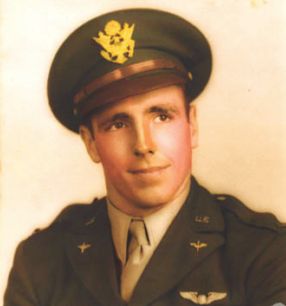
Tuck was no stranger to hard times. His father was a coal miner before being seriously injured on the job early in the Depression. From that time forward, life was tough for the Belton family; they lived a day-to-day existence, often depending on hunting to put meat on the table. Tuck joined the Army Air Forces in the summer of 1942 and married his sweetheart, Virginia Atterberry, while going through training.
By 1945 he was piloting a B-17 on bombing runs over Germany. On Jan. 20, while returning from his fifth mission, Lieutenant Belton’s aircraft was hit. He bailed out over northern Holland, the only crewmember to survive. He was immediately taken in by members of the Dutch Underground, who hid him away in a chicken shack for several weeks, with little more than tulip bulbs to eat.
For the next few months, Tuck lived life on the edge, sharing the precarious existence of his fellow Dutch Underground members, masquerading as William Shank, a deaf and mute bookbinder. Since he could not speak the language, he wore a placard on his shirt proclaiming that he was doofstom. It worked, most of the time. If caught, the Nazis would not look kindly on a downed pilot who worked with the Underground.
Belton and his comrades got around mostly on bicycles, traveling throughout the countryside and occasionally venturing into Amsterdam as well. One of
his closest calls occurred when he and another Underground member were
riding their bicycles toward a bridge and spotted guards posted on each
end. It called for very quick thinking.
“Let’s
hit the river,” barked Belton’s comrade. “So off we go,” Belton
recalled more than 65 years later. “We drove those bicycles off in the
river. Man – you talk about cold. There’s ice in that river. And the
river was fairly swift, thank God. And I remember grabbing a chunk of
ice and trying to hold my breath and get under in case they were firing
at us. …We went down that river half a mile.”
Harassing
the Nazis was a very dangerous game, and Tuck shared those risks as he
accompanied the Underground on several missions. Once, Tuck’s group
staged a daring rescue of an injured Underground member who was
recuperating in a local hospital. Armed with an English Sten gun, Tuck
found himself face to face with a German soldier and a Dutch quisling
while the others were inside the hospital rescuing their comrade. He
instinctively fired.
“And
when I did, all hell broke loose. The guys came pouring out of the
hospital. We got Steve, and I just took off. … There was a small group
of trees and I ran into there and stayed there for quite a while. … It
was January…and I thought, oh, man, what have I done?” Belton said. “I
was all by myself. And about that time this dog came along; this big old
shaggy dog. I guess he was probably as frightened as I was. I called
him and he came over to me. I petted him, you know, and I stuck him
underneath that overcoat, and he was one reason I kept alive that night.
He helped keep me warm.”
On
another occasion his group blew up an electrical substation providing
power to the Gestapo headquarters in Amsterdam. Two days later, Belton
observed German troops round up 10 men off the street at random.
“They
were trying to get back at the Underground for bombing their
substation,” said Belton. “They lined those 10 guys up against the wall,
and the firing squad shot them – just shot them.” His instincts and
training almost kicked in, but his companion that day “laid her hand
over on my arm with a pretty strong hold; you know, not to do anything,
which is very difficult not to have some kind of a reaction.”
In
April of 1945 Tuck snuck across a river into Allied territory. He still
recalls the moment his ship steamed into New York City harbor.
“Outside
of my wife, the Statue of Liberty was probably the greatest thing I’d
seen,” Belton remembered, struggling to regain his composure. “I still
get a little emotional.”
Tuck Belton has a unique perspective on Lady Liberty.
Mark
DePue is the director of oral history at the Abraham Lincoln
Presidential Library and Museum. You can listen to Tuck Belton’s entire
story and many others in the “Veterans Remember” section of the
program’s website, www.oralhistory.illinois.gov.


