Once-blighted properties now grow food
GARDEN | Patrick Yeagle
In eras past, gardens were ubiquitous in America. During both world wars, gardens were wielded like a weapon, with millions of “Victory Gardens” planted in both private and public spaces across the U.S., relieving pressure on food supplies needed for war. Eventually, the ease and convenience of modern life rendered gardens unnecessary for many Americans, and this form of hobby, art and science largely fell by the wayside.
Now, the Great Recession and a growing appetite for artisanal self-reliance are driving a resurgence in gardens. The National Garden Association estimates that the number of gardens in the U.S. grew by seven million from 2008 to 2009 – a 19 percent increase.
That growth isn’t just personal gardens.
Community gardens – defined broadly as gardens worked by some group of people – are growing in popularity, says the American Community Garden Association, and Springfield is no exception.
“It really speaks to how we get to a healthier community,” says Ward 3 Ald. Doris Turner. “We have kids who just know that when they go to the grocery store, there’s something in a can, but they have no idea about where it came from or its nutritional value. Community gardens have an educational as well as nutritional compo nent; it’s really a great thing.”
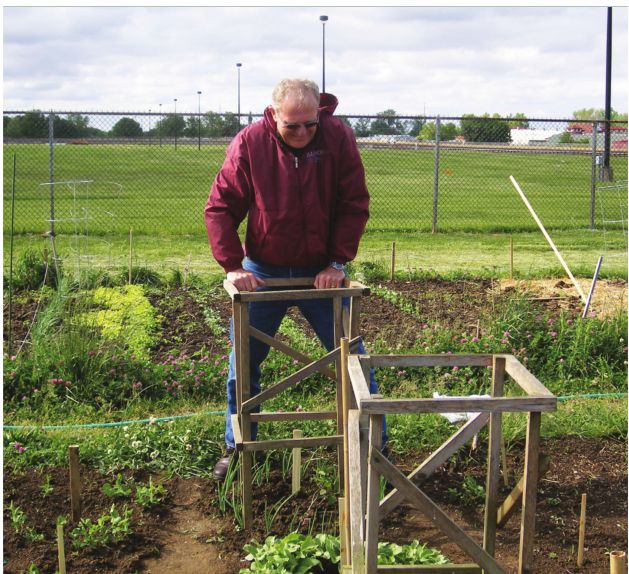
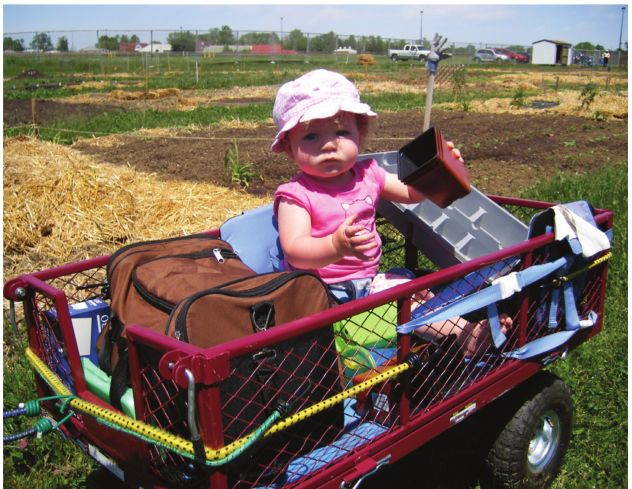
Turner’s ward is home to the Springfield Community Garden Family Fit Center, run by Vera Garrett of Springfield. The community garden is actually made up of three separate formerly blighted properties at 1515 and 1531 E. Miller St. and 718 N. 16th St.
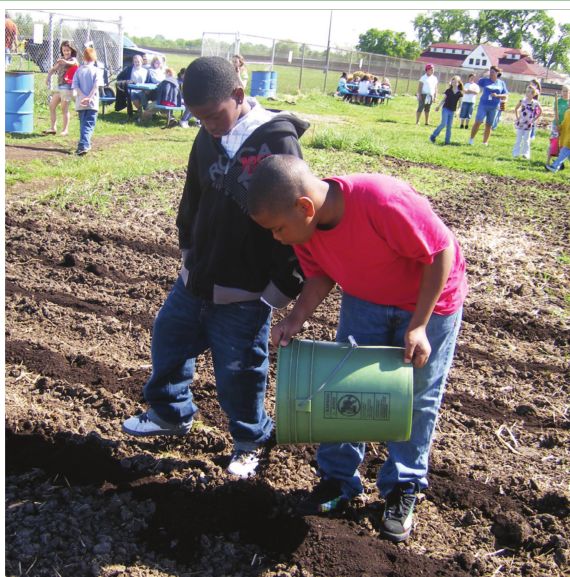
Garrett purchased the properties and set up the gardens with help from the U.S. Department of Agriculture, the City of Springfield and several friends and other organizations. This year marks the garden’s third season, and Garrett hopes to increase the number of available plots to 25 this year. She’s also planning a team cook-off challenge using produce from the garden, though she says she still needs a chef or two to help out.
Garrett says the gardens are a teaching and outreach tool for the whole community. They primarily provide fresh produce in an area of Springfield where grocery stores with fresh food are scarce. Additionally, the gardens teach participants how to garden and the value of a healthy lifestyle. Garret says one garden even has raised beds to allow people with disabilities to participate.
Garrett says several friends helped her work on the project, while the Springfield Park District donated benches and a picnic table. “I’m just grateful to the community of Springfield for making it possible,” Garrett says. “This is the peoples’ garden, and we’ve had so much support to make it happen.”
 Anyone
wishing to participate in the garden can attend a registration day
scheduled for 1-4 p.m. April 21 at 1531 E. Miller St. For more
information, call Garret at 217- 801-2050.
Anyone
wishing to participate in the garden can attend a registration day
scheduled for 1-4 p.m. April 21 at 1531 E. Miller St. For more
information, call Garret at 217- 801-2050.
Bill
Logan, executive assistant to Springfield mayor Mike Houston, says six
more formerly blighted lots in Springfield were recently purchased from
the city by a private citizen with the purpose of creating more
community gardens.
Though
the Illinois State Fairgrounds is probably best known for funnel cones,
carriage races and great shows at the historic Grandstand, the
fairgrounds also host a large community garden that has quickly become a
local favorite. Now in its fourth year, the garden has expanded to 172
plots, says Kent McFarland with the Illinois Department of Agriculture,
which oversees the program.
“Gardening
is one of the most popular hobbies in the world, but there’s a lot of
people who just don’t have space to do it,” McFarland says. “I live next
to the woods, and if I planted anything there, the deer would eat it.”
The
garden is divided into organic and non-organic plots, with tools,
seeds, water and compost provided on-site. The cost to rent a plot is
$10. All of the plots this season are spoken for, McFarland says, but
anyone interested can still submit an application and get on the
garden’s waitlist in case of cancellations. For more information, visit www.agr.state.il.us/garden.
McFarland says feedback from gardeners has been “extraordinarily positive.”
“There’s
a lot of camaraderie between gardeners,” he says. “You could be perfect
strangers but you feel like you’re old friends. One can help another
one with advice or physical labor.”
He
says groups like Boy Scouts and Girl Scouts sometimes volunteer at the
garden, and the program partners with Plant a Row for the Hungry, a
charity created by the national Garden Writers Association to provide
fresh produce for food pantries.
Judy
Taylor, a master gardener with the University of Illinois Extension
office in Springfield, says community gardens in Springfield provide
valuable support for the groups battling hunger. Several groups in
Springfield participate in the program, including Garrett’s community
gardens on the east side and some vendors at the Old Capitol Farmers
Market and the Illinois Products Farmers Market.
Plant
a Row started nationwide in 1995 and took root in Springfield in 2005,
Taylor says. Gardeners who participate donate extra produce to the
Central Illinois Foodbank in Springfield, with some gardeners even
dedicating entire garden rows for donation. The Foodbank then
distributes the produce to food pantries across 21 counties, including
Sangamon County.
“We
have a lot of fun during the summer, and we’re able to do something
helpful for the community and feed hungry people,” Taylor says. “It’s
very gratifying.”
Contact Patrick Yeagle at [email protected].