FOOD | Julianne Glatz
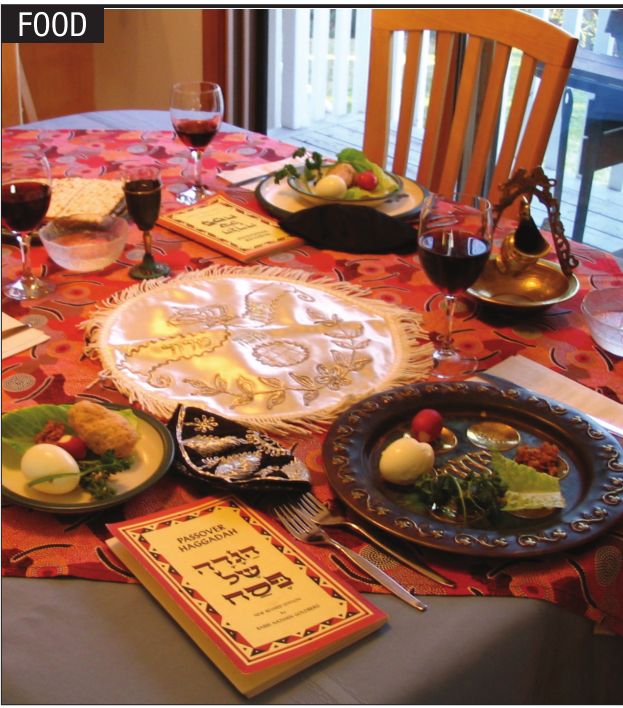
“Why is this night different from all other nights?” asks the youngest child at the elaborately set dinner table as dusk darkens the sky outside.
So begins the first night of the most widely observed and important events on the Jewish calendar, Passover. Passover lasts for seven days. As with Easter, the exact date varies with the vernal equinox, but always takes place in spring. This year, Passover begins on Friday, April 6.
While Passover is observed for seven days, the biggest celebration takes place on its first night. And its most important, most traditional component is the Seder meal. Even though they’re usually eaten at home, “The [Seder] meal actually becomes part of the service,” says Rabbi Barry Marks of Springfield’s Temple Israel.
There are ritual food items eaten to commemorate the haste with which the Israelites had to leave Egypt; among them bitter herbs dipped in salt water, unleavened bread (a.k.a. matzo) and a roasted egg. But the rest of the Seder meal is about food traditions that have been interpreted through and influenced by the cooks who settled in far-flung areas of the Jewish Diaspora.
The following recipes are Seder entrées from an outstanding home cook, Carol Kitterman, and Sangamo Club manager David Radwine. Both are descended from the Jewish European/Eastern European Ashkenazi.
Carol Kitterman’s beef brisket Kitterman’s beef brisket originated in an unlikely place: Fargo, N,D., where she and her husband, Jay, worked briefly after their marriage. “We had this brisket at a friend’s, and it was the best I’d ever tasted,” she says. “But I’m always tinkering with recipes, never” following them exactly, so it’s been modified. When Kitterman isn’t making brisket for Passover, she substitutes a can of beer for the water, even sometimes marinating the meat in it overnight.
• 5-6 lbs. first-cut beef brisket
• 1 medium to large onion per pound of meat, thinly sliced
• 1 pkg. dried prunes
• 1 can tomato soup (for Passover), or a large can of (Passover) tomato sauce, plus additional if necessary
• 2 pkgs. baby carrots
• 1 can tomato paste (for Passover)
• Kosher salt
• Freshly ground black pepper
• 4 cloves peeled and minced garlic
• Garlic powder
• Approximately 1 c. water
• 1 bottle chili sauce (for Passover)
• Paprika, optional Preheat
the oven to 325°. Mix the tomato soup, tomato paste and water until
they’re combined in a roasting pan at least large enough to hold the
brisket.
Place the meat in the pan
and rub the minced garlic into it, then sprinkle with the salt, pepper
and garlic powder. Spread the onions over the meat, cover the pan (use
aluminum foil if your roasting pan doesn’t have a cover), place in the
oven, and cook for 2 ½ hours, or until the brisket is almost completely
tender. Cool the brisket to at least room temperature. If possible,
refrigerate it until it’s completely cold: the colder it is, the easier
it will be to slice – and you can more easily remove the solidified fat
from the pan. This can be done a day ahead of time.
Slice
the brisket across the grain, return it to the pan, and spread the
chili sauce over it. Arrange the potatoes, carrots, apricots and prunes
around the meat, sprinkle the potatoes with paprika if desired, and
return to the oven. Bake for about an hour, or until the potatoes are
browned. Check periodically to make sure there’s enough liquid so that
nothing burns or sticks; add more water or tomato sauce if necessary. If
the brisket is completely tender and the potatoes haven’t yet browned,
remove the meat and keep it warm.
Bialystok Tsimmes with sweet potatoes, carrots, prunes, and apricots and a Halkie (potato kugel) topping.
Radwine’s tsimmes is another classic Jewish dish – one he’s adapted from Joan Nathan’s Jewish Cooking in America.” Tsimmes is a Yiddish word meaning fuss and comes from the German “zum essen,” to eat. Because it takes time to make tsimmes, the word came to mean making a big deal over something. While some ingredients are common to both Radwine’s tsimmes’ ingredients and Kitterman’s brisket, there are distinct differences, not least because of the tsimmes’ topping that’s a delicious marriage of two Jewish culinary classics.
• 3 lbs. short ribs (flanken), or chuck roast, cut into approximately two-inch pieces
• Kosher salt and freshly ground pepper to taste
• 3 medium onions, sliced
• 2 T. chicken fat (schmaltz) or vegetable oil
• 6 c. beef stock, beef bouillon, or water, or more if needed
• 3 large sweet potatoes, peeled
• 5 large carrots, peeled
• 3 large white potatoes, peeled
• ¾ lb. dried prunes, pitted
• ¾ pound dried apricots
• ¼ c. brown sugar
• ¼ c. apricot jam (optional)
• Dash of nutmeg
• ½ tsp. cinnamon
• Juice of 1 lemon
• Slivered rind and juice of 1 orange
For the Halkie (potato kugel) topping:
• 1 large white potato, peeled and grated (about 2 c.)
• 2 c. matzo meal
• 2 eggs
• 2 T. chopped parsley
• 1 onion, grated
• Kosher salt and freshly ground pepper to taste
• Approximately ½ c. water Sprinkle the meat with salt and pepper.
In a large (at least 4
qt.) oven heat the schmaltz in a large (at least 4 qt.) oven-proof
casserole with a tight-fitting lid over medium high heat, and add the
meat in a single layer. Brown well on all sides. You will probably have
to do this in batches; as each piece is well browned, remove it and set
aside. When all the meat is browned and set aside, add the onions and
stir to coat, lower the heat, cover the pan, and cook until the onions
are translucent. Uncover the pan and cook until the onions are brown and
caramelized, about 10-15 minutes.
While
the onions are caramelizing, preheat the oven to 350°. Return the meat
to the pan, add enough beef stock to cover the meat, cover the pot, then
put in the oven and bake for one hour.
Cut
the sweet potatoes, carrots, and white potatoes into quarters or so
that the pieces are roughly equal in size. After the meat has cooked for
an hour, add the vegetables and the prunes, apricots, brown sugar,
apricot jam, nutmeg, cinnamon, lemon juice and the orange juice and rind
to the pot, stirring gently to combine. Add more beef stock or water if
needed to just barely cover the ingredients, cover the pot, and return
it to the oven for another hour.
At this point the tsimmes can
be made a day ahead. Place the pot in a sink filled with cold water to
come to an inch or two below the pot’s upper edge. Gently stir the
contents occasionally. Drain and replace the water in the sink when it
becomes warm with cold water. When the pot’s contents have cooled to
room temperature, cover the pot and refrigerate overnight. The next day
remove any fat that’s come to the top; then reheat over low heat before
adding the kugel topping.
To
make the topping: Mix the ingredients well, using enough water to make a
sticky dough. Dust your hands with flour and press very thinly over the
tsimmes.
Bake,
covered, for 45 minutes. Uncover the pot and sprinkle with additional
Kosher salt and pepper. Return the pot to the oven and bake for an
additional 30 minutes, or until the liquid has almost completely
disappeared and the topping is crusty. Bring the pot to the table to
serve. Makes at least 10 servings.
Contact Julianne Glatz at [email protected].


