Long says she feels like she let her son down.
“I’m bitter and angry at the way DCFS treated me and my son, making all these promises and not carrying forth any of them,” Long says. She notes that R.L. tried three times to get her in trouble with DCFS by falsely reporting abuse. All three investigations came back unfounded, Long says.
“My son tried to burn our house down, he hit, pushed and kicked my 80-year-old mother, and he has hit me and his brother, but you can’t really reach out to DCFS because they look at you like you’re the criminal. All I’m trying to do is get hope for my child so we can remain a family, remain together.”
Toni and James Hoy of Ingleside, Ill., first took in their adopted son Daniel in 1996 at age two. His biological mother may have used drugs or alcohol during pregnancy, Toni Hoy said, and he had been neglected by his biological parents. Daniel’s behavior became violent and aggressive, and at age 13 he pulled a knife on Toni Hoy, threw another child down a set of stairs and displayed other violent and aggressive behavior that made Hoy feel unsafe in her own home.
Hoy says she and her husband were not warned that Daniel might develop violent behavioral tendencies.
“They told us he had been neglected, but they thought he was young enough that if he was in a good home, he would be just fine,” Hoy says. “Looking back and educating myself, when he was found, he was near death. He was a baby and his bodily organs were shutting down. For people who are educated about severe trauma like that, they would know that he was going to have PTSD (post-traumatic stress disorder).”
Hoy says she was surprised to learn that PTSD could develop in a baby that young, but she feels DCFS should have known.
“How could you find an infant in that condition and not know, if you were educated in clinical things?” Hoy says. “Part of it was clinical people knowing what these problems could look like down the road and not telling us, telling us instead that he’d be fine down the road once he was in a stable environment.”
When Daniel’s behavior became too dangerous for the Hoys to handle around age 13, they refused to pick him up from a mental hospital, hoping they could access Medicaid funds for Daniel’s long-term treat ment.
They instead faced a charge of neglect for not letting Daniel back into their home. The charge was eventually dropped, but Daniel became a ward of the state and was placed in a residential treatment facility.
“They weren’t telling us the truth about being able to access treatment,” Hoy says of DCFS. “They said it would be painful to disrupt an adoption, but they told us they would provide treatment if necessary (under the adoption agreement). They let us believe our personal insurance or Medicaid would cover it.”
The Hoys sued to regain custody and secure funding for Daniel’s treatment. The state eventually agreed in a settlement to pay for Daniel’s treatment, and the Hoys regained custody, but he remains in residential care. [See “When adoption goes wrong,” Aug. 11, 2011.] “I love the boys enough to see them through whatever issues they have,” Hoy says, referring to Daniel and her other adopted sons. “If I had known ahead of time that we were going to deal with the mental health issues we’re dealing with, I still would have taken them anyway, if we could get the support we needed. If I had known we would face that and not have the support, and face being labeled child abusers, absolutely not. It’s been three and a half years of trauma for us.”
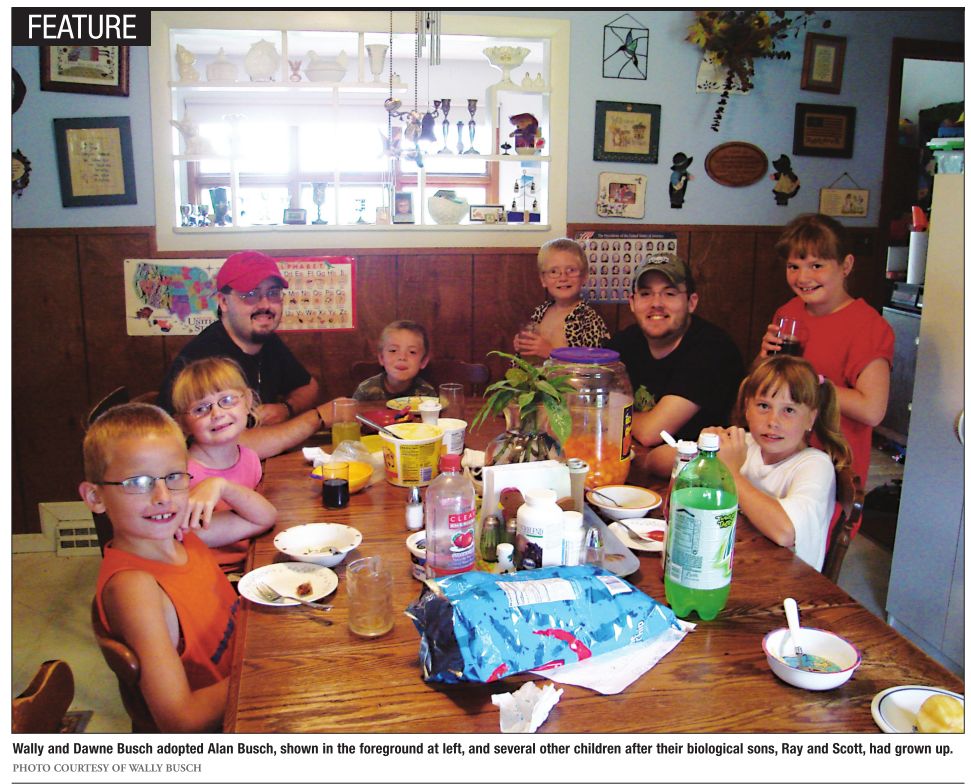
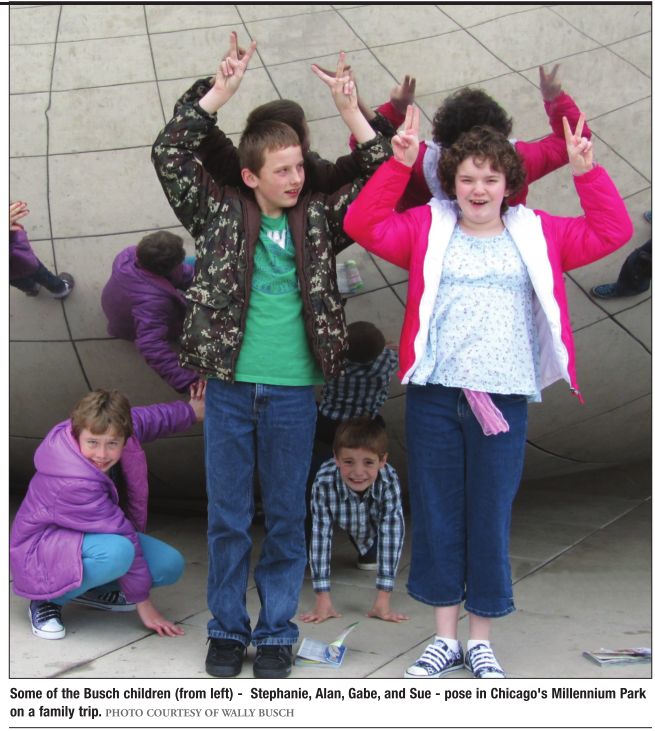
Wally and Dawn Busch of Petersburg differ somewhat from other families interviewed by Illinois Times. The
Busches say they were aware that their adopted son Alan, who they
adopted at age two in 2000, had been abused by his biological mother,
who they say abused alcohol and had mental health issues of her own.
They weren’t surprised when Alan began to act out around the time he hit
puberty. The Busches weren’t even surprised when they had to take Alan
to a mental hospital because of his threats to kill other children at
school, threats to hurt himself and the couple’s other children, and his
self-mutilation.
What surprised the
Busches is the response from Alan’s caseworker when it came time to pay
for his mental health treatment. The Busches were told they had to apply
for a certain state grant and be denied twice before DCFS would even
consider accessing Medicaid to pay for expensive long-term treatment at a
residential care facility. Wally Busch says applying for the grant and
being denied twice was only meant to keep his family busy instead of
asking about residential care.
Wally
Busch says a caseworker also previously convinced them to put Alan in a
foster care group home instead, where he would receive specialized
services. Busch says Alan’s psychiatrist later found out no services
were provided there. And despite Alan’s documented history of
inappropriate contact with other children, the group home housed a
three-year-old girl in foster care, he says.
“They
did everything including lying to us,” Wally Busch says. “The adoption
subsidy agreement we signed is full of broken promises. They told us
they’d provide all these services, but the follow-through is where they
really let Alan down.”
A
complex, ever-changing system Though their stories each differ
slightly, these families’ experiences with DCFS raise questions about
how the agency operates and about the effectiveness of communication
between caseworkers and parents. DCFS spokesman Kendall Marlowe says
caseworkers do their best to navigate an ever-changing system, but
obstacles and unknown variables can make the job very complex.
“By
definition, when we first encounter a child, we have no history
whatsoever of their condition,” Marlowe says, explaining that the agency
takes custody of children in a variety of parental situations. Some
parents are uncooperative, while others aren’t even around to tell
caseworkers about the child. “We understand that parents who are taking a
child into their lives permanently need to know everything they can
about a child, and we acknowledge our responsibility to work with them.”
continued on page 16