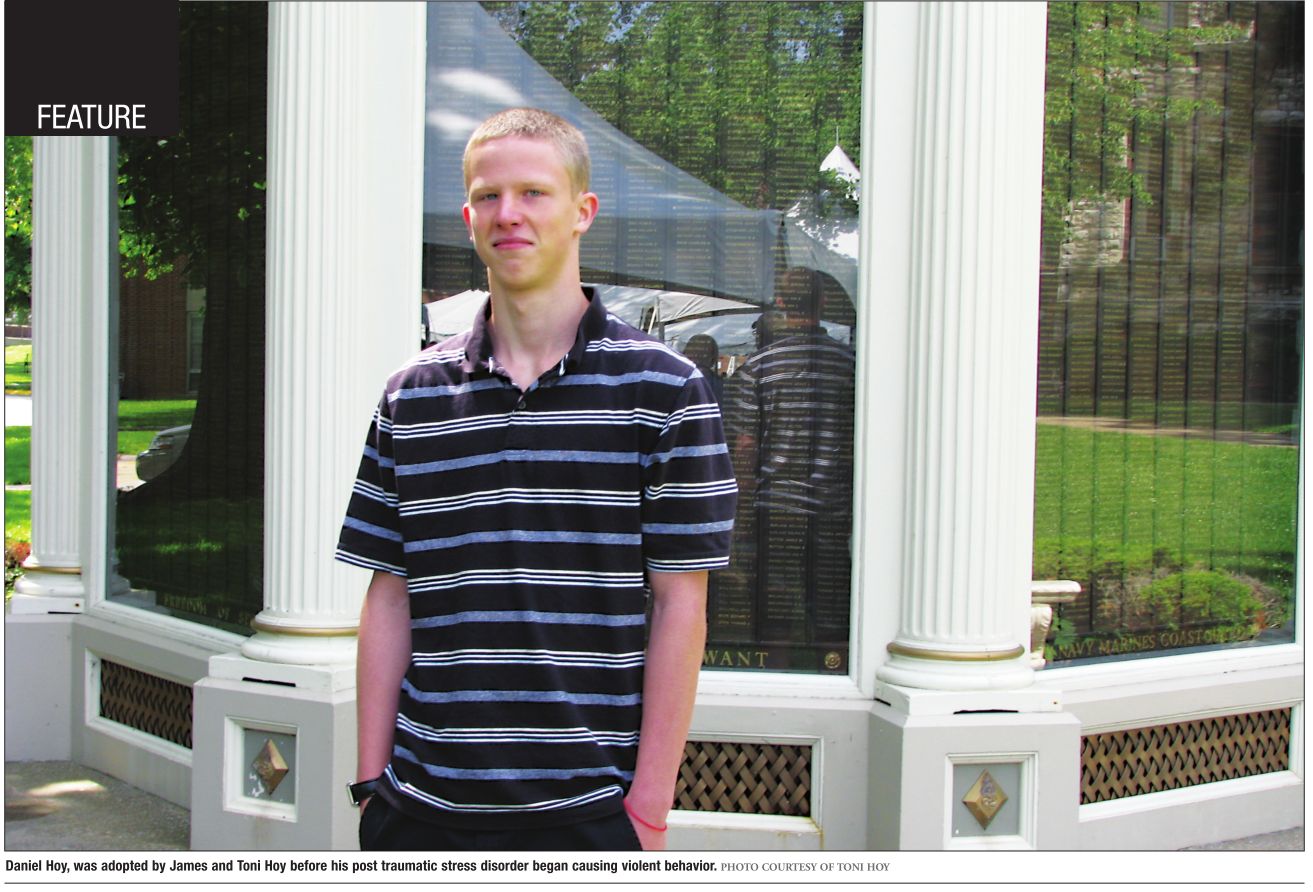
Parents say DCFS leaves them in the dark
ADOPTION | Patrick Yeagle
Tammy Herstad feels like a failure. A mother of three adopted sons and one biological daughter in the Chicago suburb of Bartlett, Herstad spends much of her time worrying about her adopted son, Adam. The 9-yearold has been diagnosed with bipolar disorder and other emotional disturbances that manifest in violent, destructive behavior at the slightest provocation.
“Right after the adoption, he fell off the deep end,” Herstad says. “He would wake up in the middle of night and destroy things. He would take (his brother) Abel’s diabetes syringes and stick them in things. He would break glass, he would hurt our dogs, he couldn’t sit in his seat anymore. He was hearing voices…(he was) aggressive, violent. It was just absolutely crazy.”
Herstad says she feels like she failed Adam because her love and parenting skills weren’t enough to stop his damaging and dangerous behavior. But Tammy Herstad also feels let down herself. She says she wasn’t warned about Adam’s bipolar disorder, reactive attachment disorder and other issues. And she’s not the only one who feels left out of the loop.
Illinois Times spoke with five families in Springfield and around the state who say the Illinois Department of Children and Family Services, along with the private agencies with which DCFS contracts, fails to give families the full picture concerning the children they adopt. Undisclosed tendencies toward violence and self-harm can lead adoptive families to throw up their hands in desperation, jeopardizing the future of an adopted child.
Does DCFS keep potentially explosive information from adoptive parents or offer promises it doesn’t keep? The answer is nuanced, but not very comforting.
The scope of the problem Mental illness among children in foster care is a common problem. A March 2010 report from the Illinois Department of Human Services says nearly 45,000 children and adults up to age 21 in Illinois received mental health services from state-supported agencies in 2009. Of those, more than 18,000 children and young adults were classified as having a severe emotional disorder that impairs their ability to function in social, family and educational situations. About two percent of those with severe emotional disturbances receive long-term residential treatment, and another two percent receive intensive treatment in their homes. DCFS spokesman Kendall Marlowe says there are currently about 15,000 children in the foster care system in Illinois.
The Child Welfare League of America says about 6.1 million children lived with parents who abused alcohol or other drugs as of 2001. The effect on children of alcohol or drug abuse by a parent is staggering: children whose parents abuse drugs and alcohol are
almost three times more likely to be abused and four times more likely to be neglected. In about 70 percent of child abuse or neglect cases, a parent’s abuse of alcohol or drugs exacerbates the abuse. More than 80 percent of children in the foster care system have developmental, emotional or behavioral problems, CWLA says.
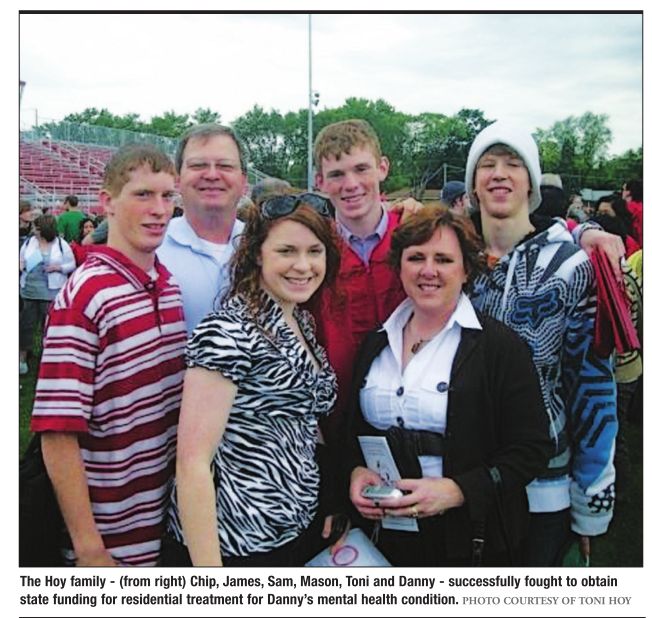
Their stories Richard H. of Springfield first adopted his daughter Andrea in 2003 at the age of 12. (Their names have been changed at Richard’s request to protect Andrea’s identity.)
Richard says he and his wife received a vague history about Andrea when they took her in, including that her biological parents were drug addicts and alcoholics. She had been through several failed foster care placements before she came to Richard’s family, though the adoptive parents weren’t told why those previous placements had failed.
Richard says he and his
wife were told that Andrea had been diagnosed with attention deficit
disorder and depression, which he says turned out to be wrong.
Richard says Andrea
actually has reactive attachment disorder (RAD), a condition in which
children who are denied emotional attention while very young find it
difficult or impossible to trust anyone or form emotional bonds later in
life. Richard says DCFS told a previous foster parent about the RAD
diagnosis, but didn’t tell him and his wife.
“They didn’t tell us, because if they told us, they thought we wouldn’t take her,” Richard says.
When
Andrea lived with Richard and his family, he says she ran away so often
that he came to be on a first-name basis with the police dispatchers.
Andrea skipped school often, vandalized Richard’s car and home,
threatened his wife with a knife and tried to kill them. Andrea, now 18,
has since moved out to live with a boyfriend, Richard says, adding that
he still worries about her.
“I
feel worst of all for her in all of this,” he says. “We still would
have taken her if we had known about her history, but we would have
educated ourselves. I kept sending complaint letters to the head of DCFS
about the caseworker, because she (the caseworker) almost got us
killed. She knowingly put a time bomb in our home, did not tell us, and
then she walked away.”
Bernadine
Long of Chicago first took in her adopted son, whom she asked to be
identified only as “R.L.,” in 2000 at the age of 3 as a foster child.
Even before Long fully adopted R.L. in 2007, he began acting out
violently. R.L. has been diagnosed with bipolar disorder with
schizophrenic tendencies, attention deficit hyperactivity disorder
(ADHD) and a learning disability, Long says.
“He’s
very aggressive, very oppositional, very defiant,” Long says, adding
that doctors have tried a handful of medications that briefly stabilized
R.L.’s behavior. She says none of the medications worked for very long,
nor did the variety of treatments and therapies recommended by DCFS.
Long
says DCFS kept information about R.L.’s background from her prior to
adoption, and she was given no indication when she first took him in as a
foster child that he would exhibit violent behavior. His biological
mother may have used drugs and alcohol during pregnancy, Long says, but
Long didn’t find that out until her attorney was able to track down the
information in 2011, after a clinical meeting that was held without her
knowledge.
When R.L.’s caseworker first approached Long about adopting R.L., Long requested specialized help for him.
“I
said we need more help for him before adoption, because I’m having
trouble now getting sufficient services that would help him be able to
remain in our home with us,” Long says. “They eventually started
threatening me, saying, ‘If you don’t do this, we’re going to remove him
from your home.’ I told them they might have to remove him because I’m
not just going to sign some papers when I know he needs help.”
Long
eventually obtained a signed agreement for specialized services for
R.L. during a time of crisis. Those services never materialized, Long
says.
“We still had
the same problems in terms of getting help for him,” Long says. “I
would call the caseworker and they would say I need to call an emergency
crisis number, and they’d make an appointment to come out and see him. I’m like, ‘He’s
having a crisis right now. What do we do now?’ I couldn’t get any help,
so I ended up having to call the police.”
continued on page 14