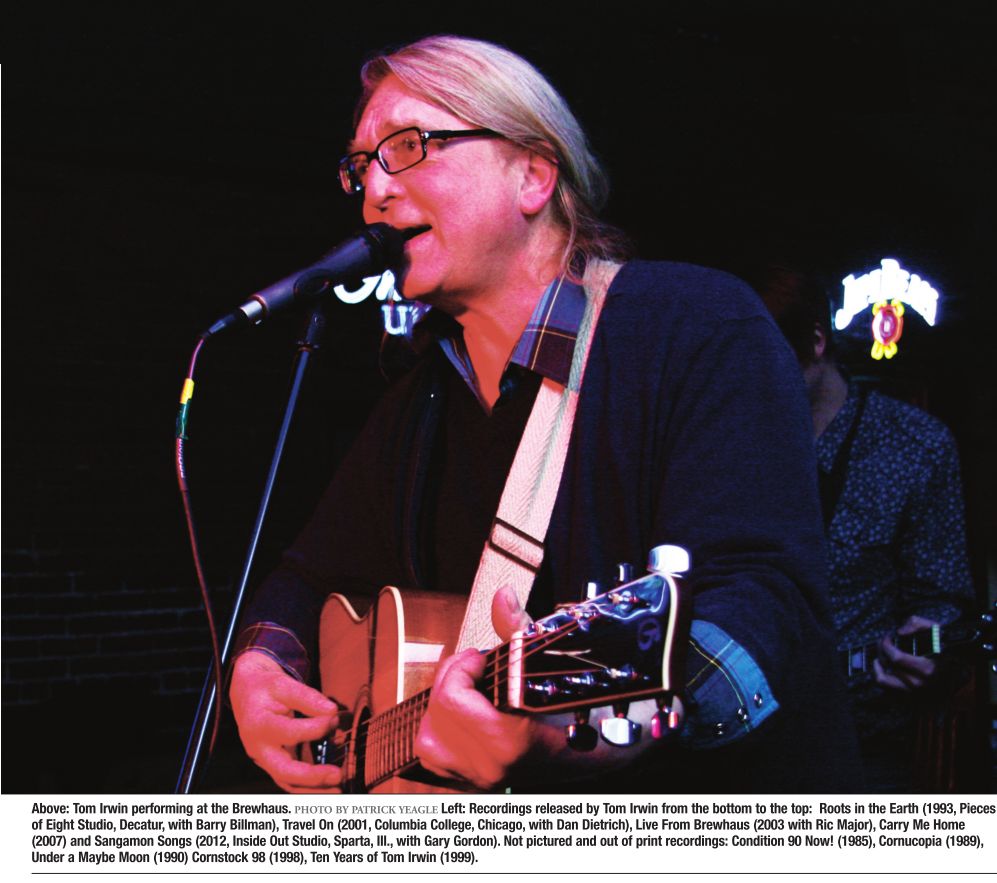
 A songwriter’s long, winding road from high school rocker to Sangamon Songs
PROFILE | Scott Faingold
To call Tom Irwin a fixture on the Springfield music scene would be something of an understatement. Beginning in the mid-1970s as a bass player and eventual frontman for various local rock bands, straight through to his present status as an accomplished songwriter and bandleader, Irwin has been a popular draw in local clubs since before he could legally drink in them. He has performed virtually every Sunday night in Springfield since the 1980s at a series of different venues, with his current weekly residency at Brewhaus stretching back to 1993.
Now, after years of personal and career highs and lows, including occasional layoffs and wholesale musical reinventions, Irwin, the longtime music columnist for Illinois Times, has just released the most ambitious and accessible music of his career.
His new CD, Sangamon Songs, was inspired by the 1893 diary of 16-year-old Harry Glen Ludlam. The journal was discovered in the Irwin family’s Pleasant Plains farmhouse, where
the young Ludlam and the young Irwin had each labored at the same chores and daydreamed over the same landscapes, albeit nearly a century apart. Ludlum’s plainspoken, evocative entries immediately struck a chord with Irwin, who initially planned to use the artifact as the basis for a book, to be written as part of a master’s degree project at UIS. However, his musician’s instincts quickly took over, and Ludlum soon became a sort of muse for a cycle of songs that eventually yielded the new disc.
“I never thought of it as a concept album, but whatever you want to call it, the songs are all connected by the journal,” explains Irwin. “I’m also not a folk musician. At least, I don’t think of myself that way.” It’s true enough that at the dawn of Irwin’s long career, folk music was the last thing people would have associated with him. For years his music was unabashedly rock ’n’ roll and his instrument was the electric bass. “I always wanted a guitar when I was little and I didn’t get my own,” he remembers. “My
dad had ’em but I never got one – every time he’d get a guitar, I thought I was gonna get that one but I never did.”
Beginning with a series of high school cover bands in the mid-1970s, six-string duties in Irwin’s various bands over the years were handled by his lifelong friend, local guitar hero Tom “Dooley” Woolsey. “I’ve known Tom since the fourth grade and we started playing in the summer between sixth and seventh grade,” recalls Woolsey. “I picked up the guitar and he picked up the bass. The first tune we ever learned was ‘Tequila’ and then it just went nuts from there. I can’t tell you how many bands we’ve been in together and I can’t tell you how many times the wheels just completely fell off.”
The first taste of local popularity for the pair was with their hard rock band, Zeus, formed while they were still attending Pleasant Plains High School, where Irwin had been elected class president on an extremely progressive antibullying platform. Highlights of Irwin’s admin-istration included peaceful demonstrations such as walkouts aimed at discouraging violence among the student body, as well as installing a school DJ and booking numerous musical performances by popular area rock bands. These performances also allowed Irwin and Woolsey to cherry-pick the best local musicians to join them in Zeus, a strategy that soon paid dividends.
“With that band, we went from doing okay, to doing well, to doing extremely well,” Woolsey continues. “And that was a time when there weren’t any rock ’n’ roll bars in Springfield at all, so we had to come up with our own venues. Since we were the only band around that was playing rock ’n’ roll, everybody who wanted to see rock ’n’ roll wanted to see this band. We always had sellout crowds and we did very, very well.”
The runaway regional success of Zeus between 1977 and 1979 led to Irwin and Woolsey attaining what would seem to be the Holy Grail for all struggling musicians: a management and recording contract with an established company. This experience, however, turned out to be closer to a nightmare than a dream come true. “Me and Tom signed with [the company, which they declined to name] and moved to Minneapolis,” explains Woolsey. “Recording-management contracts are as thick as phonebooks, and we didn’t understand what the hell we were signing.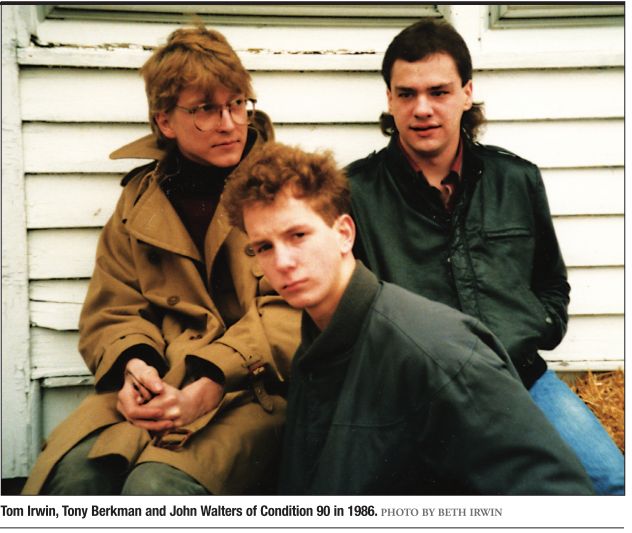
“Basically, they own everything that you are,” Woolsey continues ruefully. “Your signature, your image, your likeness. At one point, we ran out of money, and I had to go to management and say, ‘We have to get part-time jobs or something, ’cause we’re starving, we don’t have any money for food or anything.’ And they were like, ‘No, you don’t understand. Anything you sign your name to, whether it’s a paycheck, a mortgage, a car payment, all that is company property. Your guitars, amplifiers, anything you sign your name to.’” After a parting of ways with their corporate overlords that resembled the movie The Great Escape more than any typical contract negotiations, Irwin returned to the Springfield area, while Woolsey high-tailed it south to New Orleans. However, it wasn’t long before the two were making music together again. “Around ’81 or ’82, Tom called me up in Louisiana and said, ‘I’m putting a band together, come on up if you wanna play,’” says Woolsey. “And at the time I was laid off from ironworking, so I came up and that’s when we started The Strand.”
Whereas Zeus’s style had been pure 1970s rock, The Strand embodied the ’80s ideal of punchy new wave power pop, with Tom stepping up to the microphone as lead singer as well as bass player. The new style owed a considerable debt to then-new influences along the lines of Elvis Costello, and the result was a repertoire of snarling, catchy songs like “Piece by Piece,” with tough-minded lyrics written by local scribe Terry Hupp. It gave Irwin and Woolsey a new lease on musical life. Once again they found themselves ascending the slippery slope of local success.
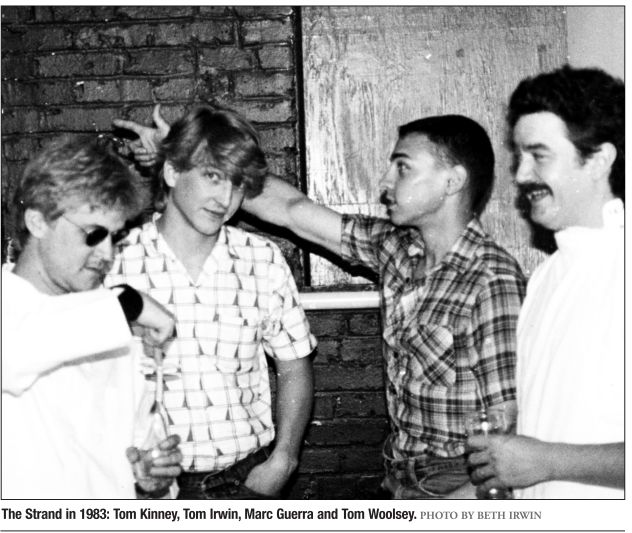
“I don’t know how this happens,” says Woolsey, “but just like with Zeus, all of a sudden we got to a point where The Strand got popular, and we didn’t just have a good following, we had a great following, and we were starting to get invited to play really nice venues on a regular basis, farther and farther away from town.”
The Strand continued for several years and through nearly constant changes in personnel, eventually comprising a virtual Who’s Who of Springfield talent, and Woolsey was in and out of the band several times. The group eventually changed its name to Condition 90 and broke up for good in 1987.
“That was kind of the big year for me,” affirms Irwin, “because that was when the band broke up, and that was the year that my friends Marty and John and I took the guitar, got in a car that didn’t run very well, and went to New Orleans, ended up in Nashville. That trip saved me, in a sense, just by getting me out and going.”
This salvation took a roundabout course, and indeed the years following the demise of Condition 90 found the musician in something of a paradoxical state. The trip south may have acted as a sort of “reset button,” but in many ways, Irwin was at a low ebb. He settled into a series of itinerant, low-profile jobs, such as hosting open mic nights at a series of now-defunct Springfield venues. At the time he seemed perfectly content charting an anonymous course toward entropy, stasis and eventual oblivion.
Things had become bleak, indeed. But here’s where the paradox comes in: this chaotic, dissipated post-Condition 90 period also found Tom operating at a high water mark of creativity. No longer constrained
by the requirements of aspiring rock stardom, his writing seemed to
naturally drift away from the angular, postpunk style of Condition 90
towards something closer to the country music of his rural upbringing.
These new, acoustic songs were an honest reflection of Tom’s most
profound musical roots, however much they may have alienated or confused
fans of his previous style.
Continued on page 14


