Recommendations for storm-damaged plants and shrubs
 What do we see after the freeze? A few disappointing things, but a lot of really positive signs!
The Bad:
Most annual flowers look bad. We aren’t going to talk much about this, though, because it’s almost time to change them anyway.
Loropetalums are pretty much smoked!Most of the ones we’ve seen so far have lost all of their foliage. Several are outright dead. The ones that are alive will have to be cut back to about one-quarter of their current size and allowed to grow back out. When this happens, they will be left bare. If you only replace the dead ones, it will look weird having some new, good-looking ones mixed in with other dead, bare-looking plants. It will take at least two to three growing seasons for them to get back to their original size and shape. We are recommending replacing these with new ones. You may be concerned with the same thing happening again next winter, but the reality is that this was a once-ina-lifetime event. Typically, loropetalum thrive very well in our climate, and you should not be concerned.
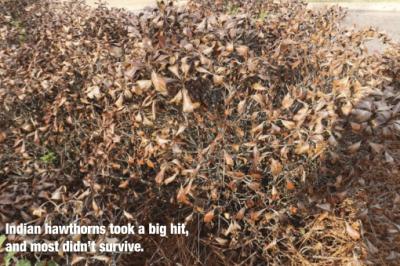
Indian hawthorns are another plant with a high mortality rate. All of them have lost their foliage and look completely dead. Most of them are dead and will need to be replaced. When deciding what to replace them with, we ask people to consider a different plant like the sunshine ligustrum.
The OK:
Boxwoods fared the storm OK. We are seeing a lot of “tip death,” where the tips of the plants have died off. As it gets warmer and they start to grow more, the plant can be trimmed. After two to three trimmings, we predict most
of these dead spots will have grown out and disappeared. There are some
cases where the whole plant died, and we recommend replacing the plant
with a new one.
Ligustrums
seem to be a hit-or-miss situation. We have seen some that are dead and
will have to be replaced while others look perfectly fine. Others seem
to have lost half or more of their leaves. The good news is most are
still alive. It may take the rest of the year to fill back out
completely, but they should be OK. Considering the cost of these plants
and the amount of time it takes for them to grow, we recommend leaving
them alone and let them come back.
Live
oaks may look bad right now, but they are just fine. Every year, they
drop all of their leaves, but this happens over time and never leaves
the tree looking empty. Following the ice, most of them around town have
dropped everything, leaving them to look bare and dead. Don’t worry!
Ivies
and jasmines are looking rough right now but will be OK. They are going
to need all the dead removed but will come back with new growth.
Make sure you don’t remove the actual vine, just the dead foliage.
Most
all palms lost their fronds but survived the cold. The dead limbs will
need to be removed, but they will grow back out this year. There are a
few cases where they were a total loss and will need to be replaced, but
overall they did well.
The Good to Great:
We
are excited that azaleas are not a total loss. Yes, most lost their
foliage, but we are seeing a ton of buds developing, and in a few cases
they are starting to bloom already. They are going to require a decent
amount of trimming and then allow them to grow back out. We do realize
there are some cases where they died, but it’s not near the level we
expected to see.
Yaupons
are the heavyweight champs of the year! 99% of them look the exact same
way as they did before the storm. They don’t need any special attention
this year other than normal maintenance.
Sunshine
ligustrums are another plant that thrived and doesn’t seem to be
showing any damage at all. This is also the plant we are recommending
people use to replace Indian hawthorn.
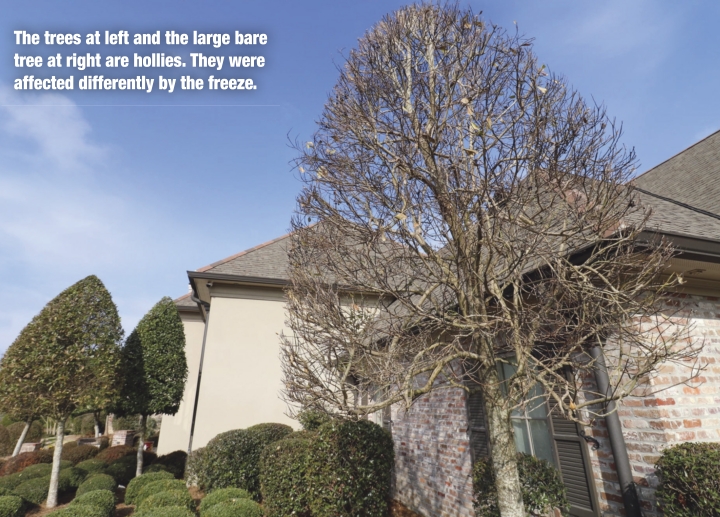
Holly
trees fared very well. There seems to be a decent amount of foliage
lost, but they are not bare and still seem full. Just keep performing
normal maintenance with these.
Ornamental grasses did well and are already flushing out with new growth. Nothing to do or worry about with most of them.
Spring is upon us, and we are looking forward to seeing what is to come! Let us know if you have any questions.
Plant observances and recommendations provided by the professionals at Matthews Landscape & Pest.


