Providing a better life and a new start
Matthew Scully is an author and a former speechwriter for George W. Bush. In his book. “Dominion: The Power of Man, the Suffering of Animals, and the Call to Mercy,” he wrote: “Animals are more than ever a test of our character, of mankind’s capacity for empathy and for decent, honorable conduct and faithful stewardship. We are called to treat them with kindness, not because they have rights or power or some claim to equality, but in a sense, because they don’t; because they all stand unequal and powerless before us.”
Lisa Davis has been living that philosophy all of her life. “Ever since I can remember, I have loved animals,” she said. “Growing up, we had dogs, cats and even a horse or two.”
When she was in her early 20s, she left home in Ohio and moved to North Carolina to work at Duke University Medical Center. Eventually, she moved into a horse community that would introduce her to the dark side of animal husbandry.
She said the community shared a barn that was terribly run down. Eventually, she was moved to purchase some of the animals just to get them out of the barn owner’s possession. “The first horse I rescued was purchased from a riding stable. She was so crippled, her knees were swollen, but she had a heart of gold. I named her Trixie.”
The next horse she rescued had just been born; her mother was blind in one eye and would soon lose sight in the other. “Due to poor nutrition and multiple other factors, the mare was unable to produce milk, so they were going to be sold at the auction, which more than likely would send them to slaughter.”
Once in Davis’ care, the foal was bottle-fed until the mare’s milk came in weeks later. She named the foal Splash and her mother, Grace.
Sometime later, they moved to Louisiana. Splash grew up to be Davis’ dressage horse, and Grace lived out her life as a pasture horse. Trixie lived only a few more years, but Davis says her life was much better than it had been.
“After 20 years, I recently lost Splash after a short illness. With the support of a wonderful husband, veterinarian, priest and friends, I was able to make that fateful decision and let her go.”
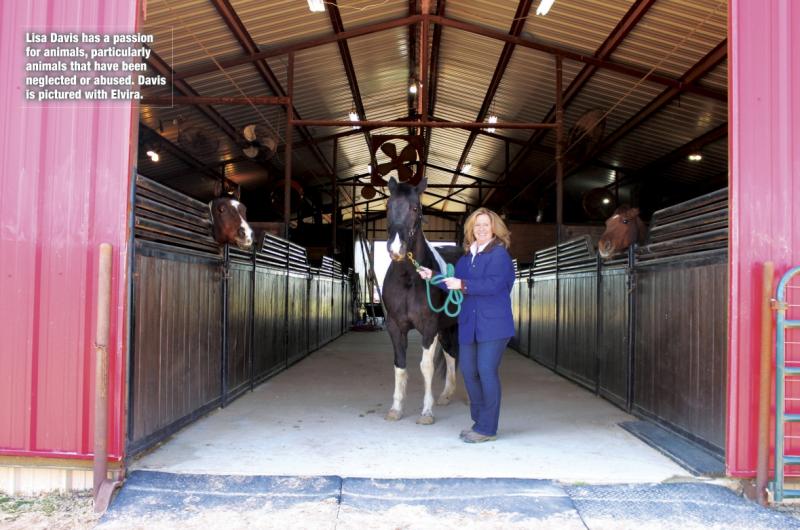
But soon she decided to rescue again. This time a trip to Texas and the SPCA of Texas turned up an old paint mare, severely underweight and in need of a forever home. Davis admits the new mare will never take Splash’s place, but she’s glad to provide her better life and a new start.
“We
will never know what her previous life was like. Perhaps she had been
abused, or maybe her owners fell on hard times. But none of that matters
now. What matters most is that reaching out and helping someone or
something, whether it is people or animals, is our duty, our
responsibility.”
Davis
is serious about her dedication to animals. While she says she never
planned to become a rescuer, she feels compelled to provide the help
animals in need lack. She said it’s easier than you’d think to follow
her lead.
Social
media teems with rescue sites and animal welfare groups who spread the
word about animals in need. She said it doesn’t even require adopting to
help an animal in need. You can give money, supplies, or even provide
transportation to the animal groups to assist them in their efforts to
get needy animals into caring homes.
She
recommends that those contemplating adoption do their research before
they take the plunge. Adopting any animal requires money, time and
patience in large doses. For example, horses need dental care, hoof
care, and they eat a lot of food. She suggested going to your local
shelter and meeting the animals before you decide on taking one.
There
are plenty of animals out there in need, she admitted, and taking care
of them has become her passion. “Giving to those that are in need,
whether it’s a home, a donation or a share on Facebook, not only helps
those around us but can give us a sense of accomplishment and leave us
feeling fulfilled.”
And
Davis also takes rescuing to the next level. She’s part of the Covid
Taskforce Strike Team, and she’s been out at the fairgrounds helping
two-legged animals get the vaccine they need to end the pandemic,
proving a rescuer will be a rescuer.


