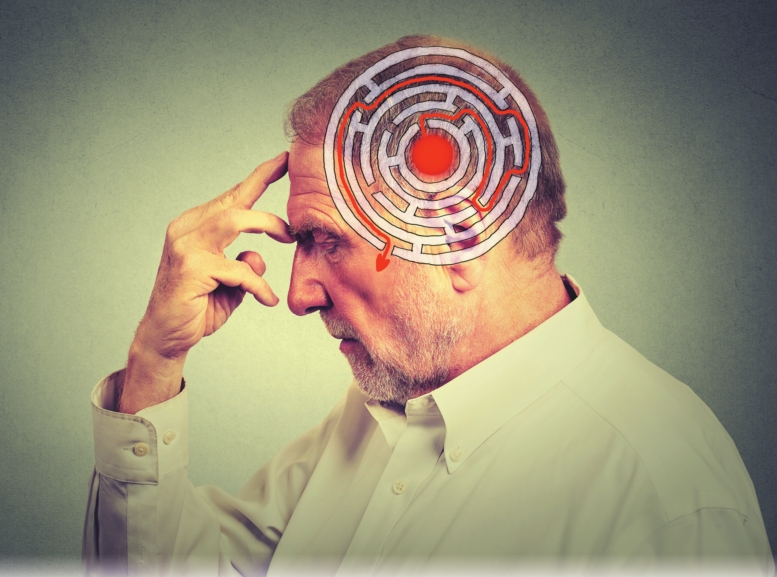
Being aware of stroke symptoms
Knowing how to respond in the event of a stroke is crucial for increasing the chances of a full recovery.
While no one likes to think of health emergencies, you want to know what to do if a stroke strikes. When someone has a stroke, every second counts – literally. There are things you can do to prepare for the best possible outcome if a stroke happens, especially if you or a loved one is at a higher risk of stroke.
PLANNING AHEAD 
Planning ahead and being aware of stroke symptoms are smart ways to protect yourself and those you love.
• Plan how to get emergency medical attention right away – within three hours, especially if you live in a rural area, where emergency services may be distant.
• Keep a current list of all prescription medicines, vitamins and other supplements you and your loved one take. Include the dosage of each.
• The key thing to remember when it comes to strokes is to get the right medical attention as fast as possible.
• According to
the CDC, those who reach an emergency room within three hours from the
time stroke symptoms first appear often have less disability in three
months than those who delay.
Know the signs of a stroke – FAST
Stroke
symptoms come on FAST. An easy way to identify the most common signs of
stroke is to remember the letters in “FAST.” They stand for:
F stands
for “face” drooping. One side of the face becomes numb or droops. You
can see this if the person is unable to smile fully.
A is for “arm” weakness. A person who’s had a stroke will not be able to raise both arms; one will drift down.
S refers
to “speech” problems. The person’s speech may be slurred, garbled or
hard to understand. They are unable to clearly repeat a simple sentence.
T means
“time to call 911.” If any of these signs appear, call 9-1-1
immediately and say you suspect a stroke. Don’t wait call right away,
even if the symptoms go away. Make a note of when the symptoms first
appeared.
In addition to these signs, someone having a stroke may suddenly experience:
• Mental confusion or trouble understanding speech
• Weakness or numbness in a leg (as well as arm) – usually on one side
• Vision problems in one or both eyes
• Trouble with balance, coordination, walking or sudden dizziness
• Severe headache that comes out of nowhere.
ACT FAST WHEN A STROKE STRIKES
If you or someone you’re with shows signs of stroke, take action right away.
• Immediately call 9-1-1 or emergency services.
• Tell the operator that you suspect a stroke.
• Ask for an ambulance to carry the patient to one of the hospitals you know has a stroke center, if available, in your area.
• Be as precise as possible about how and when the signs first started.
• If you are having signs of a stroke, DO NOT DRIVE.
• DO NOT TAKE OR GIVE ASPIRIN, as this can make a stroke worse.
• Don’t delay even if symptoms go away.
Your quick response can save a life and improve the chances of full recovery.
Dr. Susan Kemp
practices internal medicine at CHRISTUS Primary Care Associates and
focuses on the complete treatment of adult patients by balancing care of
both acute illness and preventive medicine. She also specializes in
wound care and hyperbaric and serves as the medical director of the
CHRISTUS Wound Care and Hyperbaric Center.


