Should Shreveport police get a raise?
Michael Carter, president of the Shreveport Police Officers Association, has thrown down the gauntlet to the administration of Mayor Ollie Tyler over pay raises for Shreveport police officers. “This is a full-scale campaign that will go on indefinitely. We are at the point of crisis with hiring and retention. We will not stop,” Carter stated.
Carter has done a video which he has posted on YouTube and Facebook to make his case. Shreveport police officers have not received a pay increase since 2003. Consequently, they continue to fall behind other police departments in salary. The starting salary for a Shreveport police officer is $33,000. The state average is $38,000. The national average is $61,000. But compare Shreveport’s salary to that of Tyler, Texas, where the starting salary is $48,345 a year, or to Texarkana, Ark., where the starting salary is $40,188.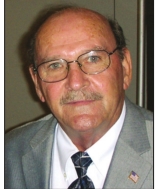
Carter makes a good point. He says, “People looking for a job in law enforcement consider the risk versus the pay just like any other job. When they look around and see they can make almost double the salary
in other places with lower the risk, that’s a no-brainer.” So what
happens is Shreveport bears the brunt of the cost to train a police
officer. After he is trained, he opts for a job somewhere else.
According to Carter, “You continue to train and lose talent and recruit
from the bottom of the barrel.”
Perhaps
the best supporting argument for a pay raise for police officers comes
from the release of the 2016 crime statistics. Shreveport is, indeed, a
dangerous city. In 2015, it was ranked the 69th most dangerous city out
of 444 cites surveyed. But in 2016, crime became rampant in the city as
nearly every category of crime increased.
Most
notably was the increase in homicides, which spiked to 46 in 2016,
almost double the 28 which occurred in 2015. Forcible rape also
increased, going from 121 in 2015 to 156 in 2016, a 28 percent increase.
Aggravated assault/ battery increased to 1,171 in 2016 compared to
1,008 in 2015. Person robbery went from 377 in 2015 to 399 in 2016, and
business robbery increased to 86 in 2016 from 78 in 2015.
"In 2015, [Shreveport] was ranked the 69th most dangerous city out of 444 cites surveyed.”
These
crimes comprise the Violent Crimes Index, which includes homicide,
rape, robbery and aggravated assault/ battery. Combined, there were
1,857 violent crimes in 2016 compared to 1,612 in 2015. That’s a 15
percent increase.
The Property Crime Index, which includes burglary, theft and auto theft, went from 10,139 in 2015 to 10,709 in 2016, an
increase of 6 percent. Residential burglaries increased to 1,827 in 2016
compared to 1,798 in 2015, a 2 percent increase. Similarly, business
burglaries went to 486 in 2016 from 429 in 2015, an increase of 13
percent.
Theft
is broken down into several categories. Here they are: purse snatching,
25 in 2016 compared to 22 in 2015, an increase of 14 percent;
shoplifting, 1,826 in 2016 compared to 1,783 in 2015, an increase of 2
percent; theft from business 415 in 2016 compared to 409 in 2015, an
increase of 1 percent; theft from residence, 1,660 in 2016 compared to
1,523 in 2015, an increase of 9 percent; auto accessory theft, 448 in
2016 compared to 467 in 2015, a decrease of 5 percent (this was the only
category to show a decrease); theft from auto, 2,262 in 2016 compared
to 2,256 in 2015, a zero increase; other thefts, 1,018 in 2016 compared
to 876 in 2015, an increase of 16 percent. Auto theft had a 32 percent
increase with 747 in 2016 compared to 566 in 2015.
The grand total for crimes in Shreveport came to 12,566 in 2016 compared to 11,751 in 2015,
an overall increase of 7 percent. These statistics present a challenge
for the city’s new police chief, Alan Crump. He was interim chief for
half of 2015 and is now the permanent chief, so the burden is now on his
shoulders. He is urging citizens to be as active as possible in their
communities.
Back
in 2002, voters approved a onequarter cent sales tax for police and
firefighters’ pay and equipment. Police officers have not received a pay
raise from that tax since Jan. 1, 2003. And Carter points out that
police officers don’t receive incentives based on certifications like
firefighters and that officers often have to pay for their uniforms and
equipment.
So
that’s what a Shreveport police officer deals with on a daily basis. Do
they deserve a pay raise? Absolutely. It is a dangerous job for what
Carter and his organization feel is not sufficient pay. The problem, of
course, is the money. Where to find it. That’s the task facing Mayor
Ollie Tyler and the city council. Knowing Michael Carter, he will not
let them off the hook, and he will not go away. As he has said, “We are
going to be heard by everyone in Shreveport.” He is asking the public to
contact the mayor and the city council to show their support for police
officers.
Lou Gehrig
Burnett, an award-winning journalist, has been involved with politics
for 44 years and was a congressional aide in Washington, D.C., for 27
years. He also served as executive assistant to former Shreveport Mayor
“Bo” Williams. Burnett is the publisher of the weekly “FaxNet Update”
and can be reached at 861-0552 or [email protected].


