IS THIS GENERATION THE KEY TO GROWING OUR DOWNTOWNS?
Approaching the end of the
first quarter of the 21st century, much research and focus is being
directed toward the Millennial generation. Businesses and marketing
strategists spend a good portion of their time trying to learn more
about and attract this generation. As leaders in North Louisiana and
around the world plan developments for the next quarter century, they
are looking closely at trends and those trends are all about
Millennials.
The
Millennial generation, sometime referred to as “Generation Y,” are
generally thought of as being those individuals who reached adulthood
around the year 2000, although researchers use birth dates ranging from
the 1980s to around the year 2000 when studying this group.
The
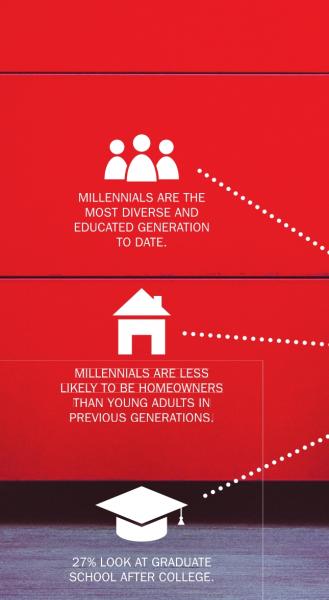
PEW Research Center describes Millennials as confident, connected and
open to change, and America’s most racially diverse generation to date.
The vast data available at pewresearch. org is used to draw conclusions
such as, “Now ranging in age from 18 to 31, they are relatively
unattached to organized politics and religion, linked by social media,
burdened by debt, distrustful of people, in no rush to marry – and
optimistic about the future.”
Liz
Swaine, executive director of the Downtown Development Authority,
explained why and how cities and businesses are focusing on attracting
the Millennial generation.
One of those steps is recognizing how Millennials live and work.
“Millennials
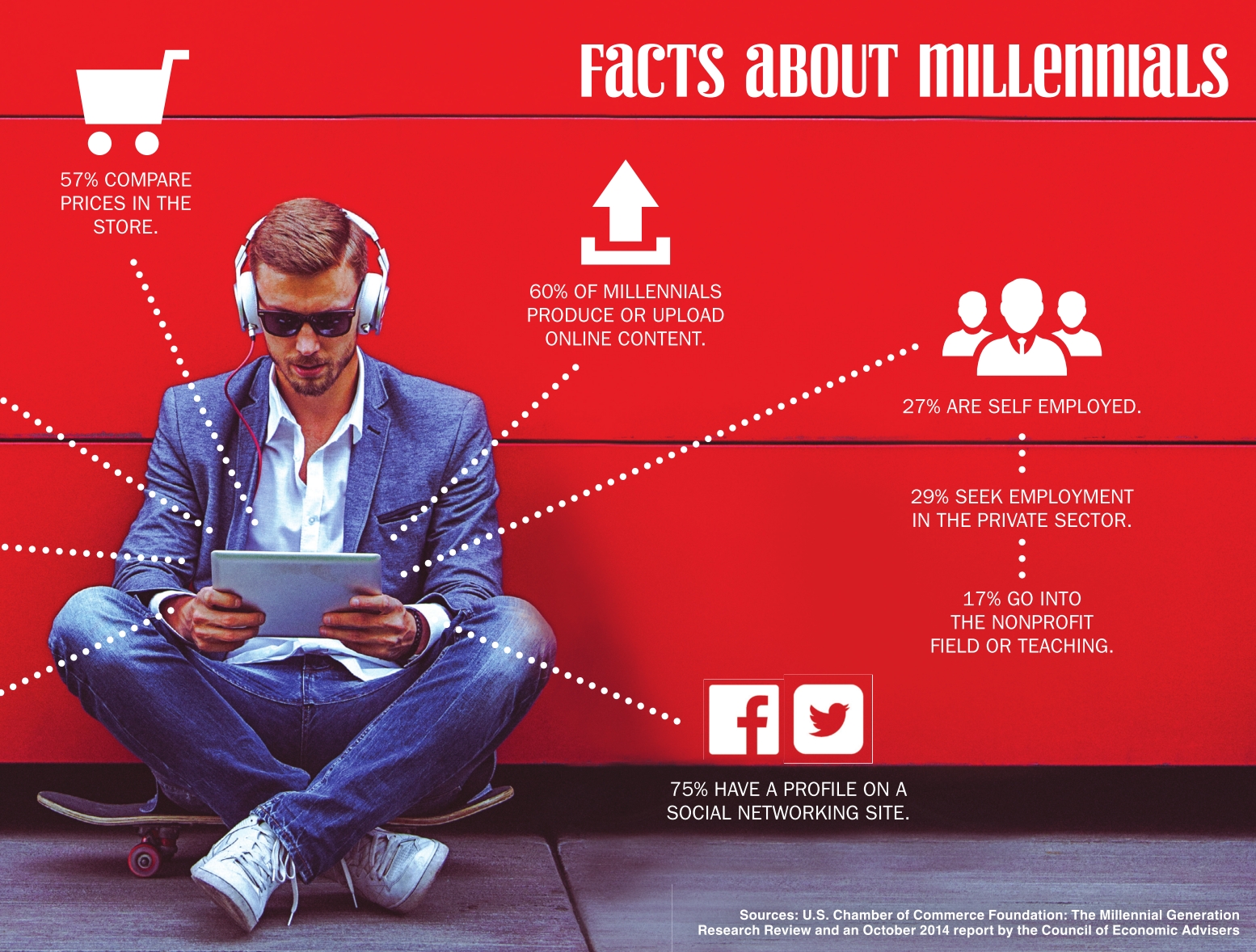
tend to create their own jobs and be interested in entrepreneurial
activities,” she said. “Let me generalize for a moment knowing that
every person is different; Millennials are mobile. They tend to not own
as much stuff. They love to walk and ride bikes and can be very social.
They
enjoy experiential activities. They tend to understand the concept of
smart cities and realize that urban sprawl was a really bad idea.
Downtown checks every one of those boxes.”
Swaine said the importance of downtowns in any master plan involving the Millennial generation cannot be overstated.
“Every
important trend is pointing toward downtowns,” she said. “Downtown
residential is up nationwide and manufacturing is moving back to
downtowns. We’re seeing the adaptive reuse of historic buildings, the
ultimate recycling project. Downtowns are on the rebound and they can
help save entire communities.”
Swaine
said one key element to the downtown match is that Millennials tend to
come without baggage. “They don’t know what ‘downtown used to be’ and so
they don’t try to wedge it into that memory or perception,” she said.
“They’re just interested in downtown becoming the best it can become
now.”
Both Shreveport and Bossier City are putting a lot of thought and effort into attracting more Millennials to the area.
“We
need to provide jobs and fun in equal measure,” Swaine said. “If there
aren’t wellpaying jobs available or at least the potential to make
money, Millennials and others will go elsewhere. Conversely, no one is
going to want to cash the paycheck then go sit in an apartment and stare
at the walls. That’s where arts’ activities, events at Cohab, film
festivals, dog parks, outdoor activities and great restaurants and
coffee shops come into play. We definitely have the fun side of the
equation under control while we are working on the jobs side.”
Architect
Mike McSwain is working with the City of Bossier to repurpose its
downtown area beginning this year. “We’re calling it a Downtown Bossier
Re-envisioning,” he said. “Actually, it’s a bit different than a
traditional downtown.
There’s no courthouse. It’s another kind of urban environment.”
McSwain
said the first wave of development for Downtown Bossier is important.
“The first wave of roadway and infrastructure [leading to] the Town
Center should begin in April,” he said. “They will be replacing primary
utilities like sewer and water. There will be new road overlays and
those roads will include new parallel parking with dedicated bike lanes.
I think in about two years, you’ll see the first fruits of their
labors.”
“There are
also some other things in the works, such as plans for some mixed-use
retail with apartments above it,” McSwain said. “What you’ll be seeing
is really progressive stuff, not just in Bossier but in Shreveport and
all over the United States. ” McSwain said city leaders have listened to
Millennials about what they want in their community.
“One
thing we heard loud and clear was, ‘What I want doesn’t exist here.’
They were looking for other unique, weird things and they would
reference other cities. They want cool experiences and more original
handcrafted artisan-type
goods.
That’s what has been neat about the urban environment. Bossier will
have an outdoor plaza for daily gather as well as events and more
independent retail.”
“I
think it’s that mix of housing and this weird retail that’s unique and
different that everybody is trying to supply for the Millennials,”
McSwain said. “They are the creative engine that are fueling the economy
and they dwell on place and experience instead of stuff. The Internet
age has made the world a much smaller place. Now you can go anywhere in
the world with a phone.”
From
a big picture perspective, development plans here to accommodate a
changing future and its people are part of a bigger complicated puzzle.
“This is about all of us winning,” McSwain said.
“We’ve
homogenized the country. You can travel from New York City to Los
Angeles by car and stay in the same Holiday Inn Express with a Walmart
next to it and eat dinner at Applebee’s – in every single town along the
way. Millennials don’t know that it wasn’t like that 50 years ago. So
we’re not re-inventing the wheel for Millennials. What we’re doing is
just urban planning at its best.”
Katy
Larsen is a Millennial and owns The Agora Borealis, an art
market/gallery in downtown Shreveport. Larsen is also an active business
leader who has refurbished a strip of buildings on the edge of
downtown.
Larsen’s
wish list from a business standpoint is more mentoring and education to
provide opportunity for those Millennials with their own start-ups.
“We need to be more pro-active in giving them
opportunity,” she said. “We need tools and information. For example,
Liz Swaine brought me under her wing a little bit. She made me aware of
simple things about business, government and rules and regulations. She
kept me from getting into trouble. So many Millennials have a spark that
just needs to be lit so they can learn and grow.”
From
a personal standpoint, Larsen wants to see more options for healthier
lifestyles. “We need healthier choices for food and the way we live.
We’re also looking downtown for more spaces to lounge and to meet with
others. We crave more communication face to face. The town is so spread
out at present that more community transportation would also move us
into the future.”

Larsen
is also a parent and wants to make sure future plans aren’t just
designed around singles. “We have no parks downtown for meeting and
gathering. We could also use some food places designed for young
families. I’m on the NORLA [Preservation Project board] and we’re
working on a space like that. We see it as a space where small
businesses can come and people can gather, shop and eat with small
entertainment events … something small business oriented with a
Louisiana flavor.”
Larsen said providing leadership skills and education are the key to any good planning.
“Millennials
are more worldly but not in the same sense of what that might have been
before,” she said. “They can connect to any piece of the world and find
information and run much faster with it.
They
have open minds and can be inspired easily. Tradition isn’t holding
them back. They can be swayed, but they need the right information.”
“My
ideal world is for education to always be right at our fingertips,” she
said. “We have the resources. We need to help one another. We need to
remind one another as Millennials that, this is about to be our city,
our state, our land. We need to keep going.”


