Early treatment can prevent future pain
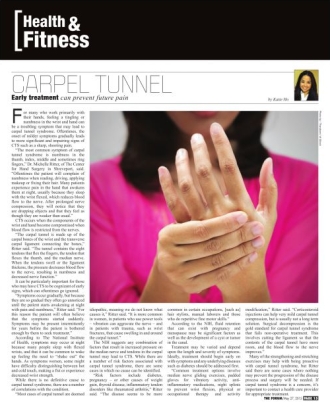
 For many who work primarily with their hands, feeling a tingling or numbness in the wrist and hand can be a troubling symptom that may lead to carpal tunnel syndrome. Oftentimes, the onset of milder symptoms gradually leads to more significant and impairing signs of CTS such as a sharp, shooting pain.
“The most common symptom of carpal tunnel syndrome is numbness in the thumb, index, middle and sometimes ring fingers,” Dr. Michelle Ritter, of The Center for Hand Surgery in Shreveport, said. “Oftentimes the patient will complain of numbness when reading, driving, applying makeup or fixing their hair. Many patients experience pain in the hand that awakens them at night, usually because they sleep with the wrist flexed, which reduces blood flow to the nerve. After prolonged nerve compression, they will notice that they are dropping objects and that they feel as though they are weaker than usual.”
CTS occurs when the components of the wrist and hand become compromised when blood flow is restricted from the nerves.
“The carpal tunnel is made up of the carpal bones of the wrist and the transverse carpal ligament connecting the bones,” Ritter said. “The tunnel contains the eight tendons that flex the fingers, the tendon that flexes the thumb, and the median nerve. When the tendons swell or the ligament thickens, the pressure decreases blood flow to the nerve, resulting in numbness and decreased nerve function.”
It can be particularly important for those who may have CTS to be cognizant of early signs, which can oftentimes go ignored.
“Symptoms occur gradually, but because they are so gradual they often go unnoticed until the patient starts awakening at night with pain and numbness,” Ritter said. “For this reason the patient will often believe that the symptoms started suddenly. Symptoms may be present intermittently for years before the patient is bothered enough by them to seek treatment.”
According to The National Institute of Health, symptoms may occur at night because many people sleep with flexed wrists, and that it can be common to wake up feeling the need to “shake out” the hands. As symptoms worsen, some might have difficulty distinguishing between hot and cold touch, making a fist or experience decreased wrist strength.
While there is no definitive cause to carpal tunnel syndrome, there are a number of correlations with the condition.
“Most cases of carpal tunnel are deemed idiopathic, meaning we do not know what causes it,” Ritter said. “It is more common in women, in patients who use power tools – vibration can aggravate the nerve – and in patients with trauma, such as wrist fractures, that cause swelling in and around the carpal tunnel.”
The NIH suggests any combination of factors that result in increased pressure on the median nerve and tendons in the carpal tunnel may lead to CTS. While there are a number of risk factors associated with carpal tunnel syndrome, there are some cases in which no cause can be identified.
“Risk factors include diabetes, pregnancy – or other causes of weight gain, thyroid disease, inflammatory tendon disorders like rheumatoid arthritis,” Ritter said. “The disease seems to be more common in certain occupations, [such as] hair stylists, manual laborers and those who do repetitive fine motor skills.”
According to the NIH, fluid retention that can exist with pregnancy and menopause may be significant factors as well as the development of a cyst or tumor in the canal.
Treatment may be varied and depend upon the length and severity of symptoms. Ideally, treatment should begin early on with symptoms and any underlying diseases such as diabetes should be addressed first.
“Common treatment options involve median nerve gliding exercises, padded gloves for vibratory activity, antiinflammatory medications, night splints to prevent wrist flexion, physical or occupational therapy and activity modification,” Ritter said. “Corticosteroid injections can help very mild carpal tunnel compression, but is usually not a long term solution. Surgical decompression is the gold standard for carpal tunnel syndrome that fails non-operative treatment. This involves cutting the ligament so that the contents of the carpal tunnel have more room, and the blood flow to the nerve improves.”
Many of the strengthening and stretching exercises may help with being proactive with carpal tunnel syndrome, but Ritter said there are some cases where nothing may prevent the progression of the disease process and surgery will be needed. If carpal tunnel syndrome is a concern, it’s important to contact a health care provider for appropriate treatment.