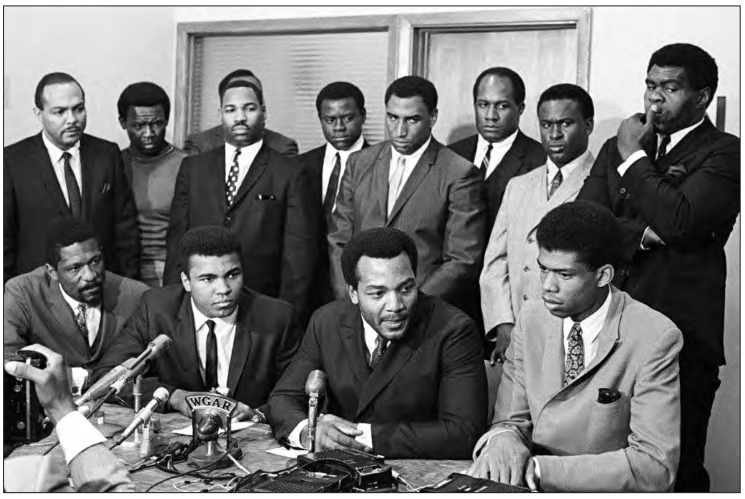
In 1967, Black athletes met in Cleveland in response to Muhammad Ali’s refusal to enter the draft. 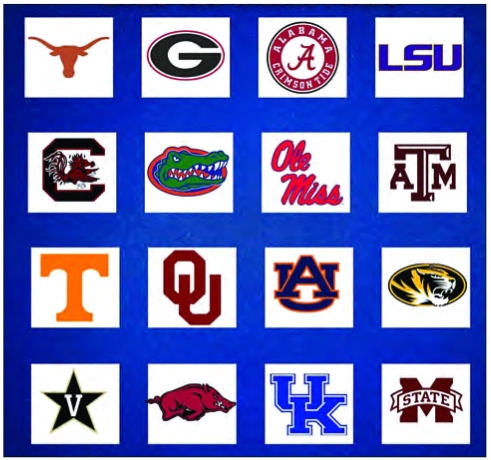
Many southern schools have been targeted by the NAACP boycott.
A “Reclaim Your Vote” campaign encourages Black voters participation in honor of National Black Voter Day.
I begin this article with a direct call to action: Today’s Black athletes must unite and actively resist efforts by the U.S. government aimed at undermining the voting rights of Black people — YOUR PEOPLE!
Under President Donald J. Trump, Black people, including his supporters, now see his effort to erase our race from history. Part of this effort comes from the U.S. Supreme Court’s recent 6-3 ruling in Louisiana v. Callais. Derrick Johnson, president and CEO of the NAACP, said it “gutted what was left of the Voting Rights Act.” The Trump administration and the court decided to “change the maps” in heavily Black voting districts across America, reducing our political voice. Johnson urged Black athletes to join the NAACP in this fight in eight priority states: Tennessee, Louisiana, Alabama, Florida, Mississippi, South Carolina, Texas and Georgia.
“What these states have done is not a policy disagreement. It is a sprint to erase Black Political Power,” Johnson said. “These actions happened in days or even hours after the Supreme Court ruling [May 19], giving extremist lawmakers a playbook to erode Black representation. The economic stakes are high.
The flagship universities in these eight states collectively generate billions in annual athletic revenue.”
The NAACP calls on Black athletes to leave white colleges in those states and attend Historically Black Colleges and Universities (HBCUs), bringing “Name, Image and Likeness” (NIL) benefits with them. Sadly, many young Black athletes still believe their only path to fame is through these “big white schools” in those eight states. Many parents and families hold the same belief.
And too many Black male and female athletes, blessed and fortunate enough to reach their dreams of becoming professionals in their chosen fields, “forget from whence they came” (poverty) and believe that they are “entitled” to the fortunes that their athletic gifts produce for them while forgetting the people who fought, bled and died for the voting rights that allow them to become who they are.
An article in the May 25 issue of Time magazine listed the top 100 philanthropists in this country.
Celebrities, actor Idris Elba (born in England) and his wife, Rihanna (born in Barbados) and Chance the Rapper from Chicago are listed among the top 100, with no Black athletes on the list. This is not simply an indictment of Black athletes. Many are doing good things with their money to help people. But now is the time for the wealthiest of Black athletes to help their race and society by joining the fight for one of our most precious rights: our right to vote, which is being challenged once again.
Judge Frederick Lewis Brown, a respected voice and legal authority, underscores this crisis, warning that Black people face extinction without defending their right to vote. He argues that voter turnout, especially in key states, would have dramatically altered the current political landscape. Brown insists that Black athletes have a unique power to inspire and mobilize change, drawing on the courage and legacy of those before them and amplifying the urgent need for participation in safeguarding voting rights.
Brown continued: “My father (Edgar George Brown, a four-time national Black tennis champion) taught me to fight for my rights. Back in the 1940s, he led a protest at the Virginia National Airport —10 years before Martin Luther King Jr. started his campaign for Civil Rights. As his proud son, I stood next to him, getting my first taste of Civil Rights teaching on that day.
“That lesson led me to Harvard University, Harvard Law School, the United States Military, where I reached the rank of major, and a lifetime of practicing the laws of this country. My father was a member of ‘The First Black Cabinet in this country [read the book “The Black Cabinet: The untold story of African Americans and Politics During the Age of Roosevelt” by Jill Watts] and taught me about the heroic Black people of his day that met frequently (in secret) with President Roosevelt and their relentless determination that the New Deal socioeconomic justice include Black Americans. That was my father, a great athlete and political giant. [He was] my First Hero, who walked with other political giants like Mary McLeod Bethune, long before Rev. Dr. Martin Luther King Jr. was even heard of.”
From the late Derrick Bell, the first Black professor in the history of Harvard Law School and celebrated author, the judge further pointed out, “I learned that Black people will never be free until poor white people get smart and realize that we are not taking anything away from them; we just want our [deserved] piece of the American Dream for ourselves and our children. That dream that has not been fulfilled since the day Black people came to this country. Other races have come to this country in ships. We were brought here as slaves in the bows of ships. What many people in this country fail to grasp is that we may have come in different ships, but we are all now in the same boat. And if the voting rights of Black people are taken away, it will not be long before the same will happen to other races of people in the United States of America.
It should be noted that Black athletes’ and entertainers’ wealth will not protect them if they lose their power to vote.
“During my many years of practicing the law, I learned that the law is about money and politics. White people understand money, while many young, rich, Black athletes don’t have a clue as to the ‘real power’ that their money could produce.”
Boston Celtics legend Bill Russell, one of the true athletic pioneers of civil rights, once told me: ‘I am not a role model, I am a freak of nature due to my height and ability to play the game of basketball. What I am most proud of is my work in Civil Rights.’”
Lessons of life from my father and people like Bill Russell helped make me the man that I have become.”
And just think, if today’s young Black athletes followed Bill Russell’s example, they would be all over this voting rights issue and their voices would be heard.
What would happen if every Black player in professional sports said, “We will not play until this country passes the John Lewis Voting Rights Act with no loopholes! And if that was not enough, I would add that no Black athlete plays any sport on Juneteenth.
To every Black athlete and Black person reading this: I challenge you to stand and fight for your voting rights. History, your community and your future demand your action now.