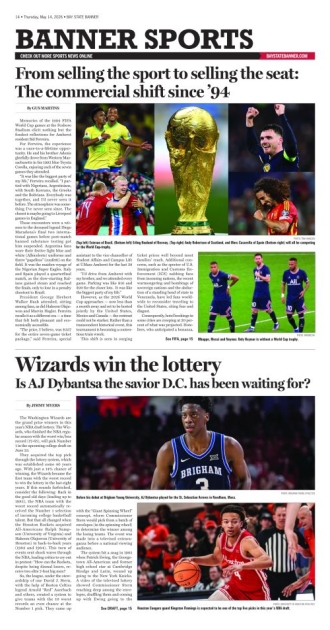
Before his debut at Brigham Young University, AJ Dybantsa played for the St, Sebastian Arrows in Needham, Mass. 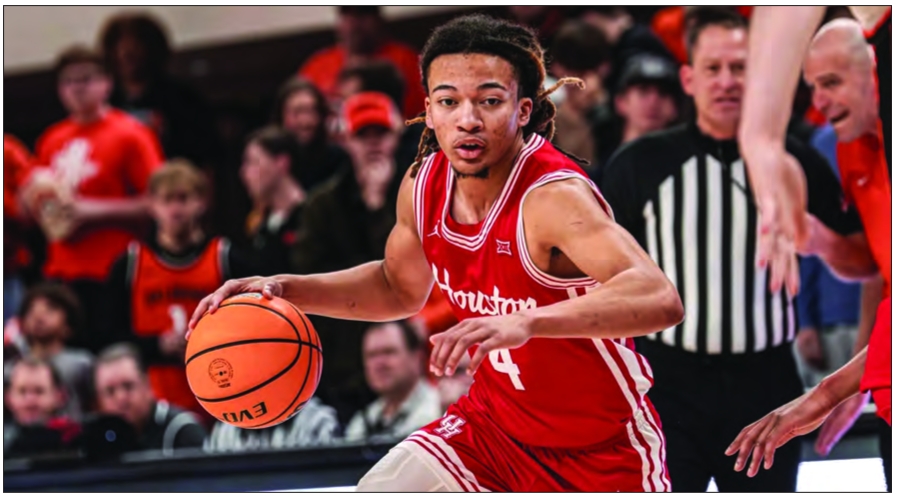
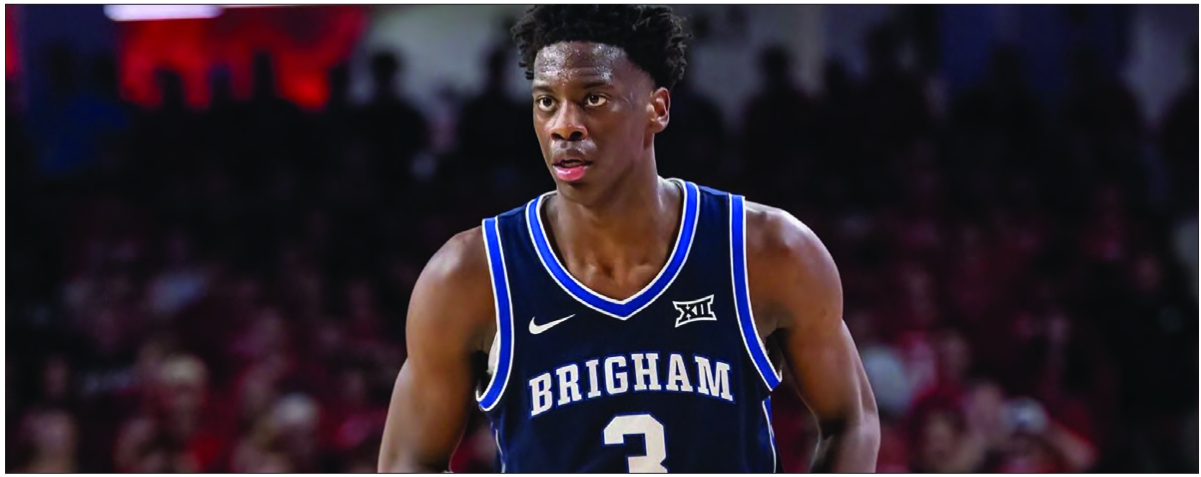
Houston Cougars guard Kingston Flemings is expected to be one of the top five picks in this year’s NBA draft.
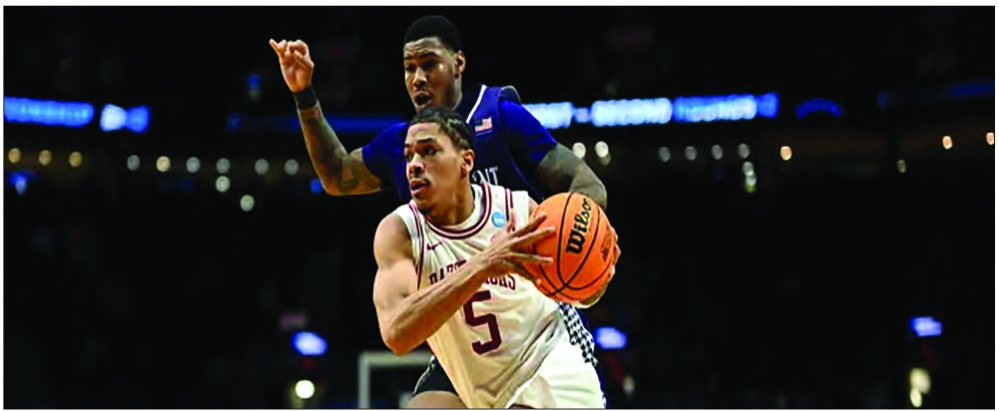
Darius Acuff Jr. will leave Jim Calipari’s Arkansas Razorbacks for the NBA.
Is AJ Dybantsa the savior D.C. has been waiting for?
The Washington Wizards are the grand prize winners in this year’s NBA draft lottery. The Wizards, who finished the NBA regular season with the worst win/loss record (17-65), will pick Number 1 in the upcoming college draft on June 23.
They acquired the top pick through the lottery system, which was established some 40 years ago. With just a 14% chance of winning, the Wizards became the first team with the worst record to win the lottery in the last eight years. If this sounds farfetched, consider the following: Back in the good old days (leading up to 1985), the NBA team with the worst record automatically received the Number 1 selection of incoming college basketball talent. But that all changed when the Houston Rockets acquired All-Americans Ralph Sampson (University of Virginia) and Hakeem Olajuwon (University of Houston) in back-to-back years (1983 and 1984). This turn of events sent shock waves through the NBA, leading critics to cry out in protest: “How can the Rockets, despite being dismal losers, receive two elite 7-foot big men?
So, the league, under the stewardship of one David J. Stern, with the help of Boston Celtics legend Arnold “Red” Auerbach and others, created a system to give teams with the 10 worst records an even chance at the Number 1 pick. They came up with the “Giant Spinning Wheel” concept, where Commissioner Stern would pick from a batch of envelopes (in the spinning wheel) to determine the winner among the losing teams. The event was made into a televised extravaganza before a national viewing audience.
The system hit a snag in 1985 when Patrick Ewing, the Georgetown All-American and former high school star at Cambridge Rindge and Latin, wound up going to the New York Knicks. A video of the televised lottery showed Commissioner Stern reaching deep among the envelopes, shuffling them and coming up with Ewing going to the Knicks.
There were screams of “FIX” from every part of America. There were questions about why Stern dug into the pile of envelopes instead of just picking the one at the top. Conspiracy theorists claim that Stern reached for a “weighted Knicks envelope.” A change was needed to address all concerns about chicanery. Thus, the “ping-pong ball” system came into existence. That was followed by the “secret drawing” of ping-pong balls, which led us to where we are today, where teams are given “percentages” of their chances of getting the Number 1 draft pick. I missed the old system of seeing the pingpong balls spin and be selected on live television. I have issues with anything of this nature being done behind closed doors, even if it is monitored by the highly regarded accounting firm of Ernst and Young, but that is me.
This current system of spinning ping-pong balls — behind closed doors — makes me question the reason for such secrecy. We are not talking about launch codes for nuclear weapons or other national security secrets. We are talking about college basketball players.
With that thought on the table, here is the list of this year’s lottery winners who are being “rewarded for losing seasons.” Another point to make: Something is very strange about this situation. I know that the underlying purpose of this exercise is to create competitive balance in the National Basketball Association, but it has created a more serious issue: “tanking” (i.e., purposely losing games) by teams to improve their chances of getting higher draft positions.
And as much as the NBA claims to be “taking a serious look into the ‘tanking issue,’” very little has been done to seriously address this matter.
OK, enough commentary — here is the list: The Washington Wizards are expected to take freshman All-American forward AJ Dybantsa from Brigham Young University. Dybantsa played a portion of his high school career (locally) at St. Sebastian’s Prep School. It is the first time since Washington was granted the first pick in 2010, when they drafted guard John Wall.
The Utah Jazz picked second, the highest draft position for the team since 1980 when they drafted Darrell Griffith of the Louisville Cardinals. The team is expected to take Kansas Jayhawks All-American guard/forward Darryn Peterson.
Memphis Grizzlies: University of North Carolina forward Caleb Wilson, considered by many to be the college player with the highest potential to be a major star in the league, is expected to be heading to Tennessee.
The Chicago Bulls will pick fourth and are ready to select Duke All-American forward and College Basketball Player of the Year Cameron Boozer. The talented freshman is the son of former NBA player Carlos Boozer, who once played for the Bulls.
With the fifth pick, the Los Angeles Clippers, via the Indiana Pacers, as part of the Ivica Zubac trade. The Indiana Pacers acquired Zubac before the deadline, but it took a bold move that turned disastrous after they gave the Clippers the fifth overall pick in Sunday’s lottery. Indy only kept the pick if they landed in the top four. It went to the Clippers if the Pacers dropped to fifth or sixth. The Pacers needed a starting center to replace Myles Turner as they jump back into contention next season. The risk certainly didn’t pay off. Look for LA to take Arkansas All-American guard Darius Acuff or Illinois guard Keaton Wagler. The rest of the top 10 teams’ draft order is the Brooklyn Nets, Sacramento Kings, Atlanta Hawks (via New Orleans Pelicans), and the Dallas Mavericks.
With the wealth of freshman talent available, there will be a new wave of future stars coming into the NBA. Here’s hoping that they will bring a level of maturity with their considerable talents.