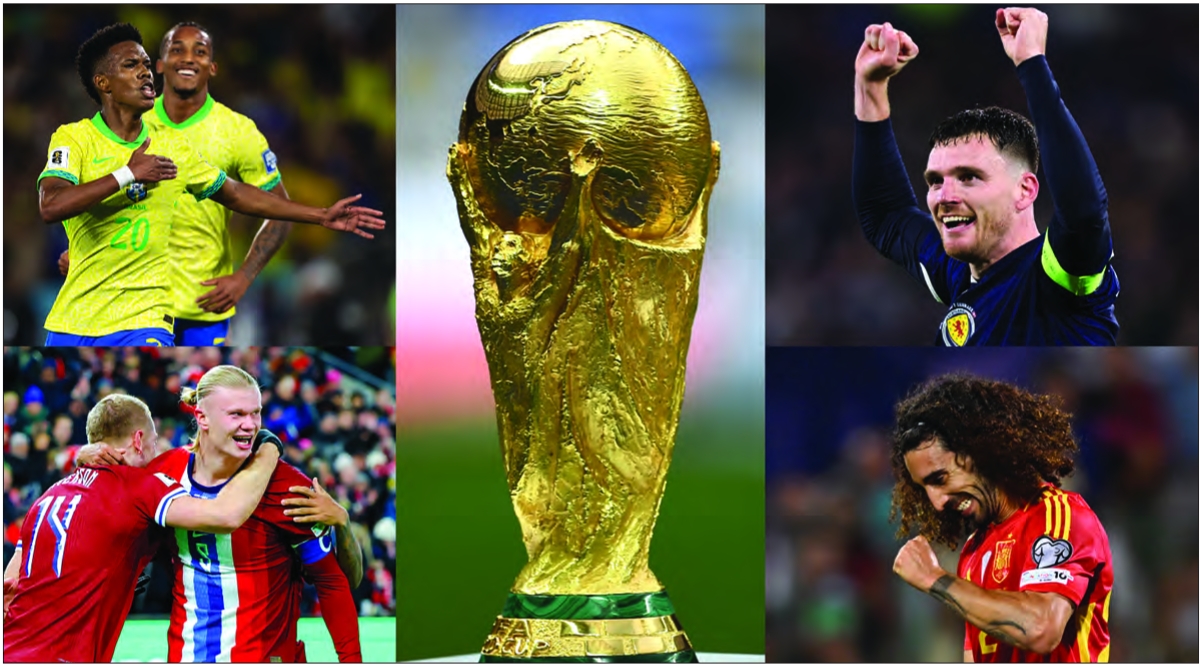
(Top left) Estevao of Brazil, (Bottom left) Erling Haaland of Norway, (Top right) Andy Robertson of Scotland, and Marc Cucurella of Spain (Bottom right) will all be competing for the World Cup-trophy. 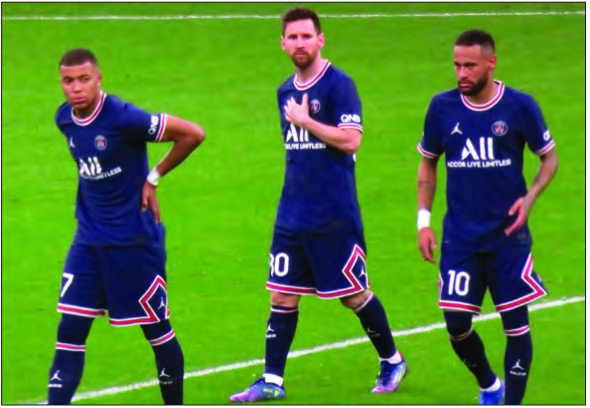
Mbappe, Messi and Neymar. Only Neymar is without a World Cup trophy.
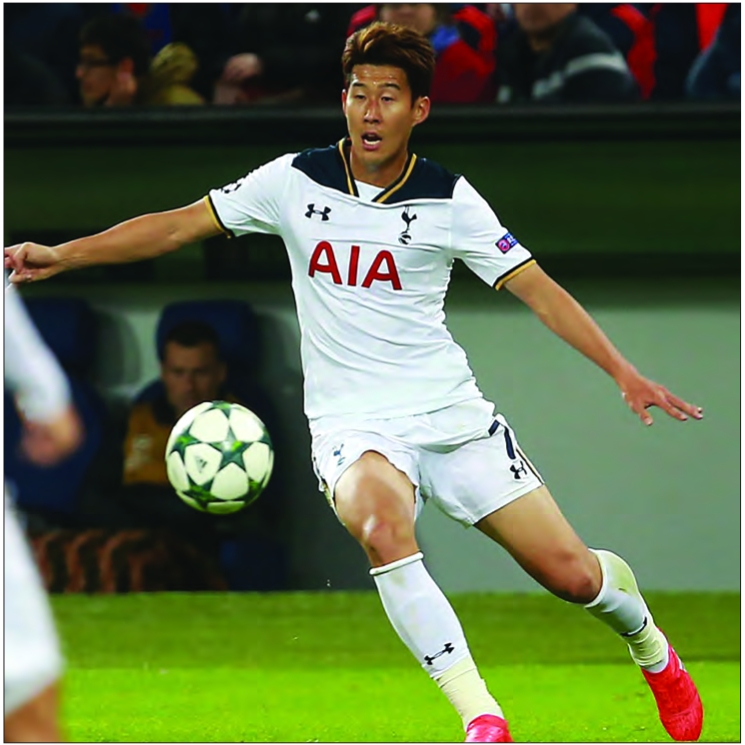
Son Heung-min of Tottenham Hotspur will be the captain of South Korea’s Word Cup Team.
Memories of the 1994 FIFA World Cup games at the Foxboro Stadium elicit nothing but the fondest reflections for Amherst resident Sid Ferreira.
For Ferreira, the experience was a once-in-a-lifetime opportunity. He and his brother Adonis gleefully drove from Western Massachusetts in his 1992 blue Toyota Corolla, enjoying each of the seven games they attended.
“It was like the biggest party of my life,’’ Ferreira recalled. “I partied with Nigerians, Argentinians, with South Koreans, the Greeks and the Bolivians. Everybody was together, and I’d never seen it before. The atmosphere was something I’ve never seen since. The closest is maybe going to Liverpool games in England.”
Those encounters were a witness to the deceased legend Diego Maradona’s final two international games before post-match banned substance testing got him suspended. Argentina fans wore their festive light blue and white (Albiceleste) uniforms and threw “papelitos” (confetti) on the field. It was the maiden voyage of the Nigerian Super Eagles. Italy and Spain played a quarterfinal match, as the slow-starting Italians gained steam and reached the finals, only to lose in a penalty shootout to Brazil.
President George Herbert Walker Bush attended, sitting among fans, as did Hakeem Olajuwon and Marvin Hagler. Ferreira recalls it as a different era — a time that felt both pleasant and economically accessible.
“The price, I believe, was $357 for the entire seven-game ticket package,” said Ferreira, special assistant to the vice chancellor of Student Affairs and Campus Life at UMass Amherst for the last 38 years.
“I’d drive from Amherst with my brother, and we attended every game. Parking was like $10 and $20 for the closer lots. It was like the biggest party of my life.”
However, as the 2026 World Cup approaches — now less than a month away and set to be hosted jointly by the United States, Mexico and Canada — the contrast could not be starker. Rather than a transcendent historical event, this tournament is becoming a contentious train wreck.
This shift is seen in surging ticket prices well beyond most families’ reach. Additional concerns, such as the specter of U.S.
Immigration and Customs Enforcement (ICE) nabbing fans from incoming nations, the recent warmongering and bombings of sovereign nations and the abduction of a standing head of state in Venezuela, have led fans worldwide to reconsider traveling to the United States, citing fear and disgust.
Consequently, hotel bookings in some cities are creeping at 20 percent of what was projected. Hoteliers, who anticipated a bonanza, are now calling the World Cup a non-event, despite it being the world’s most-watched sporting event.
For many, the prospect of being pulled out of line at Customs, of unlocking phones to reveal social media posts based on country of origin or of posting a $15,000 bond to enter the USA, has become daunting — too much for some people to fathom.
“If one of the European teams had dropped out the thing would have unraveled,” said Michael Lavigne, an interim deputy director of the 1994 Boston venue committee.
Indeed, there was considerable debate in Germany about withdrawing, as well as similar discussions in other countries. Iran even faced threats of having its clearance to enter the country withheld. Italy, mentioned as a last-minute substitute, resolutely and gracefully declined after failing to qualify on the field.
Lavigne noted that there’s no World Cup excitement in Boston, perhaps eclipsed by war, rising costs and ongoing economic despair nationwide.
“When we were doing this in 1993 before the 1994 World Cup, it was so much better organized,” he said. “It was because Gov. William Weld wanted it. Mayor Thomas Menino wanted it. We had flyers and posters and bumper stickers everywhere.”
That World Cup, with just a 24-team field, played in rustic, unfashionable NFL stadiums in nine cities, was the highest-attended tournament in history. This year, there are 48 teams spread over three countries beginning June 11.
Then-FIFA president, Brazilian Joao Havelange, a stern-faced patrician, brought rigid leadership, taking FIFA from a small-time organization into a financial and cultural juggernaut starting in 1974.
His successor, Josef Blatter, ousted on corruption allegations after a 20-plus-year reign, still managed to keep the Switzerland-based organization somewhat respectable.
Current leader Gianni Infantino gives off the energy of an unctuous multi-level marketing guru. He bequeathed President Trump an inaugural FIFA Peace Prize at the World Cup Draw in December, unbeknownst to the member countries in the audience.
“Once the ticket pricing came out, it was too much for the average person,” Ferreira said. “A lower-middle-class person, even a middle-class person, could not afford it. I could afford to go to maybe two games or so, but I don’t have an interest in going, and I can afford it. I just choose not to at this kind of pricing. If the average student I have at UMass, who is an avid soccer fan, wouldn’t have the ability to go, too, then I am not going to go.”
Ferreira said a friend crunched the numbers to go to Atlanta with his family of four to see Cape Verde vs. Spain and said it could cost upwards of $10,000.
On-site parking in some cities is going from $200 to $400. A train ticket from downtown Boston to Gillette Stadium costs $80. In New Jersey, taking the train to MetLife Stadium costs $180.
“The tickets from 1994 were $35 and $65,” Lavigne said. “I still have my tickets from that time. Those are the prices that are now $300, if you’re lucky, to $1,000. They [FIFA] are making plenty of money, and they are always saying that this money is going to support soccer programs around the world for underprivileged kids and all that. And they do a lot of that. But for this tournament, you can’t go to these games unless your family is wealthy. If you have to pay $1,400 for a ticket, no way.”