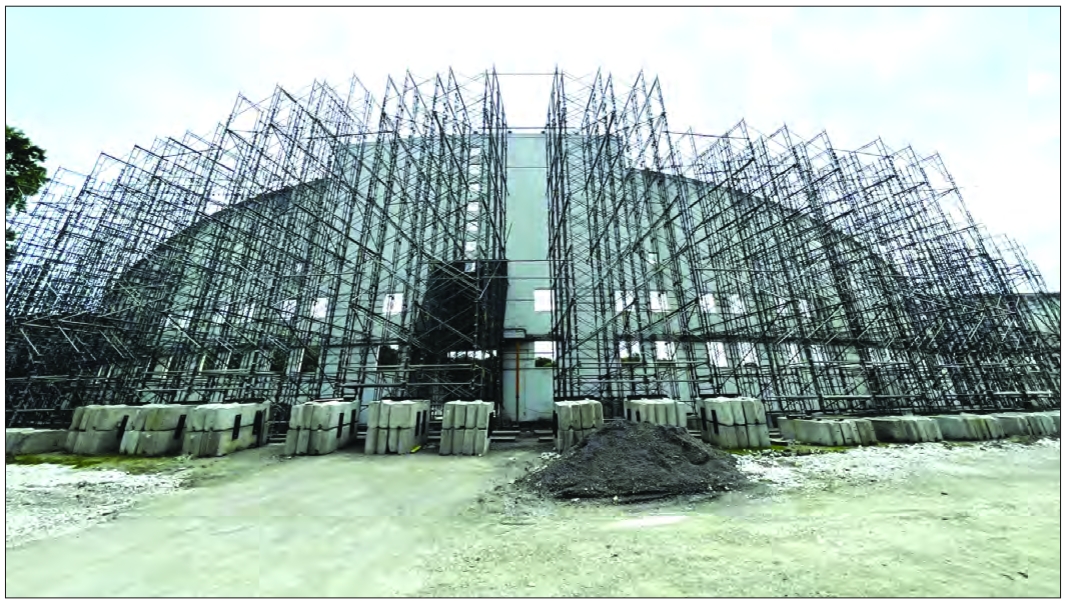
White Stadium under construction in 2025.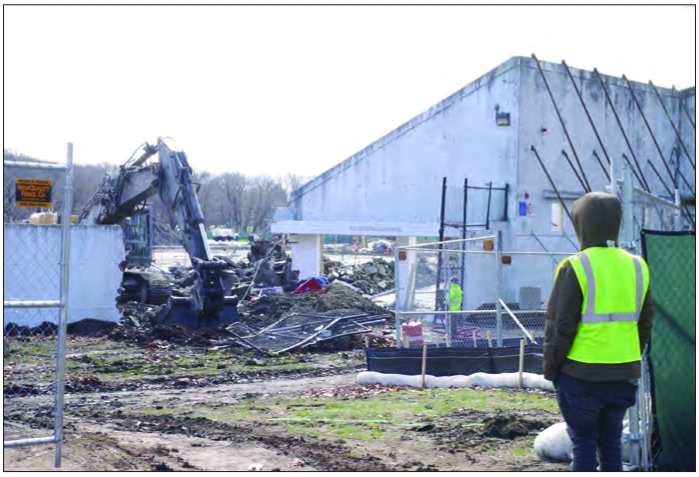
An excavator removes a section of wall next to the west grandstand of White Stadium in 2025
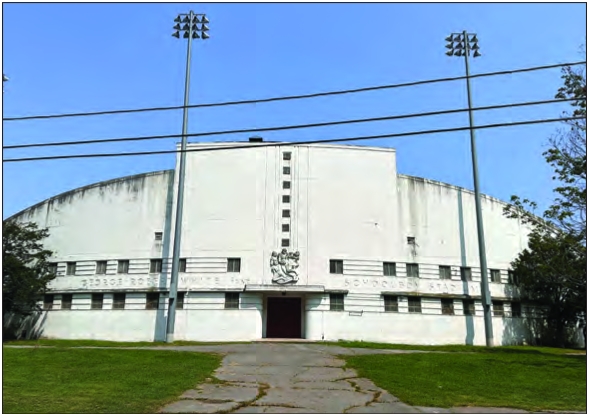
White Stadium, before demolition.
Opponents worry it will fail to reflect neighborhood priorities
A new city-organized advisory is set to bring neighborhood perspectives into the redevelopment of White Stadium in Franklin Park, which borders Jamaica Plain, Roxbury, Dorchester and Mattapan.
The 15-member body aims to provide residents a voice in the controversial construction project, as well as general operations. However, there is some doubt that the group will provide real accountability, according to several residents and local leaders opposed to the project.
According to a May 4 press release announcing the council’s members, the group will receive regular updates from the city, Boston Public Schools athletics and Boston Legacy Football Club, the professional women’s soccer team set to lease the facility. The group includes neighborhood representatives and staff and student voices from BPS.
Boston Mayor Michelle Wu said the council will “be instrumental to making sure this project reflects the needs and priorities of our residents.”
Kim Miner, chief external affairs officers for Boston Legacy FC, said the soccer team sees the council as representative of an “ongoing, meaningful partnership with the community,” something they believe is essential.
“It will play a critical role in building trust and accountability through transparency and ongoing engagement, providing a consistent forum for listening to and sharing neighborhood perspectives,” Miner said in a statement.
The concept of the advisory council was first outlined in the cooperation agreement negotiated between the city and Boston Legacy FC in late 2023.
The city announced its plans to pursue a public-private partnership to redevelop the stadium, a BPS sports facility, in the spring of that year.
Franklin Park Coalition President Ricky Thompson said he is confident the new group will help shape priorities around the stadium. The nonprofit advocates for the city’s largest park, and was involved with the push to get the advisory council developed.
“It provides a voice to those other than the soccer team and other than the city — those of us like the Franklin Park Coalition who have a stake in the park, those who are neighbors around the park that have a stake in the park and a stake in the stadium,” Thompson said.
But, like much of the Wu administration’s plan to rebuild White Stadium, the latest announcement faces concerns from the project’s opponents, who see it as the latest in a string of instances where the city refuses to listen to the voices of residents who live right around the park – specifically those most connected to it.
Louis Elisa, president of the Garrison-Trotter Neighborhood Association, said he views the Advisory Council as a “sham.” He believes the members of the committee largely have a limited history of working in or advocating for Franklin Park and White Stadium.
Elisa also was concerned by the number of city employees on the council, which includes two members of the Wu administration, as well as two BPS employees, in addition to a staff member from the Boston Legacy FC team.
“It clearly does not speak to what advisory councils are supposed to do, and they set it up as a way of not having to deal with the people in the community who’ve been working with White Stadium, with Franklin Park, over the last years,” said Elisa. “They just wanted to find a way to distract people from the real issue, which is that they are not representing interests of the communities that surround the park.”
Elisa is also a member of the Franklin Park Defenders, a group of residents advocating against the city’s redevelopment plan at the stadium. They say that the inclusion of a private soccer team at the stadium is an unlawful use of the public land. A spokesperson for the Franklin Park Defenders said the coalition was not issuing any comment on the Advisory Council as a group.
Thompson, in contrast, said he thinks the council’s makeup “seems pretty representative” of various stakeholder groups connected to the stadium.
It will be chaired by Luis Perez Demorizi, the city’s executive director of Franklin Park, City Coordinator Anshi Moreno Jimenez and Boston Legacy FC Head of Facilities Matt Balk. The council will include nine community members, as well as City Councilors Brian Worrell, Miniard Culpepper and Ben Weber, the three councilors whose districts neighbor Franklin Park, in an ex officio capacity.
The advisory council will also provide feedback and ideas regarding how a new Community Annual Fund, part of the package of privately funded community benefits, will be spent. Starting at a $500,000 annual commitment and increasing by 3% annually, it will be funded entirely by the Boston Legacy FC team.
“It’s great that we’re getting those funds, but if we have no say in where they go and what they do, they’re not much use to us,” said Thompson, who said he’d like to see the investment go toward Franklin Park as a whole, as well as supporting local businesses and student events.
For Elisa, the $500,000 in funding is “a joke.” He pointed to a comparable community benefits agreement with the Kraft Group in Charlestown, related to the construction of a soccer stadium in Everett that will host the New England Revolution team. There, the community has been promised an immediate $1.5 million investment with annual $300,000 payments for the five years.
The new advisory council is the latest development in a project that has faced criticism for allegedly ignoring community concerns.
Residents have said they worry the private-public partnership will bring in increased traffic, excessive noise and limits to when Boston Public Schools teams can access the facility.
Opponents have also decried the project’s rising price tag — up to $135 million, as of February, from an initial estimate of $50 million — while floating their own proposal that they say would be cheaper and could be done without private partnership. In February, Wu said that the rising costs are due to rising material costs and an expanded scope for the project based on community feedback. The February estimate is the final budget for the project, according to the city.
The city’s efforts to redevelop the stadium also face a pending lawsuit, currently before the Massachusetts Supreme Judicial Court. In April, the state’s highest court heard arguments in the case, in which the Franklin Park Defenders alleged the public-private partnership with Boston Legacy FC amounted to the unlawful privatization of the stadium. The case reached the Supreme Judicial Court on appeal, after a Massachusetts Superior Court justice ruled in April 2025 that the city’s plan to lease the stadium to the team was lawful.


