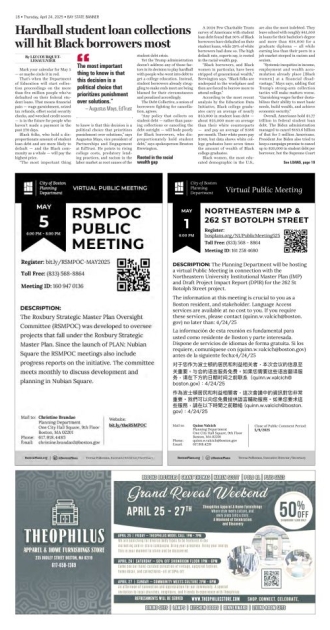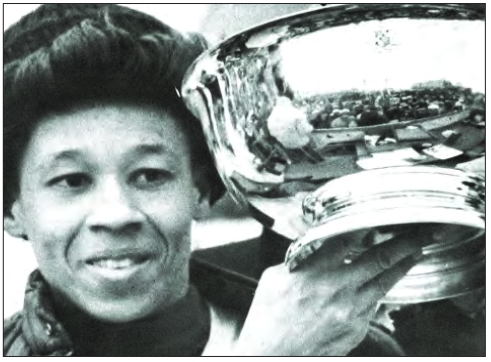
Marilyn Bevans became the first African American woman to win a marathon. 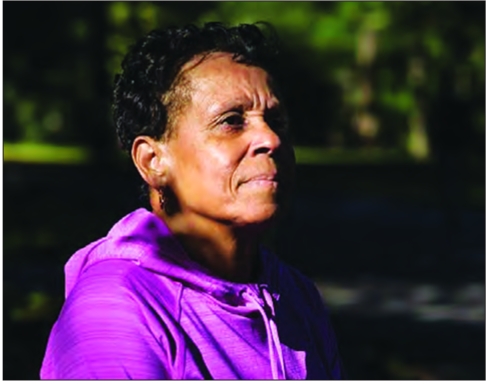
In 1977, Ms. Bevans became the first African American woman to medal in Boston.
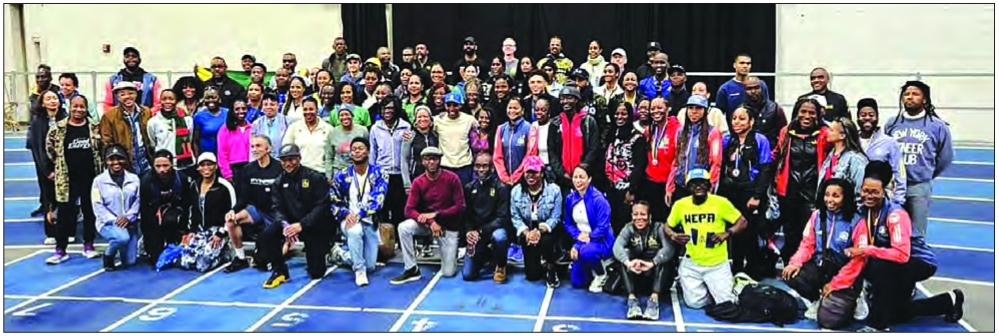
Members of the Black Unicorns gather at the Reggie Lewis Track and Athletic Center.
With the running of the 129th Boston Marathon, over 30 thousand stories will be recorded into history, some huge and some so small. They will be cherished only by the people, family and friends of those who really care.
The huge narratives will talk about the ultimate victors of the 26.2-mile adventure through the streets of Massachusetts. Wheelchair champions Marcel Hug of Switzerland finished first in a time of one hour, 21 minutes and 34 seconds for his eighth marathon, and American female Savannah Scaroni won her second in one hour, 35 minutes and 20 seconds.
Kenyans John Korir, who finished 2:04:45 and Sharon Lokedi, who finished 2:17:22, breaking the old course record by over two minutes, were victorious in the men’s and women’s professional running divisions. John and his brother Wesley are the only siblings to ever win the Boston Marathon.
And while runners from the African continent continue their domination of marathon running, African Americans and other minorities from communities of color continue to ask the question: Why can’t we compete, especially against our foreign brothers and sisters from the African continent.
Breaking it down this way, Rochelle Solomon, cofounder of Black Unicorn Marathoners, said, “African
Americans as well as other minorities of color will become dominant on
the marathon scene when there is more attention given to training and
adopting the mindset needed to develop such athletes in marathon
running.”
The Black
Unicorn Marathoners organization deserves credit for its ongoing efforts
to honor those minorities that have blazed a trail for the current
generation to follow. On April 19, the 11th Annual Black Unicorn
Marathoners Celebrate and Connect Event had a dual ceremony that was
held at the Reggie Lewis Track and Athletic Center. There, they honored
such running pioneers as Aaron Morris, from Brooklyn, New York, who is
recognized as the first person of color to run the Boston Marathon back
on April 19, 1919, exactly 106 years ago. He finished sixth in a time of
two hours, 37 minutes and 31 seconds.
The
celebratory event included highest honors to Marilyn Bevans, the first
U.S.-born African American Woman to run a sub-threehour marathon in
Boston, back in 1975. Other names to the 2025 Bevans 50th Anniversary
Team include:
Alisa Harvey, with a distinguished running career spanning over 40
years; Michelle Wheeler, a worldclass wheelchair marathoner, mother,
clinical rehabilitation counselor, and winner of the Boston Half
Marathon and the Sanlam Cape Town Marathon in 2024; Erica
Stanley-Dottin, a dynamic force in the running world who is co-captain
of the Black Roses NYC, the 25th U.S.-born Black woman to break the
threehour barrier in two hours and 52 minutes at the Berlin Marathon;
and Tay Artis, a former hurdler-turned-distance runner who debuted in
the 2018 Chicago Marathon through the Nike Women Marathon Project and
earned her first Boston Qualifier in Berlin in 2022.
There
was also special recognition paid to the 1955 team of color, led by
Theodore “Ted” Corbitt and two Puerto Rican runners, Rudy Méndez and
Luis Torres, who holds the distinction of being the only minority squad
to win the Boston Marathon Team Championship.
In
their mission statement, the Black Unicorn Marathoners Celebrate and
Connect BIPOC runners associated with the Boston Marathon, from
qualifiers and charity runners to invited entrants and alumni.
“We
strive to elevate the visibility of Black excellence in long-distance
running, build bridges to the next generation, and expand the narrative
of who belongs on the marathon stage. Our vision is one of connection,
education, and transformation — ensuring that the Boston Marathon
reflects the full breadth of its community, now and for future
generations.