Sandro Tavares There have probably been times when you’ve learned something about someone that’s given you a newfound appreciation for them, whether that be a story about your parents from before you were born, a skill that
you didn’t know your friend had or even learning that a celebrity has
similar interest as you. This past summer I had a similar experience. I
was at a library waiting for my friend who needed help with his writing
and while waiting, I found a book titled Writing on the Wall, which is a
collection of short stories written by Mumia Abu-Jamal while serving
his life sentence, which he is still serving.
Mumia
Abu-Jamal is a former activist, journalist and a founding member of the
Philadelphia chapter of the Black Panther Party. He was convicted in
1980 for the murder of a police officer named Daniel Faulkner. This
followed his extensive coverage of a shootout between the Philadelphia
Police Department and MOVE, a political and religious organization in
Philadelphia between 1972 and 1985. MOVE was led by a man named John
Africa, who was a friend of Mumia’s
and a consistent enemy of the the police department. According to local
news coverage at the time, John Africa was a villain. Mumia writes in
depth about his conviction and the unbelievable amount of violence that
he
experienced leading up to his trial in detail in the early chapters of
the book. It was difficult for me to read due to the gruesome nature of
his situation.
But,
aside from my disgust toward the situation and our country’s criminal
justice system, I was also filled with a sense of pride and admiration.
It had not truly occurred to me what it meant to be Black and a
journalist in America before reading that, and the level of risk that
people subject themselves to in the pursuit of presenting the truth when
the truth is so desperately needed in the process of moving forward as a
people. The press is often referred to as the fourth branch of
government because of the important role that it serves in informing the
public and serving as a check on government action. Where has this role
been more clearly fulfilled than in the work of Black journalists like
Ethel Payne, Ida B. Wells, Roi Ottley, Gordon Parks and Mumia Abu-Jamal.
This
is a time when the president can sign executive orders that allow
police to invade people’s homes and tear apart families, orders that
allow the government to invade our neighboring countries with only the
president’s permission and orders that can remove the social safety nets
that we fought for so long through the democratic process to get. At a
time like this, it’s all the more important that the public stays
informed and that journalists hold the government accountable with as
much passion and dogged persistence as those Black journalists of the
past did.
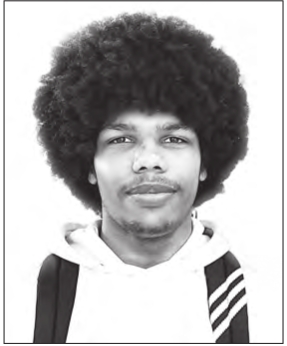
Sandro
Tavares, has been with Teens in Print for two years and writes about
society and politics. Sandro plans on majoring in molecular biology.