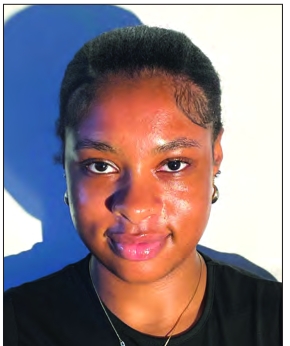
Mya Bentick The word “woke” has existed in the Black community for years. Created by Black Power movements dating to the 1930s, Black revolutionaries have defined the term as the action of Black people being conscious of the truth and not being under a distorted reality. To be woke is to be interpreted as being awakened from the slumber of mental slavery many Black people across the world are still under.
The word woke itself is unique, one of the reasons being that this word, like others, is only designated for Black people. This word exclusively applies to us and no other people due to our experience with oppression. Today, non-Black people who assume they have the right to adopt the term overlook its true context and purpose. Non-Black people who use woke because
it embodies the process of being radically aware of the society we all
live in is not only misused, but is condemned by Black revolutionaries,
including myself.
With
this word being so bastardized in the modern day, it tends to get
tossed around in weak punchlines by those who mock Black people in
online chatrooms for the reward of a dry laugh from peers. Viewing the
current use of the word, it is used in the mockery of Black people by
other races, politics, alt-right white supremacist groups and a handful
of Black people who say they’re for the people but really aren’t.
Altogether, the word has been taken away from its original meaning,
leaving most Black people without the knowledge of its profound
significance and misusing it. But how did a word with such meaning
become a signal word for facades of proclaimed revolutionaries and
essentially become a dead name to Black people? Well, the short answer
is white people, but once again, this answer is more complex than you
may think.
Woke is a participle
adjective and a part of AAVE (African American Vernacular English),
often misused by different demographics. As I defined it before, woke is
the action of Black people being conscious of the truth. The definition
of woke can be understood as the beginning of a revolution inside the
brain that manifests into reality. In the origin of this word, examples
of how woke is used correctly are in the Black revolutionary
perspective. An example of how this word is used correctly is from the
1970s play “Garvey Lives!” written by Barry Beckham. Beckham writes:
“I’ve been sleeping all my life. And now that Mr. Garvey done woke me
up, I’m gon’ stay woke.” In the line, the word is used to describe the
action of being woke and shows the remaining woke state the person is in
from learning about Marcus Garvey, a Black revolutionary who in the
early 20th century was a leader in the creation of the Pan-Africanist
movement. Along with the grammatical correctness of the word is the
connotation of it, too. With the purpose of woke being exclusive to
Black
people, it creates the additional meaning, which is only to be applied
to Black people who have unlearned white supremacy and adopted an
emancipated mindset. Anything outside that given definition is
incorrect.
Now that
there is an idea of how woke is used correctly, here are some examples
of how it is misused. In politics, where non-Black people are describing
people who are Democratic or Republican as woke because of some sort of
radical awakening, is automatically incorrect.
When
a Black person claims that a non-Black person is woke for being aware
of social injustices is erroneous. Self-proclaimed Black revolutionaries
who participate in the division of the Black community, claiming
themselves as woke, are flawed and in denial. And lastly, racist echo
chambers where white supremacists use this term to differentiate
different types of white supremacists based on how woke they are, and
mocking Black people with this term, will always be incorrect. The word
woke was never meant for such loose interpretation and to be open just
for anybody to use. Woke only applies to Black people who are
legitimately woke.
Time
and time again, woke is misused by Black people who do not know about
Black revolutionaries and non-Black people and chose to take the term
and run with it. When Black revolutionaries used this term, it was much
deeper than waking up from the lies you’ve been told throughout your
history. It was also the beginning of a non-televised revolution that
birthed many leaders in the Black community. Part of the reason why
Black people are misinformed about this word is because of not being
taught about Black revolutionaries in school and instead, being educated
on their oppressors. This allows pro-Black thought by revolutionaries
to be untaught and misinterpreted by the masses. As for other non-Black
people, no amount of education can stop them all from dragging the word
through turmoil and erasing its original meaning. Woke for me, however,
will always be a word of resilience in a world of oppression, being free
from all restraints against me and those who look like me.
In
the future, if Black people as a collective want words like woke to be
protected and not killed by the abuse of those who do not look like us,
our energy should be geared toward educating ourselves instead of those
outside of our community so we can work to preserve our ways of
effectively communicating with each other.
Mya
Bentick is a talented youth writer, reporter, and intern born and
raised in Boston. With a passion for writing, she thrives on telling
stories that inform, and provoke thought to her audience. Her writing
often explores social issues, and entertainment, through her unique
perspective as a young Black Caribbean American woman and enjoys
reimagining the society we live in.


