This Black History Month, the Banner is teaming up with Write Boston’s Teens-In-Print Program, highlighting young voices of color. Each week, we will feature the work of three new students, who will deliver their perspectives on Black History and what it means to them.
The overlooked history of Black Bostonians
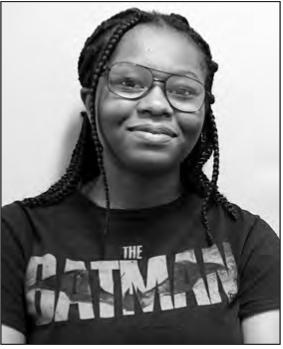
Gloria Ekechukwu When
I scroll my For You page on TikTok, oftentimes I’m greeted with a
TikTok about Boston, and it always shows the same areas and topics that
have been heavily discussed before. Whether introducing new, expensive
dining options in Back Bay or shedding light on tourist spots in and
around Boston. It’s been a common theme for proclaimed “Bostonian”
TikTokers, to portray a crafted image of the city. This image is widely
accepted by anyone outside of Boston and adopted as an accurate
portrayal. Beacon Hill is a neighborhood in Boston known to be on the
tourist bucket list. However, the same neighborhood praised for its
intricate architecture and importance to the historical map of Boston
has a crucial piece of its history hidden: it was once a Black
neighborhood.
During
the early 1600s, English colonists began their settlement in Boston and
in 1635 a beacon mounted on a hill was used to warn settlers in the
countryside of danger. This beacon was soon regarded as Beacon Hill and
Thomas Hancock, the uncle of John Hancock, established the first home in
the area. During the Revolutionary War, British troops overtook Beacon
Hill, prompting the evacuation of British troops from the neighborhood
and a postwar revamping of Beacon Hill. Boston architect Charles
Bulfinch took part in the reconstruction of the neighborhood
transforming Beacon Hill into a place where Boston’s richest and most
powerful residents resided. This part of Beacon Hill was regarded as the
southern slope and overshadows the historical backgrounds of the
western and northern slopes of the neighborhood.
While
the southern slope is renowned for its prominent wealth and power, the
western and northern slopes were homes to working-class families,
notably African Americans. Hidden in this side of Beacon Hill was a
strong and tight-knit community of middle-class and African American
Bostonians who exemplified progressive changes that helped set
precedents in the city and the country. It’s in these areas that one of
the first integrated schools in the United States could be found. Also,
prominent abolitionists and activists
lived there, such as Maria W. Stewart, Lewis and Harriet Hayden and
Josephine St. Pierre Ruffin. Also located in Beacon Hill is the African
Meeting House, built in 1806, which is the oldest surviving Black church
in the U.S. The African Meeting House served as a meeting space for the
Black community in Boston and played an important role in the
Underground Railroad and abolitionist movement. The building was used to
house enslaved people who escaped through the Underground Railroad.
Notable activists including Frederick Douglass congregated there to hold
meetings and space for discussion and advocacy. In addition to being an
important building for political and social progression, it also was a
valuable resource in education for both young and adult African
Americans in the early 1800s.
Historical
awareness is important and today, the stories of the Black community in
Beacon Hill are often swept under the rug on social media. On TikTok,
many creators focus on the southern slope of Beacon Hill and often
forget the significance
that the northern and western slopes have on Boston’s history. Beacon
Hill has been reduced to a tourist attraction for its colonial
architecture and overpriced food spots, rather than a place for the
celebration of Black American determination throughout the 1800s. This
lack of coverage of an important part of Boston history on social media
is frustrating to me as a black Bostonian as it feels as though Black
American history is, in a sense, being gentrified by new-wave
influencers. While not talked about much, concealed in that area is the
Museum of African American History located on Joy Street. The MAAH
offers locals and tourists an interactive telling of Black American
history in the city and sheds light on the stories of the people who
lived on the northern and western slopes of the neighborhood. The museum
acts as a way to preserve the history of the Black Bostonians who lived
there, leading to more people being exposed to underrepresented parts
of Beacon Hill’s history.
Beacon Hill serves as an unintentional commentary on
how much of the historical importance of Black Bostonians is treated.
While there are many beautiful landmarks and places that tourists crowd
around to marvel at, many seem unwilling to peer into the stories of
those not highlighted by the city’s brochures. This unwillingness
continues to shed light on the city’s history equally, allowing for the
abandonment of groups intertwined in the city’s foundation.
The
erasure of the historical significance that Black Bostonians,
especially on social media, is the result of historical neglect.
Although African American activism and progress have roots in Beacon
Hill, yet this is rarely talked about. Rather, it’s portrayed as a
historically white, affluent neighborhood. Shining light on the
importance of African American history in the city isn’t just about
adding context, it’s also about ensuring that the stories of those who
have been forgotten are heard. Beacon Hill represents the cultural
diversity seen in many parts of the city, and promoting Boston’s
cultural diversity to the mainstream is presenting a more accurate
tapestry of the city. One that isn’t portrayed on social media.
Gloria
Ekechukwu is a teen writer based in Boston who enjoys writing about all
things entertainment and niche. She spends her free time watching
movies/shows, playing video games, and reading books she’ll never
finish.


