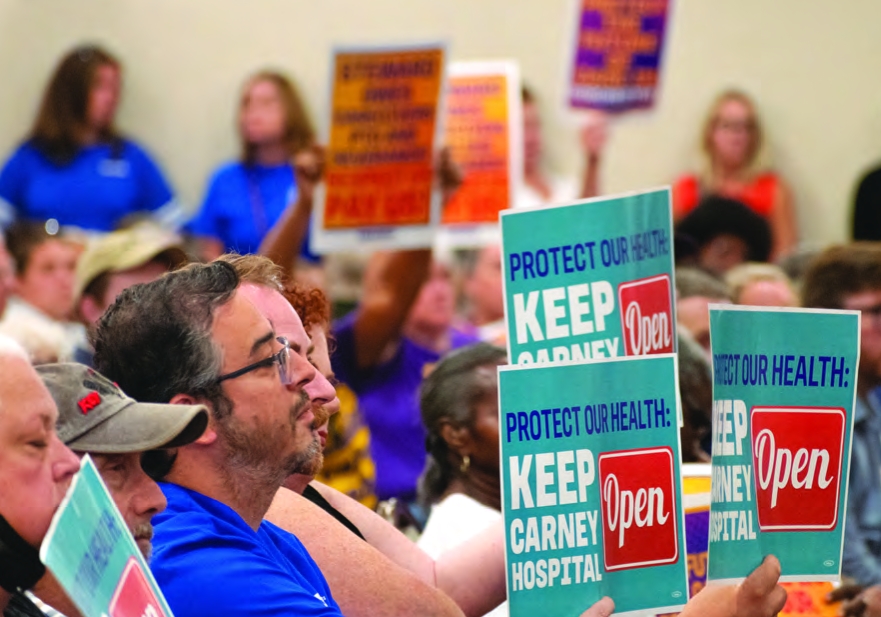
The
closure of the Dorchester hospital came despite protests from
employees, patients and community members throughout the month of
August. 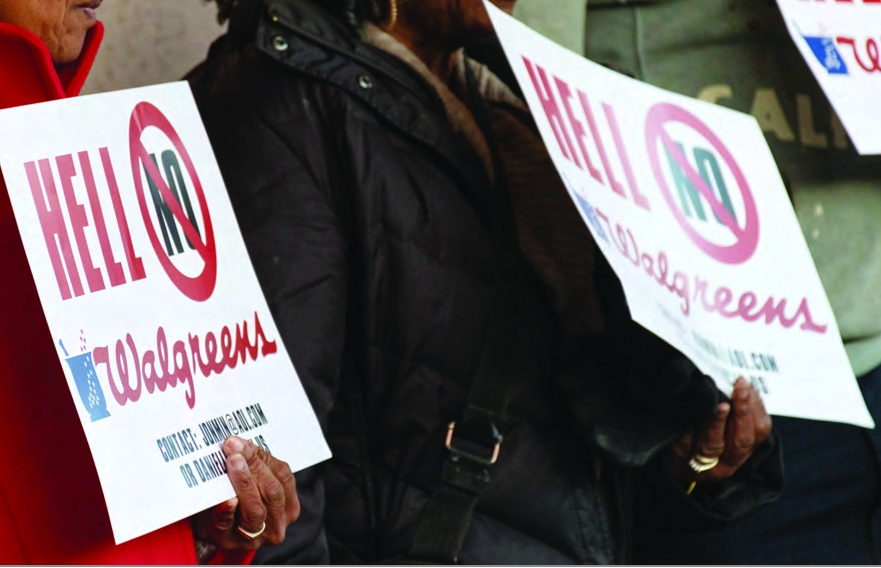
Community members protest the closure of the Warren Street Walgreens in Roxbury.
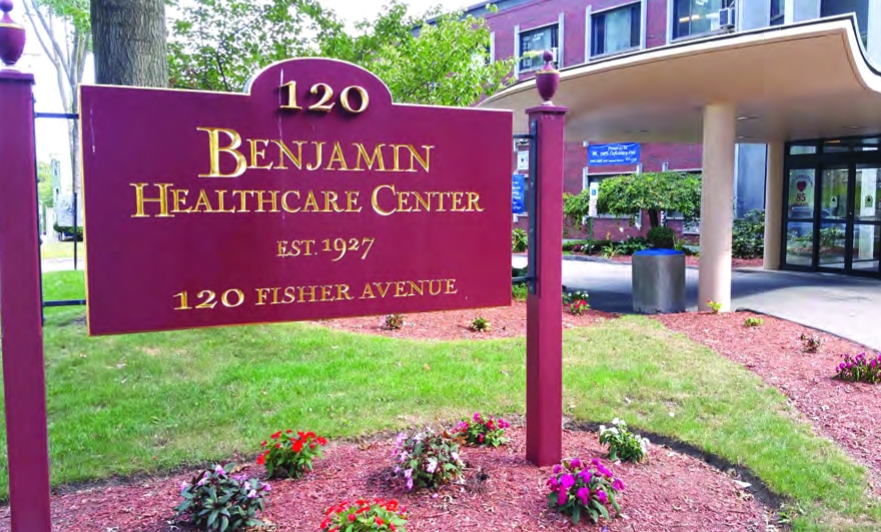
A
fight led by community members and staff saw the Edgar Benjamin
Healthcare Center on Mission Hill come under court-appointed
receivership in April.
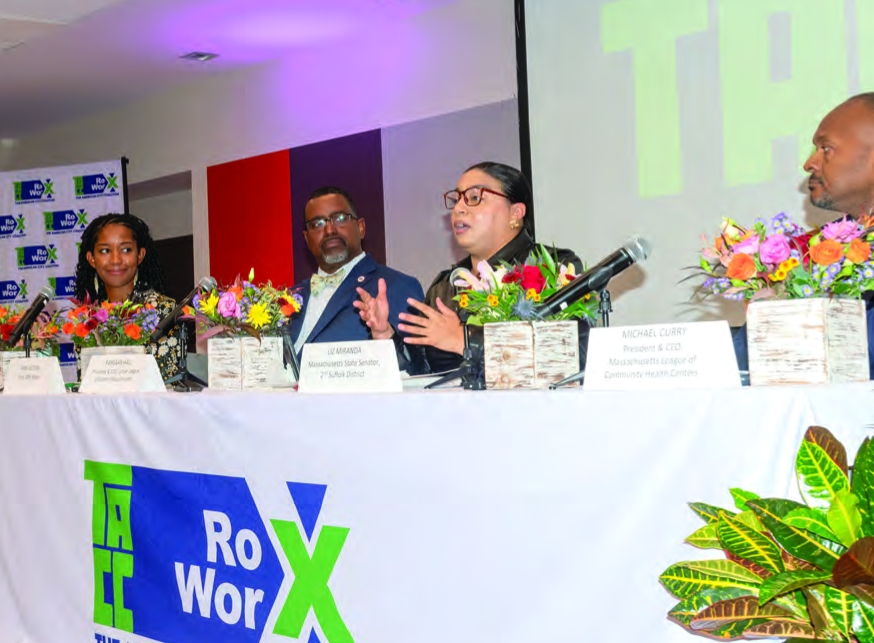
Sen. Liz Miranda, center, discusses the future of diversity-focused workforce development at the Roxbury Worx conference.
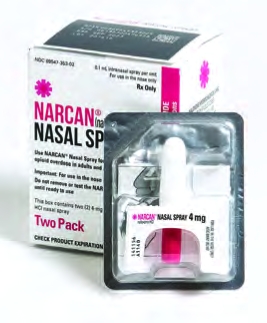
A priority of the city
has been to increase access to naloxone, a medication often sold as
Narcan, that can reverse the effects of an overdose.
For residents in Boston and surrounding communities, 2024 saw heightened discussions about the closure of health care facilities and the elimination of health care resources, highlighting gaps that already existed in lower-income areas and communities of color.
The year also saw a continued push to ensure that, as science and technology fields grow, communities of color can make a place for themselves in that space.
Loss of health resources highlight gaps in care
Throughout 2024, Roxbury, Dorchester, Mattapan and surrounding communities grappled with the closures of a variety of health care resources and facilities.
That question of health care access — and places where it is limited — was one that wasn’t new to the city, said Bisola Ojikutu, executive director of the Boston Public Health Commission, but the loss of additional resources across the city highlighted needs that have long existed
Perhaps most prominently, in August, the ongoing saga of the embattled Steward Health Care’s presence in Massachusetts came to a head as Governor Maura Healey’s push to get the for-profit health care company out of the state led to the sale of six of the company’s eight functioning hospital campuses in early September.
But for Carney Hospital in Dorchester and Nashoba Valley Medical Center in Ayer, the end of the summer saw the end of operations as both facilities permanently closed when no “qualified bids” were found during court proceedings in a Dallas-based bankruptcy court.
The closure of the Dorchester hospital came despite protests from employees, patients and community members throughout the month of August, as Steward pursued a closure period of just over a month — condensed from the 120-day period that is outlined under state regulations.
At a state Department of Public Health hearing, held Aug. 13, supporters packed Florian Hall in Dorchester, filling more than three hours with testimony about what Carney meant to them.
Some told stories about how the hospital had helped and supported them and their loved ones; some presented data; and one supporter sang a song she had written about its role in the community. And speakers often wore more than one hat — staff and patients were often one and the same — as they extolled the community health and economic benefits of the facility that operated near Ashmont station.
Still, on Aug. 31, the facility shut its doors, leaving community members to travel further afield or face longer wait-times at other facilities — concerns that were highlighted throughout the closure process.
In response, the state launched a 34-member working group, led by Ojikutu and Michael Curry, president of the Massachusetts League of Community Health Centers, including health care experts, state and city officials and community advocates, the members of which were announced in October. A similar working group was assembled to address the closure of the Ayer hospital.
Since then, the group has met several times, including at a community meeting Dec. 12, looking to develop a plan for the how the area can address impacts from the closure and close gaps that existed in care before the hospital shut its doors.
Ojikutu said closure has highlighted disparities in things like preventable cancers, diabetes, heart disease and other factors that reduce life expectancy in the surrounding communities of Dorchester, Mattapan and parts of Hyde Park, which have long existed but have been exacerbated by the loss of the medical facility.
If there is any sort of silver lining to the closure, it is the fact that the working group,
which is slated to issue its assessments in early 2025, now has the
opportunity to consider the impact of the hospital closure and those
gaps that existed before.
“I
think that we’re at sort of a point where the fact that we have this
one hospital that has closed … really gives us an opportunity to talk
about these issues, to think strategically about what the real needs of
this community in terms of access to care are,” Ojikutu said.
It’s
a conversation that fits into a broader initiative the health
commission announced this summer, called the Live Long and Well Agenda,
focused on closing gaps in life expectancy in the city, spurred in
particular by data released by the BPHC in 2023, which found a 23-year
life expectancy gap between a census tract in Back Bay and another tract
in Roxbury two miles away.
Ojikutu
said the commission plans in January to issue a request for proposals
to use a $10 million contribution from the Atrius Foundation to address
economic mobility as it impacts health and life expectancy.
The
campaign, as well as broader efforts from the health commission and in
health advocacy circles in the Boston area, will focus on upstream
factors — what public health experts call social determinants of health,
things like housing, food security or the economic mobility at the
heart of this first push — as a way to try to close health disparities
and life expectancy gaps.
Months
before the closure of Carney, across town in Roxbury, community members
gathered in a falling January evening to protest the planned closure of
the Warren Street Walgreens. Community action won a brief, twoweek
extension before the store shut down, but on Jan. 31 it closed, leaving
an empty building and reduced access to the pharmacy services it
provided.
The Warren
Street Walgreens followed three other closures in Boston a little over a
year before, all also in predominantly communities of color.
The
closure raised concerns of a so-called “pharmacy desert” — though, city
officials, acknowledging the impact of the closure, did identify six
stores within a mile of the shuttered Walgreens.
Rev.
Miniard Culpepper, senior pastor of the Pleasant Hill Missionary
Baptist Church, said that the loss of the pharmacy may have shaken up
the lives of community members, especially nearby elderly residents who
now have added challenges in getting their prescriptions or receiving
other care like vaccinations, especially with longer travel times that
make it tough to get to other stores before they close.
“It
puts us in [a] more vulnerable position, health-wise,” said Culpepper,
who was at the center of the fight to keep the store open. “I can’t say
we’ve lost lives because that Walgreens gone. I can say that it’s a
threat to folks’ health.”
In
the wake of the store shutting down, the Urban League of Eastern
Massachusetts and the city of Boston announced plans to partner with
Lyft to help close access gaps, a program that spun off into a broader
program called the Holistic Health Initiative, which the Urban League
launched in November.
Efforts like the one from the Urban League have helped,
but not in a significant enough way, Culpepper said. Instead, he and the
Communities of Color Coalition for Health Equity, which he helped
organize to fight the closure, are now advocating a proposed ordinance
in the Boston City Council that would require pharmacies and other
health resources to provide 90 days’ notice before shutting down.
Similar legislation was approved in the Massachusetts House of
Representatives over the summer.
But 2024 also saw some victories in preserving or expanding care in Boston’s communities of color.
A
fight led by community members and staff saw the Edgar Benjamin
Healthcare Center on Mission Hill come under court-appointed
receivership in April. The appointment of a receiver allowed the
facility to continue operating after the center’s previous
administrator, Tony Francis, announced plans in February to shut down
the nursing home by the start of July.
Francis,
at the time, credited the need to close to “insurmountable financial
difficulties,” but supporters of the facility were quick to point out a
number of instances of alleged financial mismanagement, including
botched cryptocurrency investments and personal loans from Francis to
the facility at 12% interest, which left the Edgar Benjamin repeatedly
unable to pay its employees.
Since
Roxbury attorney Joseph Feaster took over as receiver in the spring,
the center has increased its resident count, hired a new administrator
and worked to get the facility back on track for continued operations
with a goal making it to the Edgar Benjamin’s 100th anniversary in 2027.
On
Dec. 19, Suffolk Superior Court Justice Anthony Campo ruled to extend
the receivership by six months, until the end of June. The receivership,
which was slated to end at the end of June under the original court
order, was already extended once, through the end of 2024.
And
residents in the South End also saw expanded care when NeighborHealth
opened a new radiology suite at its community health center there. It
was previously known as the South End Community Health Center before it
merged with the East Boston Neighborhood Health Center. Previously,
patients had to be referred to other facilities to get X-rays and
mammograms, which now can be performed on site.
At
the time of its opening, staff said they were hopeful the new space
would increase access to care with faster appointments as they touted
wait times of a week or two for mammograms, compared to the average of
three months that existed citywide. Patients can get X-rays the same day
as other medical care appointments at the facility.
City, state, community groups push for equitable growth of science workforce
Efforts to grow and diversify science and technology workforces continued to be a focus in the Boston area in 2024.
In February, the city of Boston announced
$4.7 million in investments into life science workforce development
programs, especially ones that will connect Black and brown residents
with careers in biotechnology.
Those
programs, along with much of the push more broadly, have focused on
targeting efforts through programs other than four-year degree programs
to meet more community members where they are.
Four
of seven recipients of the $4.7 million in city funding were programs
from community colleges or other schools with a focus on associate
degree programs, like Franklin Cummings Institute of Technology. The
other three centered external workforce development programs aim to get
community members the training they need to access biotechnology jobs
without another established degree.
For
example, one of the recipients was Bioversity, a program that was
launched in January through the Massachusetts Biotechnology Council, or
MassBio — the training program is now officially an independent
nonprofit — that runs eight-week programs from its classrooms in the
Southline building in Dorchester.
Expanding
workforce development programs, including through Bioversity, was
identified as a priority by MassBio, the statewide trade group for the
life sciences industry, in a five-year vision released by the group in
October.
In September,
Bioversity announced a planned expansion into the Merrimack Valley in
partnership with the University of Massachusetts Lowell.
And
more workforce development efforts are on their way. As part of a $4
billion economic development bond, a bill signed by Healey Nov. 20, the
legislature OK’d $50 million in funding
to the Nubian Square Life Science Training Center, which will be part
of the Nubian Ascends development.
Richard
Taylor, a leader of the Nubian Ascends development team, said that the
training center is grateful for the state support and that the group is
hoping to be in construction by the end of next year.
That
economic development bond bill also included the third reauthorization
of the Massachusetts Life Science Initiative, which, through the
quasi-public Massachusetts Life Science Center, works to foster the
biotechnology industry in the state.
Central
to the push around workforce development will be coordinating between
groups to maximize resources, leaders say. That’s why efforts like the
Roxbury Worx initiative, run by The American City Coalition, have
brought Roxbury groups, including the Nubian Square Life Science
Training Center, together to jointly work on tackling the problem.
“All these orgs are working collaboratively because this is a big scope, a big lift,” Taylor said.
Opioid overdose deaths trended down
The city and state saw a glimmer of hope in the fight against the opioid epidemic in 2024.
In
October, the Boston Public Health Commission announced preliminary data
from the first four months of the year that showed a 33% decline in
overdose deaths compared to the same period the year before, with
notable decreases among Black and Latinx residents.
The announcement came after data
released over the summer found that, statewide, overdose deaths dropped
in 2023, but in Boston and among communities of color, deaths still
rose.
“It really presents great news,” Ojikutu said. “We just have to figure out why it happened.”
Some of that, she said, might be due to the targeted investments the city has made in harm reduction and care.
A
grant, announced by the city in the spring, directed $1 million to
community-based organizations and offered funding in bundles of up to
$200,000 intended to increase care in Boston, especially to communities
of color. It marked a shift, Ojikutu said at the time, from focusing
efforts at the intersection of Mass. and Cass, which had long been
considered the epicenter of the epidemic in the city, to care across the
city.
Another
priority of the city has been to increase access to naloxone, a
medication often sold as Narcan, that can reverse the effects of an
overdose. The commission has made a push to get the drug out to more
community organizations to distribute to residents.
That
push has been occurring across the state and country. In 2023, Narcan
became accessible over-the-counter in pharmacies nationwide. It was
previously made accessible to anyone in Massachusetts under a standing
order from the Department of Public Health in 2022.
And
those changes may have had some effect. A study published in October
found that a rising number of overdoses had been treated by laypeople
administering naloxone before emergency medical technicians arrived at
the scene.
“For a
victim that’s experiencing an overdose, they can’t treat themselves. We
have to get naloxone out into the community so those that are around
them are able to take action,” said Rebecca Cash, an assistant professor
of emergency medicine at Harvard Medical School and Massachusetts
General Hospital, who worked on the study.


