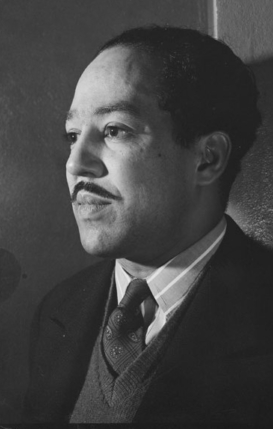
Langston Hughes
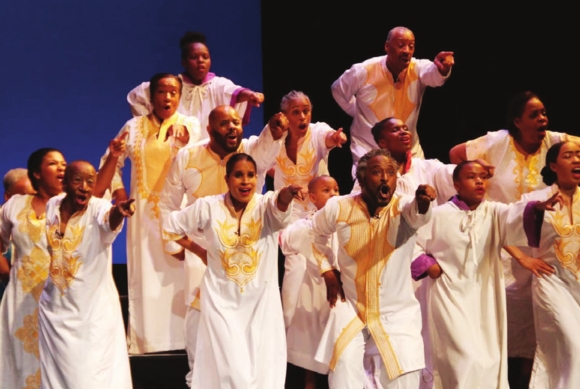
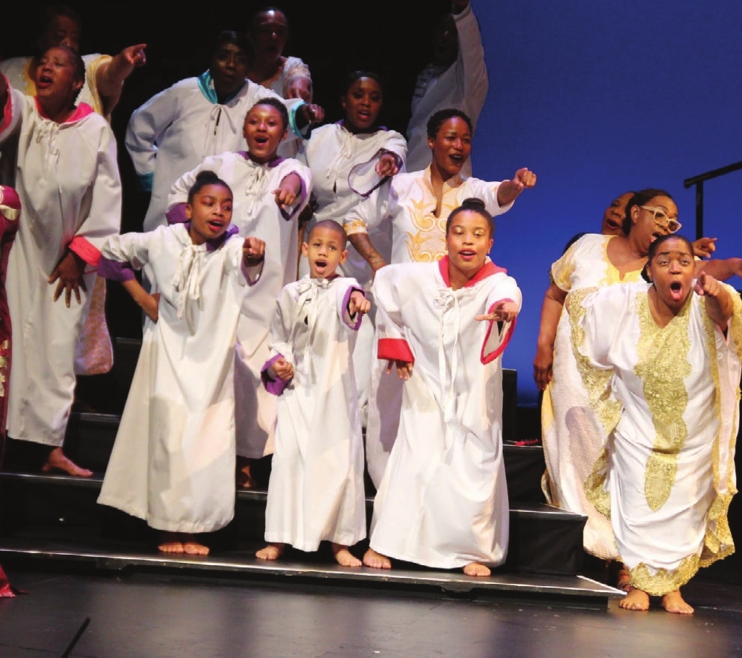
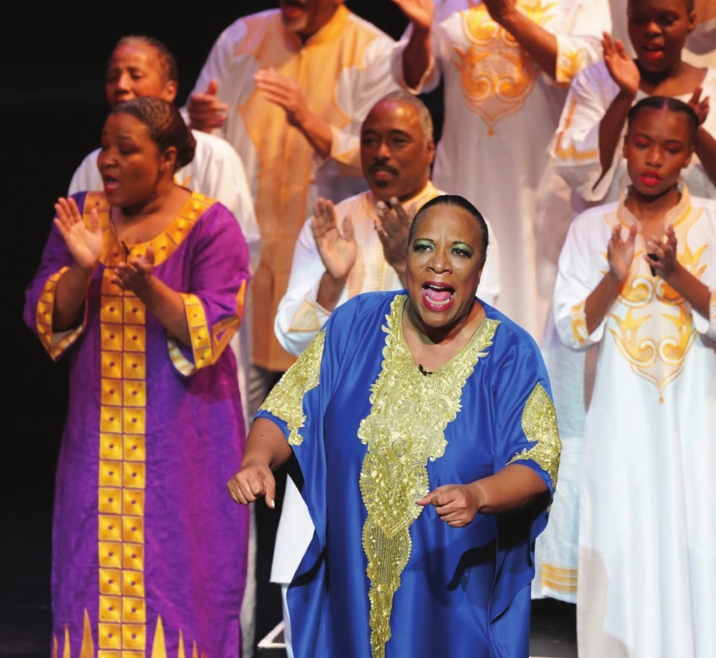
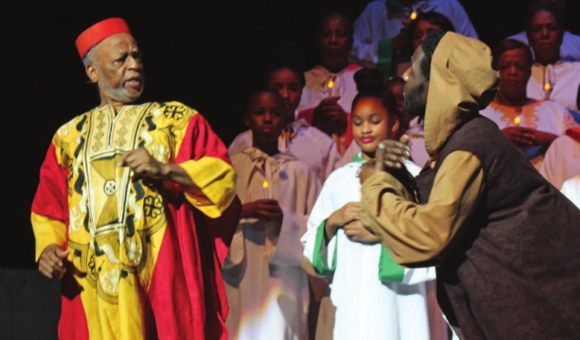
Scenes from the NCAAA production of “Black Nativity.”
By CELINA COLBY
Langston Hughes’ “Black Nativity” has been a Boston tradition for more than 53 years. Produced by the National Center of Afro-American Artists (NCAAA) in Roxbury, the production tells the nativity story with joyful gospel music, a cast of community performers and original choreography.
The production is rooted in
Hughes’ original play with music, produced in 1961, but it’s been made
uniquely Boston. Influenced by Elma Lewis, the famed local arts educator
and NCAAA artistic director, John Andrew Ross, music director, and
George Howard, choreographer, the Boston production of “Black Nativity”
is one of the longest continuously running shows in the country.
“Certain
values have been sustaining over the more than half a century of this
production,” says Edmund Barry Gaither, director and curator of the
Museum of the NCAAA. “One is that as a show, it brings forward and
emphasizes the common humanity that we all share.”
One
of the most striking scenes that is unique to the Boston production is
the birth of Jesus. Howard choreographed a powerful dance number drawing
on African diasporic movements and traditional drumming. The addition
of children to the show is another important change that’s blossomed
here in the Hub. Even baby Jesus is played by a
real infant, and many of the current cast members played Jesus and then
grew into other roles over time.
“Black
nativity is a cultural property of this community at large,” says
Gaither. “You can find lots and lots and lots of people who have
performed
in it at one time or another, and even more people who’ve gotten to see
it at one time or another. So it has woven its way into the fabric of
many, many lives over generations.”
Last
year, the Banner spoke with Desiree Springer, the ballet mistress of
“Black Nativity” and a longtime performer of the role of Mary. Springer
attended the Elma Lewis School of Fine Arts and stayed connected with
the production into adulthood, performing in it with her children and
former husband every year.
That
longevity with the show is common. Several cast members have been with
the production its entire 53 years, and families will often perform in
it annually together. In that way, “Black Nativity” is truly a coming
together of the Black community for the holiday season.
The
performance runs at the Emerson Paramount Center Dec. 1-17. In
ever-challenging times, Gaither hopes the performance will continue to
serve as a balm.
“In
the recent history, in our national politics, in global politics, we
have no shortage of incivility, of dehumanization, of conflict over all
sorts of things,” says Gaither. “The birth of every new life is an
opportunity for us to strike out on a new path that might lead us to a
more peaceful existence with each other.”
ON THE WEB
Learn more at blacknativity.org
All seats are $25 for
the Dec. 2, 8 p.m. performance, which is followed by the annual toast to
Black Nativity and the city of Boston.