 Food for love How aphrodisiacs work 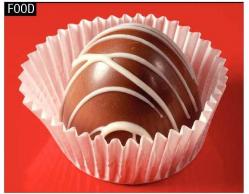
Tita’s blood [which got into the sauce when she pricked herself on the roses] and Pedro’s roses proved quite an explosive combination.
…when Pedro tasted his first mouthful [of the quail in rose petal sauce], he couldn’t help closing his eyes in voluptuous delight…. Tita wasn’t there, even though her body was sitting up quite properly in her chair. It was as if a strange alchemical process had dissolved her entire being in the rose petal sauce, in the tender flesh of the quails, in the wine, in every one of the meal’s aromas. With that meal it seemed they had discovered a new system of communication…through which the singular sexual message was passed.
—from Like Water For Chocolate, by Laura Esquirel
For millennia, certain foods have had the reputation of being aphrodisiacs. Sometimes it was primarily because a food was thought to resemble a sexual body part: the phallic shapes, say, of asparagus, bananas (including banana flowers), carrots and cucumbers; raspberries and strawberries that resemble nipples; oysters and fresh figs that suggest female genitalia.
Then there are avocados. The ancient Aztecs called avocado trees Ahuacuatl, testicle trees, because the fruits grow in pendulous pairs.
The list of foods and herbs thought to have romance-inducing qualities is extensive and mostly ancient. But scientists have found that many contain components that may have contributed to their reputation.
Here are a few, cited by Lee Ann Obringer in How Aphrodisiacs Work: For centuries, sweet basil was reputed to stimulate sex drive, boost fertility and a general feeling of well-being. Women would rub their breasts with it because the scent was said to drive men wild. An old Italian family friend told me that young men in Italy went courting with bunches of basil tucked behind their ears. Basil has been found to have the property of promoting circulation, as have other reported aphrodisiacs such as garlic and ginger.
The capsaicin contained in chili peppers is a good pain reliever, but it also generates a physiological response that’s similar to having sex: increased heart rate, circulation, and sweating.
In the medieval era, mead was drunk to promote sexual desire. Mead is a fermented beverage made from honey. In ancient Persia couples drank mead every day for a month after their wedding to get into the proper frame of mind for a successful marriage — the basis for our term “honeymoon.” Honey contains high levels of B vitamins (essential for testosterone production), as well as boron, which help women metabolize and utilize estrogen.
Chocolate has long been linked with love and romance. The Aztec king, Montezuma, legendarily drank 50 goblets of (unsweetened) chocolate a day to increase his power in general, and his sexual abilities in particular.
Modern researchers have found that chocolate contains phenyl ethylamine and serotonin, “feel good” chemicals that occur in humans naturally and are released by our brains when we are happy or feeling loving and/or passionate, producing a euphoric feeling like being in love. Additionally, researchers at the Neuroscience Institute of San Diego, California say that chocolate may also contain a neurotransmitter called called anan- CONTINUE ON PAGE 17
|


