 Austrian cuisine is a rich amalgamation of its native culinary heritage as well as influences from countries that were a part of the Austro-Hungarian Empire. Touches of the Middle East can be found — not surprising, since the empire had its beginning with the defeat of the Ottoman Turks in the 1683 Battle of Vienna. Austria’s ruling dynasty, the Hapsburgs, then began conquering many Central and East European countries the Ottomans had controlled for centuries. The Austro-Hungarian Empire extended over much of Central and Eastern Europe until the assassination of the Hapsburg Archduke Franz Ferdinand precipitated World War I and, ultimately, the end of the empire.
Wealthy and aristocratic Viennese enjoyed food as elaborate and sophisticated as any in the world, including France’s — especially those pastries.
Liptauer has influences from Hungary (paprika) and the Mediterranean/Middle East (capers). It’s a staple in many Viennese Heurige, but also perfect for American cookouts of grilled bratwurst and sausages.
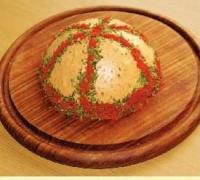
Making Liptauer takes only minutes to make and it can be served in a bowl or mounded on a plate. For a gorgeous presentation worthy of those sophisticated Viennese of yesteryear, try the method below. I don’t normally use dried chives — in fact, this is the only dish in which I use them — but here they make the garnishing easy. LIPTAUER CHEESE 2 C. cream cheese or fresh goat cheese or a combination, softened
2 T. prepared mustard such as Düsseldorf, Dijon, or whole grain
(Do not use “ballpark” type mustard)
2 T. Hungarian sweet paprika
1 tsp. freshly ground pepper
3 T. drained and finely minced capers
1 tsp. ground caraway seed, optional Optional garnish
Sweet Hungarian paprika
Freeze-dried chives Mix all ingredients in a medium bowl. Serve with thinly sliced dark pumpernickel (such as cocktail pumpernickel.) It’s best to let it stand for at least an hour (overnight is even better) for the flavors to meld. For an especially attractive presentation: Put the cheese on a small serving platter and mound into a round dome. Stick pieces of waxed or parchment paper around the bottom to facilitate cleanup. Lightly score the mound into 6 sections. Put the chives on a small plate or in a bowl. Moisten your (clean) index finger with water and blot it on a towel. Gently put the tip of your index finger into the chives. Gently press the chives that adhere to your finger onto the top of the mound. Repeat to make a small circle at the tip of the mound, then follow the scored lines down the sides, flaring the chives a little as you go downwards. Finish by pressing chives into an inch-deep border around the bottom.
Now take the tip of a sharp knife and pick up a little paprika. Carefully sprinkle the paprika over the areas covered by the chives. Liptauer can also be served on cucumber slices, spread on thinly sliced ham rolled up and sliced into pinwheels, or as a topping or stuffing for pork chops. |