Meet Muslims through profiles in faith
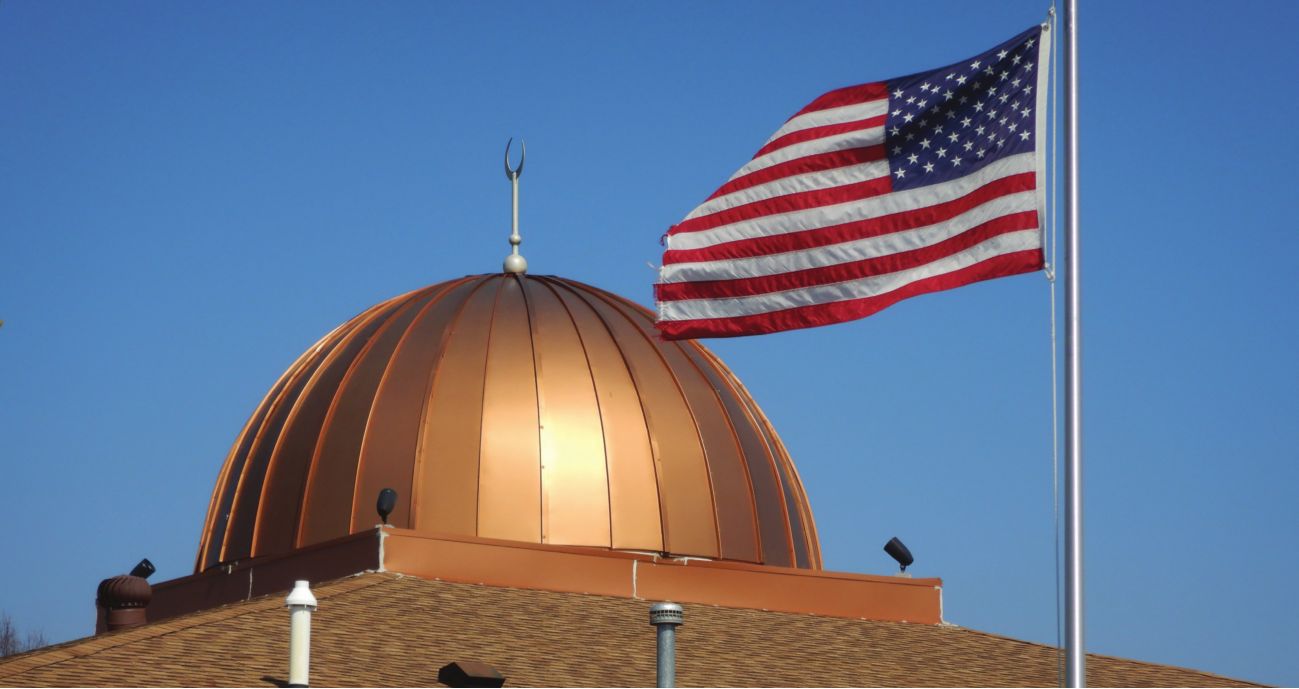
Thursday, April 23, marks the official start of Ramadan, the annual month-long Islamic observance of fasting and prayer that encourages reflection and promotes community.
Members of Springfield’s Muslim community will join their 1.8 billion faith brothers and sisters in daily suhur pre-dawn meals; abstention from food, drink and several activities from sunrise to sunset; and the nightly iftar feast to break each day’s fasting. They will spend more time in prayer, and their charitable activity will increase.
Ramadan is a time of coming together, something that will prove challenging with social distancing and stay-at-home precautions in place. But Springfield-area Muslims, who represent more than 30 ethnic groups, will find ways to observe their faith as adherents across the globe have for more than 1,400 years.
Their faith is a personal journey, and it means something unique to each individual Muslim. Here is what being a Muslim means to several people who are part of the Islamic Society of Greater Springfield.
 “It’s part of my identity.”
Fatina Faizal is a high school student and a youth leader for a Muslim children’s group.
“It’s my religion, it’s my way of life, it’s part of my identity,” Faizal said of being a Muslim.
Faizal, who was born in India, moved with her family to Springfield when her father accepted a job in the city. She feels her religion encourages people to walk a personal path.
“We can’t force anything upon another individual,” Faizal said.
“We were born with a sense of free will and we can exercise that any way we want to as long as it’s within the way of God.”
Faizal
is a youth leader at the local mosque and engages children with
activities such as competitions and checking knowledge of the Quran.
Boys and girls are treated equally in her youth groups, and Faizal feels
that Islam is equally empowering to both men and women.
“Religiously yes, men and women should be equal,” Faizal said.
“However,
people come from different backgrounds where, because of their culture,
they may not be equal. If I’ve ever felt any gender discrimination it’s
not because of my religion, it’s because of cultural discrimination.”
Faizal’s
favorite Quranic verse talks about the favors that God has bestowed
upon everyone and the nature and earth God has given us. These blessings
are among the many reasons she practices charity, one of the five
pillars of the Islamic faith.
“Even
a simple smile is considered charity,” Faizal said. Faizal always looks
forward to Ramadan, and knows that the daily fasting and spirituality
go hand-in-hand.
“Every
morning we wake up very early and eat a meal so we won’t be hungry for
the rest of the day. Then we don’t have our next meal until sunset.
That’s the physical aspect of it,” Faizal said. “But we also have the
spiritual aspect where we abstain from committing sins, which we should
be doing every day, but during this time we take more care to be mindful of our actions and words.”
“It’s being a good human being.” 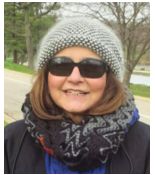
Mona Ahsan feels that in Islam, “there are duties toward God, but there are also duties toward man.”
Ahsan
is an attorney who moved to her husband’s hometown of Springfield when
he was discharged from the U.S. military. She has done volunteer work
for the NAACP and recently received an award for that work. Ahsan feels
giving back to her community and helping people is part of her faith.
“It’s
not just being a good Muslim, it’s being a good human being,” Ahsan
said. “I’m not here to judge anybody on their religious beliefs, I leave
that to God. I am here to judge myself, to teach my kids, to do better,
and to help other people.”
Ahsan
grew up in Karachi, Pakistan, and was raised in a Muslin family where
the boys and girls were treated equally. Ahsan’s husband has a similar
view of equality, she said, and added that practices such as women
covering their hair are more cultural than religious interpretations.
“In
Islam you don’t need anyone to interpret your religion,” Ahsan said.
“You pick up the book and read it yourself and interpret it for
yourself.”
Ahsan’s
husband was targeted by the Taliban while he was deployed to Afghanistan
because he had a Muslim last name, an example of “Islam that was
hijacked by ignorance,” Ahsan said. After the 9/11 attacks, Ahsan was
approached by people wanting to know if she was a Muslim.
“Wait, I thought I was an American!” Ahsan said. “Yes, I’m a Muslim, but I don’t wear my religion on my sleeves.”
Ahsan
plans to spend Ramadan in self-evaluation. “It is a time of cleansing
and improving yourself. You have to make sure you understand the
suffering of other people and help them,” Ahsan said. “Such charity and
concern for your fellow man brings you closer to God.”
 “It is an amazing thing to happen.”
About
15 years ago Dr. Ashraf Tamizuddin was able to realize a lifelong
dream, and fulfill one of the pillars of the Islamic faith, by
participating in the Hajj, the yearly pilgrimage to Mecca.
“It is a sense of great achievement that you have managed to do it.
There are literally
millions of people from all over the world and everybody is just the
same,” Tamizuddin said. “It is an amazing thing to happen, whether you
are rich or poor, regardless of which part of the world you come from,
everybody is considered equal.”
During
the five days of the Hajj, Tamizuddin experienced the flexibility of
Islam, which is one aspect of his religion that he appreciates.
“Many
of the things you did during the Hajj were exactly the opposite of what
you do every day as a Muslim,” Tamizuddin said. “For example,
cleanliness is very much promoted in Islam. But for those five days, you
do not take a shower. That made me realize that Islam is a very
flexible religion.”
Tamizuddin
was born in Pakistan and came to Southern Illinois University School of
Medicine as a resident. He settled in Springfield in 1998 and has been
practicing as a kidney specialist ever since. He and his family have
been welcomed by the community, and that support was vital to Tamizuddin
as the president of the Islamic Society of Greater Springfield when the
9/11 attacks occurred.
“Every
group has been stereotyped, and Muslims lately have been stereotyped as
wanton terrorist people,” Tamizuddin said. “Islam is a very peaceful
religion. By far the vast majority of Muslims are very, very peaceful
people.”
Ramadan in the Tamizuddin household is a special time for the whole family.
“When
you get up in the morning the whole family is there together, you eat
together, then when you break your fast you are also together,”
Tamizuddin said. “I still believe that whether you are Muslim or not, it
is nice to have everybody at the table and eat dinner together.”
“I just found truth there.” 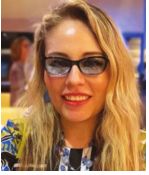
Alina
Khan has been a Muslim for five years. She is a second-generation
American, and searched for religious truth from the age of 13 through
college by doing intensive religious studies.
“I’ve
read versions of the Bible for several years, I’ve worked with a rabbi
to do a deep study of the Torah, and I read the Quran at age 15,” Khan
said. “The Quran really consolidated everything I had been studying
previously. I just found truth there.”
Khan’s
husband is a physician, and the couple looked at different locations to
live and raise children before settling on Springfield. Now, the
business administrator and stay-at-home mother is actively involved in the Greater Springfield Interfaith Association.
“This
is personal for me. Springfield is a great place, but I want to make it
even better,” said Khan, who added that participation in the Interfaith
Association lets her share “the beauty of our faith.”
Khan
is also working to establish a Daughters of Abraham initiative, a group
with which she became familiar while living in New York.
“The
women can get together and read books from Judaism, Christianity and
Islam, and connect and celebrate our similarities,” Khan said. “It’s a
way I feel we can all get closer to God and closer to understanding our
community.”
Khan has a
unique perspective as a recent Muslim convert. “Islam is highly
empowering to women,” Khan said. “There is a level of respect that men
have for women. They are obligated to treat us with kindness, a gentle
tone and manner. Women are allowed to work if we choose, and our salary
is not meant to go to our family or our husband unless we decide to,”
Khan said. “We can gain our financial independence and our husbands are
not allowed to ask us for our salary.”
This
year will be the first Ramadan in Springfield for the Khan household.
Some concessions may have to be made for pandemic precautions, but Khan
knows her family will enjoy iftars, give gifts to their children, pray and read the Quran. It brings to mind her first Ramadan as a Muslim.
“It
was beautiful to be able to get close to God in that way with the
celebratory rituals and even the fasting,” Khan said. “It was a very
spiritual experience.”
 “When they see a Muslim come into the Capitol, they know what it’s all about.”
Nia
Odeoti-Hassan came to Springfield in 1980 and spent 36 years working
for the Illinois Senate Democrats. She had only recently become a Muslim
while in college.
“I
was accommodated. I could do the prayers in my office,” Odeoti-Hassan
said. “Because our day of worship is on Friday, the chief of staff would
tell me I could use my lunch hour on Fridays for worship.”
Odeoti-Hassan
worked with virtually everyone on both sides of the state Senate aisle
during her career, including a stint that began in 1997 with an
up-and-coming young state senator named Barack Obama, who understood
Islam because his father was a Muslim. Her biggest supporters seemed to
be the Jewish senators, and she worked with members from both parties to
start Illinois Muslim Action Day, a legislative page program for the
young Muslims.
“Now, when they see a Muslim come into the Capitol, they know what it’s all about,” Odeoti-Hassan said.
Odeoti-Hassan’s favorite governor was Pat Quinn, who had a staff person in charge of Asian and Muslim Affairs, hosted iftars at the Governor’s Mansion and started a Muslim American Advisory Committee.
“When Bruce Rauner came in he refused to even recognize the committee, and it never functioned under him,” Odeoti-Hassan said.
“It is a very progressive religion.” 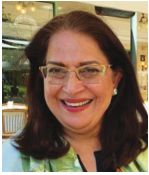
Tarfa Khan is involved in several activities that foster relationships between people of all faiths.
“There
is a lot of openness in the Springfield community in terms of wanting
to know about different people and sharing experiences,” Khan said.
Khan, who was born in England, moved to Springfield with her
husband when his job brought him to the community. Khan had worked on
several cultural diversity projects in Los Angeles and was pleased to
discover that Springfield-area Muslims are involved with interfaith
activities.
Khan has
volunteered for cultural activities that serve adults and children and
is the chief Muslim representative with the Liturgical Arts Festival in
Springfield. That involvement has allowed her to share the Islamic
perspective on the arts and to meet numerous people from different
faiths.
“It’s pretty
interesting when I interact with people of other religions, I hear about
the rules and regulations of their faith,” Khan said. “Islam and the
Quran allow us to have a lot of independence in terms of how we think.
“It
is a very progressive religion, it’s not the way that it gets portrayed
a lot of times,” Khan said. “It gives you a lot of leeway to do
things.”
Khan plans to
have a quiet and reflective Ramadan. “We kind of slow down a little bit
during Ramadan which is very nice so you get a chance to reflect about
your whole life,” Khan said. “You emphasize some of the aspects of being
a better human being.”
 “You establish self-discipline.”
Ramadan
is a busier than usual time of year for Hassan Mohamoud, the imam, or
religious leader, of the Islamic Society of Greater Springfield.
“Ramadan
is a month where people dedicate to making themselves better as
individuals and as a society, emphasizing their spiritual connection
with God, and their connections with fellow humans,” Mohamoud said.
Mohamoud
left his native Somalia at one year old and grew up in a Kenyan refugee
camp. He came to the United States in 2006 and Springfield in 2011,
where he earned bachelor’s and master’s degrees in accounting at
University of Illinois Springfield. He was elected imam in 2012 by
Springfield’s Muslim community.
“During
the month of Ramadan people are expected to watch what they are
speaking, hearing, seeing and abstaining from all kinds of
consumptions,” Mohamoud said. “You establish selfdiscipline, so you know
when to let yourself have something and when to control it.”
That
self-control is embodied in the daily fasting during Ramadan, where
teens and adults who are physically able must abstain from all food and
drink between sunrise and sunset.
“I
talk to kids about the difficulties they face when they are fasting and
they go to school and have a lunch period,” Mohamoud said. “It’s so
tempting to go to the cafeteria and sit with their friends who are all
eating.”
Ramadan also
includes special nightly communal prayers, one of the five scheduled
prayers that all Muslims must do themselves each day throughout the
year. Praying five times per day while maintaining a busy work or school
schedule can also be challenging, but Mohamoud said it helps if you
think of each day as measured by prayer time.
“When
your day is divided and spread out based on your prayer schedule, it
helps you recognize, ‘OK, this part of my day is gone,’ it helps a
person have a better schedule,” Mohamoud said.
Mohamoud and his family have been welcomed by the Springfield community.
“When
my wife and I go to the grocery store, especially when I am wearing my
religious robes, I see people smiling, letting me go ahead. I feel that
is because they are good people and they want to show me that I am
welcome here,” Mohamoud said. “Sometimes I run into people who roll
their eyes or show an attitude, but overall it’s a very welcoming
place.”
“I’m blessed to have lived a normal, American life.” 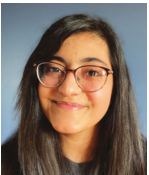
Sara Jasim is a high school student in Springfield and the only Muslim woman in her 400-member senior class.
“I’m blessed to have lived a normal, American life in the Springfield community,” Jasim said.
Jasim was born in Florida and her family moved to Springfield when she was four.
“I
didn’t really have to deal with much discrimination growing up. But I
also didn’t really have any Muslim friends until my sophomore year of
high school,” Jasim said. “I learned years later that in junior high,
some people called me a terrorist behind my back. But they were just
stupid boys.”
Jasim
will enter college in the fall as an international relations major and
would like to attend graduate school and possibly pursue a Ph.D.
“Islam
encourages constantly bettering yourself and seeking knowledge,” Jasim
said. “The only times women are limited in opportunity is because of
cultural things. Islam is probably the most feminist religion right
now.”
The past few
years Ramadan has fallen in the summer, allowing Jasim to spend the
observance with her cousins in Iraq. When Ramadan falls during the
school year, many of her friends think it’s difficult for her to fast
while attending school.
“I
actually find it easier to fast during school because when you’re
fasting at home, you don’t have anything to occupy yourself so the time
passes by a lot slower,” Jasim said. “And the kitchen is right there,
and my mom for some reason always buys the best snacks during Ramadan
even though we can’t eat them half the time.”
 “A Muslim could be anybody.”
Lisa Khan is a Chinese-American born in California, who doesn’t “look like the typical Muslim.”
“When
I tell people that I am Muslim, it’s like, ‘Oh, you’re Muslim? I had no
idea.’ My immediate thought is, ‘What do you mean, you had no idea?’”
Khan said. “Do you walk down the street and find out someone’s a
Christian and say, ‘Oh, I had no idea!’ A Muslim could be anybody. It’s
their faith, it doesn’t reflect who they look like.”
Khan
is a procurement consultant who works remotely from home while raising
her two young children. The family moved to Springfield two years ago
when Khan’s husband, a glaucoma specialist, took a job here.
Khan
grew up with a Buddhist father and Christian mother but their household
was not faith-based. She converted to Islam after meeting her future
husband, who is from Bangladesh.
“I
took the time to study and understand the religion, how to pray
properly, wash properly, and read the Quran,” Khan said. “It’s a
lifetime of learning.”
Khan appreciates the smaller, close-knit Muslim community in Springfield to the larger ones in California.
“A
lot of the Muslim families moved here for work versus having family in
the area,” Khan said. “So the close-knit community of the mosque here is
like having an extended family.”
“We worship the same God.” 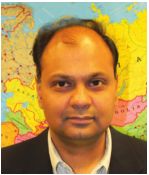
Ali Nizamuddin sees Islam as a religion of inclusion.
“We
try not to make exclusivist claims, the attitude that it’s my way or
the highway,” Nizamuddin said. “We are all representatives of God on
earth.”
Nizamuddin,
who was born in India, is a professor of international relations at
University of Illinois Springfield. He grew up in Downers Grove,
Illinois, taught at a small West Virginia college, and then came to UIS
to be closer to his family in Illinois.
“Islam
and Christianity both make it an article of faith to believe in Jesus
Christ, His miracles, ascension and coming again,” Nizamuddin said.
“Islam and Judaism have a lot in common. The teachings of Moses and
Abraham, and even the language that we use as Muslims and Jews. We all
are from the same family tree and we worship the same God.”
“Abraham,
Moses and Jesus are all described in the Quran as the Custodians of
Light because they clarify in times of darkness,” Nizamuddin said.
“Anything that is around me, I view it from the lens of what God wants
of me. That’s how my faith guides me and provides light in time of
darkness.”
Nizamuddin
said that faith is what has guided the Springfield Muslim community to
provide 60 meals to the homeless community each week for the past 30
years.