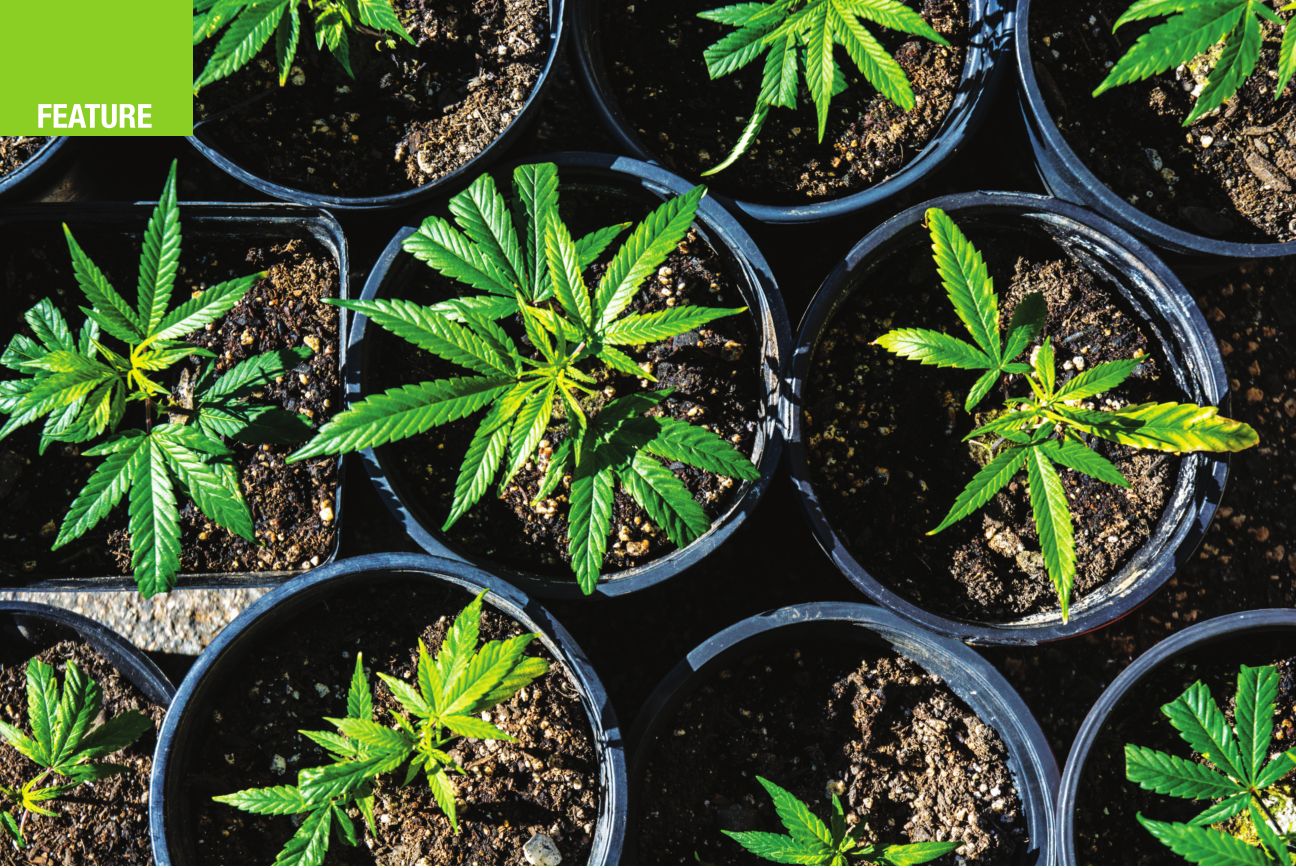
Politicians wrestle with legal weed
Gov. J. B. Pritzker and other backers of recreational marijuana have said that ending cannabis prohibition is about social justice, public health and reality, not just money.
Nonetheless, Pritzker’s financial goals when it comes to pot are ambitious – his draft budget included $170 million from licenses and fees during the next fiscal year. Potential tax revenue isn’t clear in a 522-page bill that addresses such granular issues as packaging -- it would be illegal to sell marijuana in a container that includes a depiction of a marijuana leaf – and hours of operation: Weed stores could be open between 6 a.m. and 10 p.m.
Upon releasing a bill Saturday, May 4, the governor’s staff promised that the Department of Revenue soon will calculate revenue projections including pot taxes that would start rolling in next January, when Pritzker wants to start legal sales. And so, with the General Assembly scheduled to adjourn on May 31, one of Pritzker’s campaign platform planks, legal recreational marijuana, was unveiled absent key financial data.
It promises to add up to a bongload of bucks, with Pritzker selling his plan based on promises to make room for minorities and sundry small-timers so that Big Cannabis doesn’t take over. But, under the governor’s bill, startups won’t be treated the same as bigtime operators with lobbyists and track records. And that has some longtime marijuana activists worried.
“We already have cannabis kingpins with the medical marijuana program,” says Dan Linn, executive director of the Illinois chapter of the National Organization to Reform Marijuana Laws. “I think this program will just create more cannabis kingpins without much room for the little guy.”
“You can’t just start a dispensary”
Legalization is popular nationwide, with 61 percent of Americans, including 76 percent of Democrats and 54 percent of Republicans, favoring legal pot in a recent Associated Press poll. Such sentiment explains why the issue is shifting from ballot boxes to state legislatures.
The first nine states to legalize pot for consenting adults did so via referendums and initiatives, with Colorado and Washington leading the way with ballot measures approved in 2012. Last year, Vermont lawmakers became the first to pass a law, absent a referendum or initiative, to legalize recreational pot. The Illinois General Assembly now stands to be the second.
In Vermont, legislators took the ultimate laissez-faire approach, legalizing pot without addressing how it should be sold or taxed, and so the state takes no cut – Vermonters now are wrestling with taxation questions. But in Illinois and elsewhere, money has gone handin-glove with legalization, with Maine and Michigan still working on plans to sell and regulate recreational pot after voters mandated legalization.
The retail recreational marijuana market in Illinois is worth between $1.7 billion and $2.6 billion annually, according
to a February study prepared by consultants hired by Democratic
legislators who back legal pot. The state would collect a 7 percent
wholesale tax and retail taxes ranging from 10 percent to 25 percent,
depending on the form of cannabis and its potency.
Under
the governor’s bill, existing medical marijuana growers and sellers
likely would have the market to themselves when sales began on Jan. 1.
In the case of dispensaries, the state would have until next May, four
months into legalization, to issue 75 new licenses, with the legislation
spelling out where stores would be located. Springfield would get one
new outlet in addition to existing dispensaries that sell medical pot in
downtown and Grandview; Chicago and surrounding communities would get
47 new shops.
The
state would have until July 1 of next year to issue new cultivation
licenses. If the state waited until the last minute before issuing them,
21 existing medical marijuana growers could have the market cornered
for a year or more, considering the time it takes to construct
facilities and grow a crop.
After
the first round of awarding new licenses, the state would have until
the end of 2021 to issue 110 additional retail and 60 cultivation
licenses. Going forward, the number of licenses would be capped at 500
dispensaries and 180 grow operations, with most of the cultivation
centers relatively small.
Under
the bill, nine large cultivation centers would be allowed, in addition
to the 21 that already exist, with each permitted to grow as many as
100,000 square feet of marijuana. The remaining 150 growing operations
each would be limited to 14,000 square feet. At full build-out and
production, the large facilities collectively would be licensed for
900,000 more square feet than the smaller facilities dubbed “craft
grows.”
Existing pot businesses would pay premiums for the first licenses to grow recreational weed.
Medical
cultivation centers that want to grow recreational weed would pay a
flat $100,000 fee, plus an additional fee of between $100,000 and
$500,000 to a state cannabis business development fund, with the amount
based on volume of medical pot sales. Existing dispensaries would pay
less, including a flat $30,000 fee, plus as much as $100,000 to the
business development fund. After that, as part of a social-equity effort
aimed at making up for years of damage from the war on drugs, both
cultivation centers and dispensaries would contribute as much as
$100,000 apiece to either cannabis industry education programs at
community colleges, the business development fund or job programs for
ex-convicts or residents of disadvantaged areas identified by the state.
Instead
of giving money to the business development fund, community colleges or
job programs, existing dispensaries and cultivation centers could
satisfy the social-equity provision by loaning at least $100,000 to a
startup pot business and providing incubation services, with the proviso
that it could have no more than 10 percent ownership in the new
entrant. And for $230,000 in fees, each existing dispensary that wants
to sell recreational pot could add a second location in time for opening
day, with geographical limits that would keep new locations with the
same areas but at least 1,500 from other cannabis shops.
The
recreational program wouldn’t affect a burgeoning medical marijuana
industry, which realized $136 million in retail sales last year and
brought in $44 million through the first three months of this year.
There are no plans to grant new licenses to grow or sell medical pot or
change existing fee structures.
While
Linn predicts windfalls for large marijuana businesses, Chris Stone,
chief executive officer of Ascend Illinois, a business created in recent
months when a Massachusetts firm purchased two dispensaries and
acquired leasing rights for a Pike County cultivation center, said
concerns about Big Cannabis gaining unfair advantages over small
operators are overblown.
Given
the state’s experience with medical marijuana, it would take about a
year for a new entrant to have cannabis ready for market once the state
issues a license, Stone says, but the period of time that established
operators have the market to themselves shouldn’t be a big deal.
“I
think people need to be a little patient,” Stone said. “I think there’s
going to be plenty of opportunities. You can’t just start up a
dispensary, you can’t just start up a grow operation.”
“The smaller person can’t afford it”
No
other state charges anywhere close to six figures for an application or
license to grow, process, transport or sell recreational marijuana, and
so Pritzker’s plan stands apart. Licenses for newcomers in Illinois
also wouldn’t come cheap.
New
cultivation centers, each limited to 14,000 square feet of growing
space, would each pay $40,000 nonrefundable application fees, plus
$100,000 upon being awarded a license. In addition to having access to
$100,000 in liquid assets, new dispensaries would
pay $5,000 nonrefundable application fees. Annual retail licenses would
cost $30,000. Pritzker's plan also establishes a processing license for
entities that turn raw cannabis into concentrates and other products,
with application fees set at $5,000 and annual licenses at $40,000.
With
annual license fees set at $30,000, Nevada is the only state with
five-figure license fees for businesses permitted to grow or sell
recreational marijuana.
Looming
high licensure costs in Illinois are part of the reason some, including
the National Association for the Advancement of Colored People, oppose
legalizing recreational pot.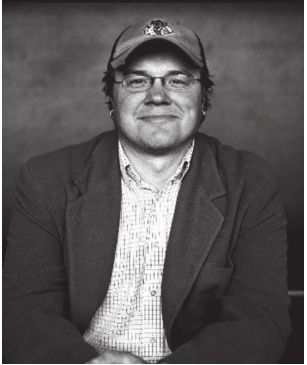
Teresa
Haley, president of the Illinois chapter of the NAACP, says her
organization’s opposition to recreational marijuana is mainly based on
health concerns and the potential that folks with histories of substance
abuse will be vulnerable if weed is legal. But money, she says, also is
important.
Haley said
she knows three people who together hoped to open a dispensary under
the state’s medical marijuana program but found that $800,000, the
amount they’d secured, wouldn’t be sufficient to cover licensing costs
and other startup expenses totaling more than $1 million, she recalls. A
cultivation center also would have been tough, she says. “Most black
people don’t have acres of land,” she says.
Backers
of legal weed tout jobs, but pay can be paltry. While CEOs of large
cannabis companies make six or even seven figures, trimmers who clip
leaf from buds make less than $30,000 a year, according to a recent
salary survey published by Marijuana Business magazine. Master
cultivators in charge of growing operations can earn $100,000 or more,
as can experts who know how to extract THC from raw cannabis, according
to the magazine, but bud tenders who wait on customers in dispensaries
make less than $15 per hour. “It’s OK for us to work in these places,
but we want to own them,” says Haley. “The smaller person can’t afford
it.” While the NAACP opposes recreational marijuana for reasons aside
from economics, Haley says her opposition doesn’t extend to medical
marijuana.
Lou Lang, a
former state representative who pushed medical marijuana through the
General Assembly before becoming a lobbyist, allows that the state’s
medical marijuana program hasn’t benefited minorities to the extent the
program’s creators wanted. “That didn’t work out to get us to where we
wanted to go,” he says.
Under
the governor’s bill, the Department of Commerce and Economic
Opportunity would set up a loan program to help disadvantage license
applicants with startup costs. Pritzker’s plan also would reduce license
application fees while awarding bonus points in licensing decisions to
applicants deemed to have suffered disproportionate consequences from
the criminal justice system. The list includes people who’ve been
convicted of marijuana offenses and members of their families.
After
regulatory costs are covered, 25 percent of proceeds from taxes and
other revenue generated from recreational marijuana would be deposited
in an account dubbed the Restoring Our Communities fund, a new pot of
money that would provide grants aimed at reducing violence, particularly
gun violence, and increasing economic development in communities
ravaged by violence, poverty and high incarceration rates. A board
including legislators, former inmates, experts in violence reduction,
members of community groups, officials with several state agencies and
representatives from the governor’s office and attorney general’s office
would decide how the money is spent.
In
addition to money for the new fund, 35 percent of recreational pot
revenue would go to the state general fund, 20 percent would be
allocated for substance abuse and mental health treatment, 10 percent
would go toward paying the state’s overdue bills, 8 percent would be
sent to the state Law Enforcement Standards and Training Board and 2
percent would be spent on drug education and substance abuse awareness.
Different states, different schemes
With 10 states having passed pot legalization measures, no two
regulatory schemes are the same, ad so there is no surefire template.
The
day before Pritzker announced his plan, Lang, the state
representative-turned-lobbyist for the marijuana industry, said he
agrees with state Rep. Kelly Cassidy, D-Chicago, who’s pushing legal pot
in the legislature and has been quoted as saying no state has mastered
legalization.

“I
don’t think any state has done it right, either, and I hope we do,”
says Lang, whose client list has included Chicago-based Cresco Labs,
which owns three Illinois cultivation centers and, with operations in 10
other states, is one of the nation’s largest cannabis companies. “The
point is, we have to find a happy medium.”
Linn,
who manages a Grandview dispensary in addition to heading the Illinois
chapter of NORML, says the state’s track record with medical weed hasn’t
been great. At $250 to $400 an ounce, medical marijuana costs more in
Illinois than other states, he says, and there have been shortages.
On
the plus side, Linn says, Pritzker’s plan would allow people to grow up
to five plants at home, which would act as a safeguard against high
prices. But giving an early start to
existing medical pot businesses, charging high licensing fees and
capping the number of licenses undercuts the goal of extending economic
opportunity to the disadvantaged, he says, while setting the state up
for recreational pot shortages and gouging.
“We’re
basically treating this crop like it’s plutonium or a huge vice,” Linn
says. “What we should be doing is fostering a cottage industry and not
just making this a playground for venture capitalists.”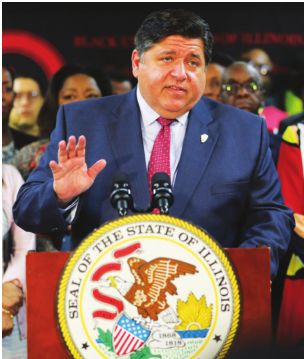
To
help prevent companies from gaining overly large market shares, the
Pritzker plan would limit the number of licenses a single person or
business could own. But Big Cannabis has found ways around such
restrictions in other states. In Massachusetts, the state is
investigating cannabis companies that have told investors they control
as many as a dozen retail pot stores, operating under different names,
despite regulations barring ownership of more than three outlets. In
California, large growers have skirted limits on big operators by
acquiring scores of small cultivation licenses.
While
large out-of-state marijuana companies have set up in Illinois since
medical marijuana became legal, Washington state keeps the industry
local by barring nonresident ownership of pot shops or cultivation
operations. Pot business owners can get financing from sources outside
Washington state, but such financing must be approved by state
regulators.
Washington
also is notorious for low licensing fees. The application fee is $250
and an annual license to grow or sell weed costs $1,480, with each
growing license allowing operations as large as 30,000 square feet and
growers allowed as many as three licenses. With a cap of 556 retail
operations, Washington (population 7.5 million) has licensed 506
outlets, more than would be allowed under Pritzker’s proposed cap for
Illinois (population 12.74 million). After issuing more than 1,000
licenses to growers since voters approved legal pot in 2012, Washington
has stopped accepting new applications. So has Oregon, where licenses
are cheap and 664 applications were submitted in two weeks after the
state last year announced that it would soon stop issuing new permits
for marijuana businesses.
Washington
also is famous for low prices, with ounces last year retailing for as
little as $40. Taxes for recreational reefer in Washington are the
highest in the nation at 37 percent, all charged at the retail level,
with per-capita tax revenue also near the top at $42.96 for every state
resident. Colorado, which has 1,400 licensed cultivators and levies a 15
percent wholesale tax plus a 15 percent retail tax, had the highest
per-capita tax revenue of any state last year, with $46.79 in pot taxes
collected for every state resident. Washington and Colorado were the
first states to legalize recreational pot.
On
the other hand, there is California, where licenses are relatively
cheap, taxes are high and sales have been disappointing since
recreational retailers opened last year. At $8.72 per capita, California
last year ranked dead last in terms of taxes collected from
recreational pot -- unless you count Vermont, which levies no taxes on
pot sales.
“California made a mess of it,” Lang says.
“California
has thousands of dispensaries. There’s some loose regulation. It’s open
season. I don’t think the state of Illinois should succumb to that. …
The Washington model may be slightly better.”
With
the legislature scheduled to adjourn on May 31, lawmakers have less
than three weeks to pass a bill. Will it happen? Stone, who says he
participated in working groups that helped craft the current version of
the bill, says he’s not sure, but tweaks are likely.
“I
would have told you four months ago it would happen,” Stone says. “I
don’t know if I could tell you that now. You’ve got some stakeholders
that are going to be opposed to some of the provisions that are in the
bill. I know law enforcement is going to be up in arms about the home
grow.
“I’m assuming
there’s going to be negotiations between stakeholders and the
administration in the next three weeks if they really want to get
something done.”
Contact Bruce Rushton at [email protected].


