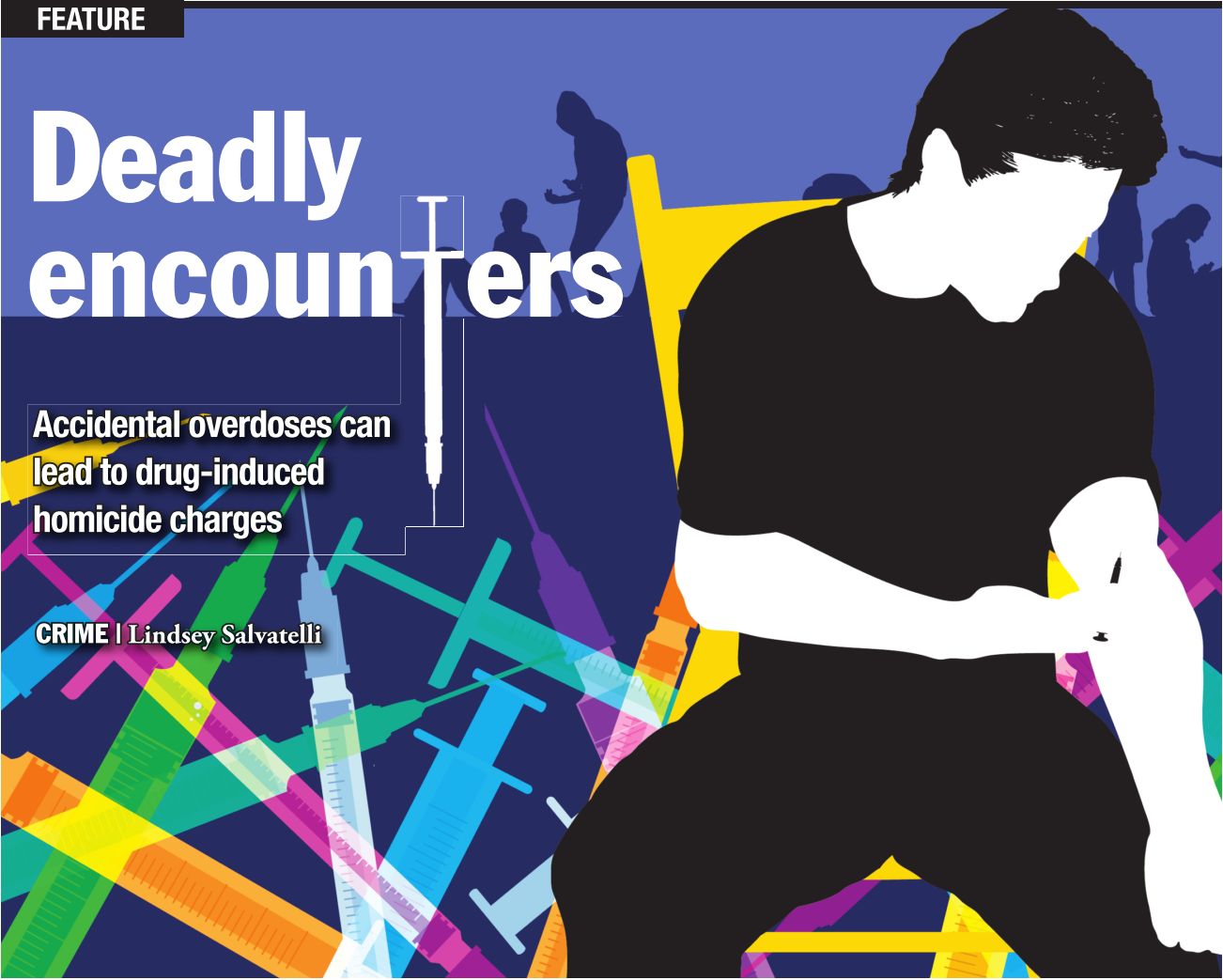
In Sangamon County, just three people have been charged with drug-induced homicide since Illinois passed a law in 1988 allowing criminal charges for distributing a substance that proves fatal to the person receiving it. However, the law makes no distinction between someone who is selling narcotics or provides a fellow user with what proves to be a lethal dose of a substance.
With the escalation of overdose deaths in Illinois and the state’s efforts to combat the opioid crisis, a 1989 law that has been used sparingly in the past is starting to gain momentum.
“This particular charge has become more common because of powerful synthetic opioids like fentanyl,” said Sangamon County State’s Attorney Dan Wright. “My job is to enforce the law, advance justice and ensure public safety. When there’s evidence to support drug-induced homicide beyond a reasonable doubt, I’ll prosecute.”
Drug-induced homicide is a Class X felony in Illinois and carries a sentence of up to 30 years, which is more than seconddegree murder or manslaughter. The only homicide charge with a greater potential sentence is first-degree murder.
Justin Callarman was indicted on charges of drug-induced homicide on Dec. 18. He’s the most recent person in Sangamon County to be charged with the crime.
William Gerding died Sept. 3, and Callarman allegedly delivered the fatal dose of heroin and fentanyl to Gerding between Aug. 31 and Sept. 3. Callarman was arrested Dec. 13 and is currently in the Sangamon County jail awaiting his trial.
Callarman previously had numerous interactions with police, ranging from petty thefts to more serious crimes. The Sangamon County Sheriff’s Office denied freedom of information requests regarding investigation of Callarman, but police records describe Callarman as an addict spiraling out of control for over a decade.
In
one interaction with an officer from the Springfield Police Department
on Sept. 4, 2010, Callarman was found asleep in a vehicle while parked
in front of a gas station on Monroe Street. He was in the driver’s seat
with the keys resting on his lap, feet dangling from his vehicle. The
officer who spoke with Callarman that night said he smelled like alcohol
and that his pupils were consistent with someone who was high. The
officer wrote in his report that he asked Callarman to roll up his shirt
sleeves during a field sobriety test, where he observed “fresh puncture
sites or track marks” on Callarman’s arm. The officer eventually found a
syringe and spoon in one of the pockets of Callarman’s cargo pants.
Residue left in the syringe and on the spoon tested positive for heroin.
Upon learning that he was being arrested for driving under the
influence, Callarman reportedly exclaimed, “I didn’t even drink that
much. All I did was shoot some heroin two hours ago, so it’s not like I
was driving drunk.”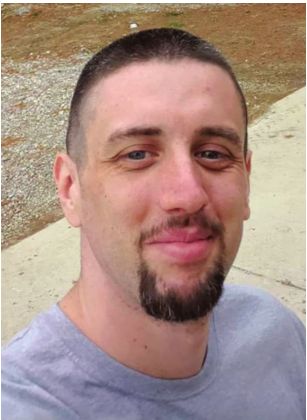
Those
who are addicted to opioids know they’re only hours away from
experiencing the intense, flu-like symptoms of withdrawal if they don’t
use. Many users say the potential long-term ramifications, including the
risk of arrest or even death, are pushed to the back of their minds
when the threat of withdrawal begins to loom.
Springfield
resident Brandy Klauzer is someone who understands those risks. She’s
battled addiction for over 20 years and says she’s been off heroin for
about a year.
“My love
affair with pills and opiates happened in 1999,” Klauzer said. “It went
from a few surgeries and finding Vicodin. It escalated to me going to
treatment. At one point I was eating 22 Vicodin a day.”
Once
she began using regularly, she moved out of her partner’s home because
Klauzer knew her substance use would ultimately lead to the relationship
ending. That’s when her drug use increased and she tried to earn extra
income to support her habit.
“My
habit went from $20 a day to $200 a day to me selling,” Klauzer said.
Given her increased use, she said she ended up being her best and only
customer.
While
Klauzer had never heard of druginduced homicide, by her own account, she
could have easily been a case like Justin Callarman if someone she was
using with had died.
Klauzer
said her group of friends and fellow users talked about getting clean,
but it took nearly five years before she began receiving addiction
treatment.
She
explained that the addicts she knew chose to get high in groups, so that
someone could call for help in case of an accidental overdose, because
carfentanil-laced product had made its way to Springfield. Ironically,
she and her friends sought out carfentanillaced heroin they knew to be
more dangerous because it was strong enough to keep them from going
through withdrawal.
“We have no other choice, being addicted to opiates the way that we are,” Klauzer said. “We have to use.”
Mixed signals
Millions
of dollars of federal funding has been allocated to battle the
nationwide opioid crisis, and Illinois has received its share. Earlier
this month, the Illinois Department of Human Services announced the
state had secured an additional $15 million in federal funding, for a
total of $82 million to combat opioid addiction since September 2016.
However,
the number of overdose deaths in Illinois climbed above 2,400 in 2016
and has remained consistent since then. Provisional data from the
Illinois Department of Public Health lists 2,642 overdoses in 2018.
That’s about 130 less overdoses than 2017 numbers, but a major jump from 1,579 overdose deaths in 2013.
Illinois
legislators have enacted laws that expand resources needed to support
people battling substance abuse while, at times during the same
legislative session, enacting more punitive laws for those who are
caught with drugs.
A
bill currently under consideration by lawmakers would increase sentences
for anyone caught with fentanyl. At the same time, a bill to create
more needle exchange programs and provide test strips to check for
fentanyl-laced heroin is also being considered.
Attorney
General Kwame Raoul has added Illinois to the list of more than 1,600
local and state governments that have filed suit against Purdue Pharma, a
Connecticutbased pharmaceutical company that Raoul alleges engaged in
deceptive practices and misinformed doctors about the addictive nature
of OxyContin.
Though
the attorney general’s lawsuit is primarily based on the influx of sales
representatives the company sent to Illinois to ramp up drug sales, the
lawsuit contains multiple references to the risk of addiction
associated with the company’s branded drug and the outcome from pushing
OxyContin, which company reps touted as a “safer” alternative than other
pain medications.
“There
are no reliable clinical studies supporting the use of opioids long
term; however, there exists a wealth of evidence establishing that
opioids are both addictive and deadly,” the lawsuit states.
Earlier
this year, 23 state representatives signed a resolution to urge the
Department of Public Health to revisit its painkiller prescription
guidelines.
David
Vail, a substance abuse counselor at Clinical Counseling Group in
Springfield, said the vast majority of people can use drugs
recreationally without issue, but approximately 10% to 14% of users are
prone to addiction. He explained there’s also a difference between
addiction and being physically dependent on substances like opioids.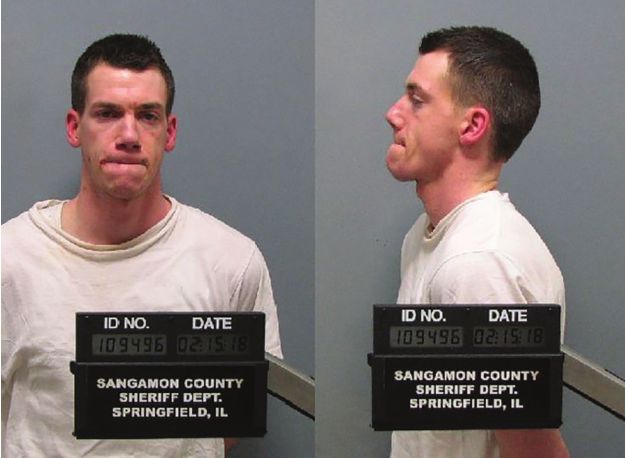
“Addiction
occurs in the brain … we have enough studies, we don’t need to spend
another dime on addiction studies,” Vail said. “We need to spend money
on what it looks like with long-term recovery and short-term recovery
and how we can get people well.”
The
underlying cause of addiction, he said, is unaddressed trauma that
manifests in behavior. Vail said childhood trauma and use of substances
before the age of 19 are common denominators among the segment of the
population that’s most vulnerable to abusing drugs. He said the majority
of IV drug users have been subjected to some type of abuse.
“We
just know more about traumainformed care because of the brain research
than we’ve ever known before,” Vail said. “These things will dictate
life trajectories and there’s just no way to avoid it.”
Vail
said taking a top-down approach at the state level to better provide
substance users resources to kick their habit while simultaneously
enacting punitive laws won’t resolve the current opioid crisis or
addiction in general.
He said the best way to address addiction
is long-term care that treats those in recovery with compassion. He
noted that threatening addicts with punishment isn’t a strong enough
deterrent.
“Condone it
or not, [drug use] is going to happen,” Vail said. “Either you want to
help with the problem with the level of care we give people, or you’re
going to bury your head in the sand.”
Illinois
passed the Good Samaritan Act in 2011, granting limited immunity for
those who seek medical attention for someone overdosing. However, the
law doesn’t extend immunity when those seeking medical attention are in
possession of more than three grams of heroin or morphine or 40 grams of
prescription pills. It also doesn’t apply if the person overdosing dies
and the person who sought help provided the drug.
Deadly habits
Illinois
prosecutors indicted 486 people on drug-induced homicide charges
between 2011 and 2016, according to data from Drug Policy Alliance, an
organization interested in reforming drug policies. Prosecutors from the
four most populated states – California, Texas, Florida and New York –
collectively charged 399 people during that same period.
The
Sangamon County state’s attorney noted that the statutory language
regarding drug-induced homicide is not limited only to people selling
narcotics.
“The charge
does not require it be a purchase or a sale of a controlled substance,”
Wright said. “It states the charge was appropriate if there’s an
unlawful delivery. We view every case based on the specific evidence
presented to us by the investigation conducted through law enforcement.”
Gary
“Rob” Clark was recently released from prison after serving
four-and-ahalf years. In 2014, he became the most recent person in
Sangamon County to be convicted of drug-induced homicide.


“I
had a good life before my addiction,” Clark said. “I’m an honorably
discharged Army veteran. I was in the 173rd Airborne Brigade, but I
ruptured my spine overseas and became addicted [to painkillers]. When I
came back, I was just hooked.”
Clark
said the experience has changed him, and he’s tried to make amends to
the family of Daniel Buehrle, the man who died after obtaining heroin
from Clark.
“I had no
clue that such a charge existed,” Clark said. “The fact that it’s called
drug-induced homicide – homicide sounds like murder. It sounds like you
meant to do this, when in reality it was just three or four people
together trying to feed an addiction. It’s the most harsh wording for
the most unfortunate scenario.”
Springfield
Police Department reports about Buehrle’s death in October 2012 include
an interview with a man who called for assistance once Buehrle
overdosed in the parking lot of Southwind Park. The man told police he
tried to move Buehrle in an attempt to drive him to get medical
assistance before running off because he was “freaked out.” He then told
police he was the one who bought heroin from Clark before meeting with
Beuhrle. The same SPD report also connected Clark to an August 2012
overdose of a different individual and the death of a 25-year-old
Chatham man who died at Clark’s residence in December 2010.
During
the incident at Southwind Park, Clark said he was there with Buehrle
and tried to give him an overdose resuscitation drug, but he didn’t know
how to administer it.
“They leave that part of the story out,” Clark said.
Police reports make no mention of Clark being present at Southwind Park when Beuhrle overdosed.
Clark
was arrested in February 2013 for his connection to Buehrle’s death and
on charges of manufacturing and delivering a controlled substance.
Following Buehrle’s death, Clark had unknowingly sold heroin to an
undercover SPD officer. By all indications, Clark was selling small
quantities of heroin to support his own habit.
Like
most people who have struggled with addiction, Clark tried to get clean
several times before his conviction. He said he drove to Champaign and
Decatur on a few occasions to check into a detox center because there
was a lack of options available in Springfield.
His attempts at staying clean failed.
Heroin
transported from St. Louis and Chicago, with Springfield flooded with
the drug along the way, and life in general, made sobriety difficult.
“It’s
almost impossible to do it on your own, and now I see that,” Clark
said. “I tried to do it, and kept failing, because I didn’t understand.”
Clark
said he’s looking forward to the life he missed during the height of
his addiction. He said the only good thing to come out of his time in
prison was gaining his sobriety, but he still thinks the term
“drug-induced homicide” is a misnomer that makes those convicted seem
like they’re violent offenders. He insists that’s not the case.
Clark
said he and Callarman were familiar with one another since they both
grew up in Chatham, although Clark said they didn’t share the same group
of friends. Clark says he can imagine what Callarman is going through,
probably believing his life is over.
“I
met a few people in prison with the same charge.” Clark said. “None of
us were dealers. We were addicts who were using with other addicts, and
another addict died while we were with them.”