For much of our modern gastronomic history, many of our beliefs about food were driven by what people were not supposed to eat. Foods take turns as the villain of the moment, and regular folks end up mired in a web of confusion and shame just trying to figure out what to make for dinner. Ethical concerns further complicate the problem. Industrial agriculture ravages the planet at every step along the way, noxious agricultural chemicals denude farmland used to grow animal feed, and just a handful of crops dominate acres and acres of farmland.
After years of being told what was bad for us, a recent report produced in collaborative effort between the World Wide Fund for Nature (previously known as the World Wildlife Fund) and Knorr foods, highlights foods that are good for us, as well as for our planet. Future Fifty Foods: 50 Foods for a Healthier People and a Healthier Planet is an inspiring and practical response to this impending crisis. The report points out that the global population is expected to reach 10 billion over the next 30 years, and there are widespread concerns that our current food supply system simply can’t sustain that level of growth. Just 12 plant and five animal special make up threequarters of the world’s food supply. Corn, rice and wheat alone make up 60 percent of the plant-based calories consumed globally. Over the past century 75% of genetic diversity in our food sources has been lost.
The report states that the consequences of this genetic monotony are wide-ranging and devastating. Monoculture of crops requires intensive chemical
applications to stave off disease, with native populations of birds and
insects feel the negative impact of this ecological imbalance. Repeated
production of a single crop strips soil and makes it vulnerable to
erosion, and large-scale agriculture has led to massive deforestation
and contributed to a tragic decline in wildlife populations.
In spite of the sobering truths highlighted in the Future 50 Foods report,
it is a positive and hopeful document. Change is not only possible, it
is also accessible and delicious. Small steps in our behaviors can make a
huge impact, not only for our own health, but for our environment also.
The foods that made the cut were selected for their nutritional value,
relative environmental impact, taste, availability and affordability.
This
list groups these foods into categories: algae, beans and pulses,
cacti, cereals and grains, fruit vegetables (foods like okra that are
technically fruits, but that we treat as vegetables), leafy greens,
mushrooms, nuts and seeds, root vegetables, tubers, and sprouts. At
first blush the average diner might balk at the thought of algae for
dinner, but many have been eating it for years without a second thought.
Nori, the dried seaweed wrapper used when making sushi rolls, is a form
of algae. Algae is responsible for a whopping half of the oxygen
production on the planet and is an excellent source of amino acids,
antioxidants and protein.
While
the report highlights specific varieties that are especially dense in
nutrients beneficial to the planet, the takeaway is simple: eating many
different kinds of plants on a regular basis is good for you and the
planet. The small choice to swap out a purple sweet potato for a white
russet potato is a little step that, when take often, can have a big
impact. Americans today, both rich and poor, do not eat nearly enough
vegetables. The Future 50 Foods report can serve as a hopeful and useful guide to helping everyday folks make positive food choices.
As
our local growing season begins to unfurl, take note of the different
varieties available at the farmers market and grocery. Buying food grown
within the community from small, diverse farms can help improve the
ecosystem by supporting soil health and biological diversity. And thanks
to forward thinking local farmers and chefs, the variety of locally
grown produce is now greater than ever. Unique varieties of spinach,
cabbage, kale, carrots and scallions will be some of the first local
produce available, soon to be followed with okra, squash blossoms,
beans, pumpkins and sweet potatoes.
A copy of the Future 50 Foods report can be found online at https://www.wwf.org.uk
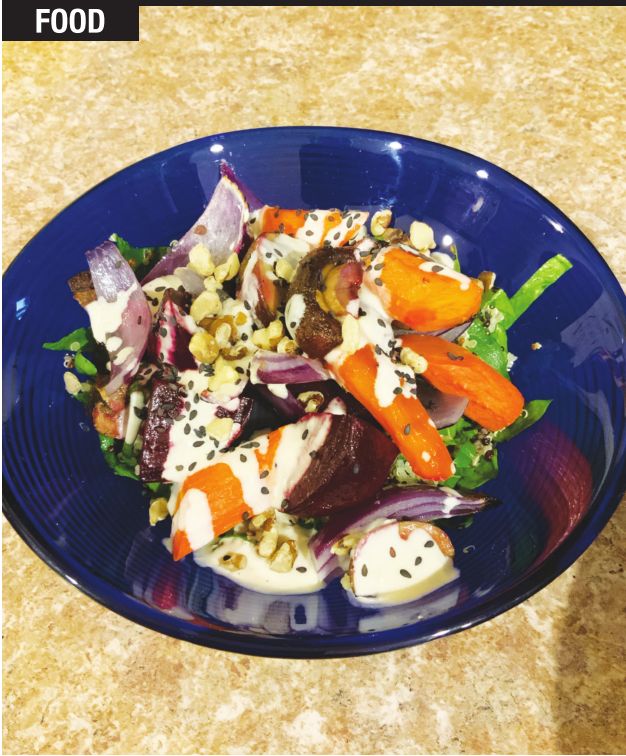
Future Bowl
1 root veggies like beets, carrots or purple sweet potatoes
1 red onion
8 ounces mushrooms
3 tablespoons olive oil, divided
2
cups cooked grain of your choice, such as quinoa, fonio (a
nutrient-dense grain from Africa that is similar in texture to
couscous), wild rice or spelt
2 cups roughly chopped spinach, arugula, watercress or kale
¼ cup each chopped mint and parsley
2 tablespoons tahini (Middle Eastern sesame paste) Juice of one lemon
1 clove of garlic, finely minced Honey, to taste Salt, to taste
½ cup chopped walnuts, toasted
¼ cup toasted sesame seeds Preheat the oven to 425 degrees. Scrub the sweet potato and cut it into 1-inch chunks.
Peel the onion and cut it into 8 wedges.
Wash
the mushrooms under running water and trim a small about off the end of
each stem. Toss the veggies, mushrooms and onion in the olive oil and
season with salt before placing on a baking sheet. Roast in the
preheated oven for about 25 minutes until potatoes are fork tender.
Remove from oven and set aside to cool slightly.
Combine
the cooked grain with the roughly chopped greens and herbs and toss
with about a tablespoon of olive oil in a mixing bowl.
To
make the dressing, combine the tahini, lemon juice, minced garlic, and a
small squeeze of honey. Add warm water as needed to achieve a pourable
consistency.
To
assemble each serving, place about a cup of the grains and greens
mixture in the bottom of a wide bowl. Mound a generous cup of the
roasted vegetables on top, then drizzle with the lemon tahini dressing.
Scatter toasted sesame seeds and walnuts over the top and serve.