It’s not weed anymore
It’s only been legal since Aug. 26, but there are already farmers throughout the state who want to start growing Illinois’ latest cash crop.
The Illinois Industrial Hemp Act was signed into law by Gov. Bruce Rauner this summer. It allows farmers to obtain state licenses to grow hemp for use in a wide range of products, from natural remedies to clothing to insulation. Chad Wallace of rural Ashland is one of the farmers looking to cultivate hemp in 2019.
“This is an opportunity with a new industry in agriculture that doesn’t come up very often,” said Wallace, who farms 120 acres of conventional crops and grows 19 acres’ worth of farmers market vegetables. “I see it as an opportunity that can help a lot of people, from farmers to people with innovative ideas on manufacturing hemp products that will sell.
“My local elevator has shown an interest and I’ve got a couple of farmers that I wouldn’t have thought would be interested that are,” Wallace said. “Those are based on the fact that you can hardly get anything for corn or soybeans now. It gives farmers another crop.”
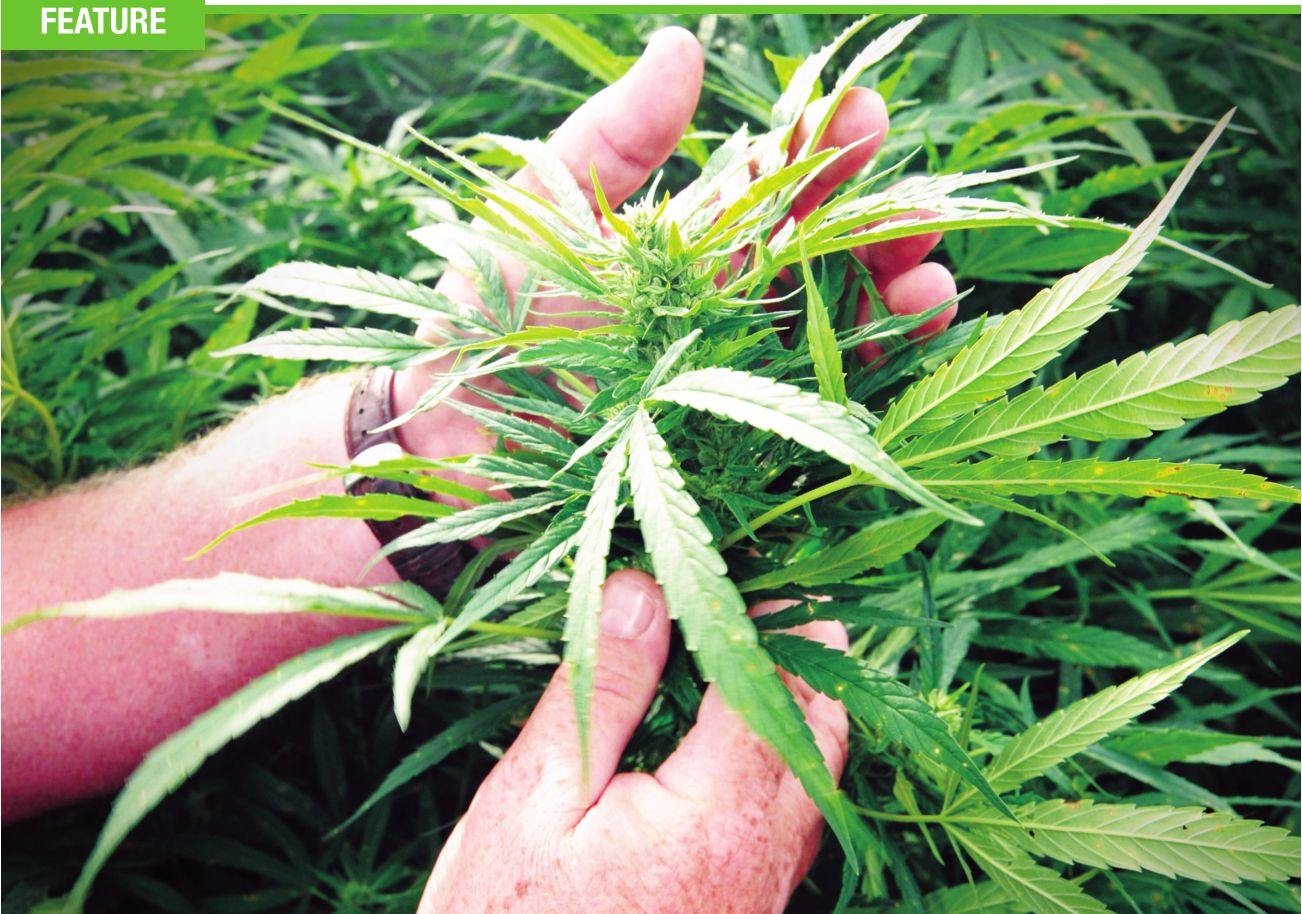
The non-hallucinogenic hemp plant looks a lot like marijuana because both are part of the same plant family. When Wallace went to Kentucky recently to talk to farmers about their five-year-old industrial hemp law, he wanted to know if the plants’ physical similarities had caused problems in that state.
“The first year they had a lot of trouble. Every kid
in the county was coming by and taking some,” said Wallace, who plans
initially to raise hemp for the fiber. “They put up signs saying, ‘This
is hemp,’ and tried to explain the difference, but it didn’t matter. So
they got through the first year, and the second year nobody took
anything.”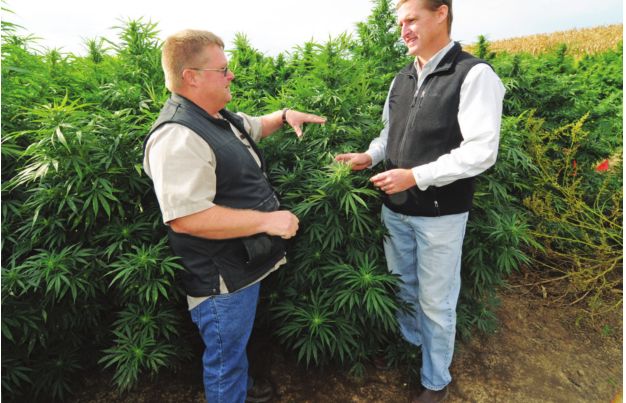
Hemp
was first spun into usable fiber about 10,000 years ago and is one of
the world’s most versatile plants. Its long, strong outer stem fibers
are used to produce thread for all types of clothing, ships’ sails,
rope, sacks, linens and cloth-based home furnishings. The woody inner
fibers of the plant are used in a dizzying array of products including
building materials, sound insulation, automobile door and ceiling
panels, composite plastics, paper and jewelry.
Hemp
plants are used for animal feed, bird seed and biofuels; hemp seeds are
made into a variety of food products for humans, from flour to granola
bits; and hemp oil is a key ingredient in many natural remedies,
tinctures, lotions and paints.
Hemp’s
end use determines what variety of the plant to grow and how to process
it. There are hemp varieties that are best for fiber production, others
that produce the best seeds for food products and hemp plants that are
raised specifically to produce hemp oil.
The
Illinois Department of Agriculture is required to adopt application and
licensing rules within 120 days of the Aug. 26 effective date, which
would be late 2018, according to department spokesperson Denise Albert.
The proposed rules will be published and the public will then have 45
days to submit comments on them to the department, she added.
Rachel
Berry of Princeton raises heirloom vegetables and herbs on her 13-acre
farm. She was among those who lobbied for passage of the Industrial Hemp
Act. Once the rules are in place, Berry plans to start with a five-acre
plot of hemp to produce fiber and seeds.
“At
first I think the market will be a little bit shaky but it will take
off in no time,” Berry said. “The surrounding states have been working
at this for years, especially Kentucky. They started off with four or
five acres and now they’ve got thousands. So I don’t expect that this is
something that will flop in this state.
“Illinois
was one of the top producers of hemp in the country around World War
II,” Berry said. “I think there will be a little bit of time for people
to reacquaint themselves with this plant and feel it is something they
can grow without a whole lot of drama attached to it.”
The
drama about hemp started when it was banned nationwide under the
Marijuana Tax Act of 1937 for its close relation to the marijuana plant.
The Drug Enforcement Administration still classifies hemp as a Schedule
1 drug and prohibits its growth, but Illinois and other states have
gotten around the federal ban by legalizing production of industrial
hemp for commercial purposes.
Berry
and other advocates are awaiting passage of the new federal farm bill
that currently includes the Hemp Farming Act of 2018 which would remove
many of those federal barriers to hemp production and encourage
continued growth in the industry.
Hemp
will be another tool in the farming toolbelt for Ryan Butzow, who
raises 920 acres of certified organic crops near Onarga in Iroquois
County. Butzow plans to devote 40 acres of land to grow grain hemp to
produce flour in 2019.
“Demand
is growing for it domestically and I think Illinois farmers are poised
to be able to meet that demand,” Butzow said. “We are blessed with
incredible soil here, and if they can do it in Kentucky we can certainly
do it here.
“It fits
well into my rotation. It competes well with weeds, it doesn’t require a
tremendous amount of fertility like corn does, it’s adaptable to all
sorts of different soil types, and the end uses are somewhat limitless,”
Butzow said. “The industry has figured out how to use corn in a myriad
of different ways, and that’s the way hemp was before corn became king.”
Butzow
also mentioned that his father has Parkinson’s Disease and uses a
hemp-based oil to alleviate some of the symptoms, so the new crop has a
special significance for him.
Learning from Kentucky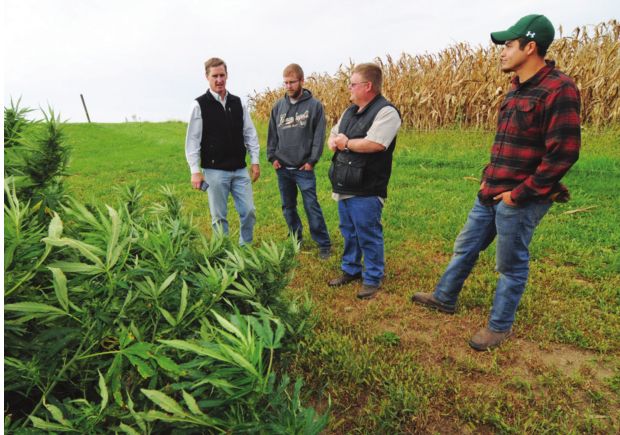
Many
prospective Illinois hemp farmers have visited Kentucky over the last
few years to see how their counterparts to the south have fared.
Kentucky’s hemp law was signed in 2013 and the state had 6,700 acres of
hemp under cultivation this season, according to Kentucky Department of
Agriculture spokesman Sean Southard.
“Kentucky
farmers have embraced the opportunities and challenges presented by
this diverse crop,” Southard said. “Our goal is to make Kentucky the
epicenter of industrial hemp production and processing. According to an
analysis in spring of 2018, there was $16.7 million of industrial hemp
products sold in Kentucky and our farmers were paid $7.5 million for
their hemp.”
Southard
said there are also 72 licensed hemp processing facilities in Kentucky
that produce either oil, fiber, seed or grain, depending on the type of
hemp that is grown. The state welcomes farmers from other parts of the
country and hosted a Hemp Information Session and Expo on Oct. 11 to
showcase Kentucky’s newest crop.
But it hasn’t happened without a few hiccups.
Southard said the process has been a learning experience.
“The
Kentucky Department of Agriculture runs a program that balances the
need for flexibility on the part of our license holders and the
safeguards required by law enforcement,” Southard said. “The law has
changed over time to accommodate the needs of our license holders and
law enforcement. When issues emerge, the department assists local law
enforcement in their investigatory role.”
In the field
There’s
no question about it, hemp looks very much like marijuana. Both are the
same plant species, cannabis sativa. To be legal, hemp plants need to
be bred with tetrahydrocannibinol, or THC content less than 0.03
percent. Any THC level above that puts the plant into marijuana
territory.
Two hemp
research plots were allowed in Illinois in 2018 under the state’s
existing hemp research law. One plot in Mason County had been harvested
by mid-September. But one in Warren County was still growing well,
waving in the breeze, and looking every bit like what it was – a field of cannabis.
The
roughly one-third of an acre plot near Roseville consisted of
approximately 1,200 plants ranging from three to six feet tall. The plot
emitted a pungent, musty scent and the leaves and buds were covered in a
sticky oil.
“Don’t
let that stuff get on your clothes, or your car will smell for days,”
said Win Phippen, professor of Plant Breeding and Genetics at the
Western Illinois University School of Agriculture. Phippen had worked
with a local farmer to raise the experimental crop this year.
The
Warren County crop was oily because it was being produced specifically
for its cannabinoids, or CBD oils, that are used in natural remedies,
tinctures and lotions. Phippen said it’s important that farmers decide
which type of hemp to grow because the process for each is different.
“It
requires a tremendous amount of care and is much more time-consuming
than corn or soybeans,” Phippen said. “With fiber production you try to
maximize the amount of stems so it’s going to be much tighter row
spacing, about 30- inch rows and just a couple of inches between the
plants in the rows, so very much like corn production.
“If
I’m going for CBD oils I want to maximize the vegetative growth, so I
want lots of branches and leaves to maximize leaf surface area,” Phippen
said. “So you might go to row spacings of almost four to five feet wide
with three to five feet between plants within the row. So it ends up
being more orchard management than corn management.”
Phippen
also wanted to dispel the notion that “ditchweed,” as hemp is commonly
known, is easy to grow and hardy because it can be found growing wild
alongside the road.
“It
needs some nitrogen so that’s why it performs well on fence rows,”
Phippen said. “You will typically see it on the edges or borders of most
production fields because of nitrogen runoff or something like that. It
needs nitrogen to really perform well.”
On to the rules
To date, 34 states have industrial hemp laws that allow its production, according to Vote Hemp.
Illinois
is a relative latecomer to the industrial hemp game, and a 2017 effort
to pass the bill fell just short in the Illinois General Assembly.
Concerns from previous bills were addressed and the Industrial Hemp Act
passed the Illinois House of Representatives this year on a 106-3 vote.
The Illinois Senate passed it unanimously.
Now
all eyes are on the Illinois Department of Agriculture and the rules,
regulations and fees they will put in place by the end of December for
the first hemp crop that will be planted in spring 2019.
The
Illinois Stewardship Alliance worked with the Illinois Farmers Union
for several years to get the Industrial Hemp Act passed. The Alliance
expects the Department of Agriculture’s rules will include licensing of
hemp growers and close monitoring of the crop, but they hope the rules
will encourage, rather than discourage, prospective hemp growers and
producers.
“We really
hope the department will pick the best of what Kentucky and Colorado
have been doing and fold those into our law here,” said Molly Gleason of
the Illinois Stewardship Alliance. “We hope that the rules support
farmers, local processing and farmer cooperatives.
“This
really falls into line with supporting farmers, economic development
and conservation,” Gleason said. “It’s good for farmers of all sizes, it
bridges that gap between the large grain producers and the small
specialty crop producers.”
Kalee
Hooghkirk is the president of the newly formed Hemp Industry
Association and the cofounder of clinical and medicinal hemp businesses
based in West Dundee, Illinois.
“We
hope to see that the rules support small farmers, to make sure there is
open access no matter the size of the farm,” Hooghkirk said. “We hope
to see low minimum acreage and diversity in the seed supply.
“We
know that the state of Illinois is a hub for processing, whether it’s
for food or cosmetic manufacturing,” Hooghkirk said. “I hope to see
Illinois become a leader in the manufacturing and processing portion of
industrial hemp, not just the growing.”
And
it couldn’t come too soon, Hooghkirk said, because for years hemp-based
products could be sold in Illinois but the raw material couldn’t be
grown here. This disparity was the result of a well-entrenched belief
that hemp, the kissing cousin of marijuana, was fine as long as it was
in clothing or oils, but not if it was growing in a field where any
teenager could pick and smoke it.
“Our
thing, no matter what, is locally grown, locally sourced. So for us to
not have those options in our business was really heartbreaking,”
Hooghkiork said. “We’re really excited to have a local source so we can
consult with these artisans to create hemp-based products within the
state of Illinois.”
Industrial
hemp states are taking advantage of a market that is expected to
surpass $2 billion by 2020 according to the National Hemp Association,
which notes that the U.S. imports an estimated $300 million in hemp
products and materials each year.
Buy your hemp here 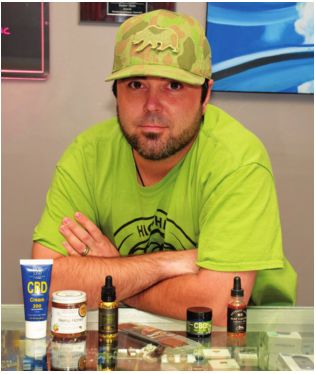
Shoppers
have been able to buy hemp-based products for years in Illinois,
although the hemp from which they were made usually came from other
states, Canada or overseas.
Walk
into Upper Limits Midwest in Springfield at Second Street and South
Grand Avenue and you’ll get an idea of what can be made from CBD oil:
Soaps, tinctures, dog treats, vapable oils, natural honey mixed with
CBD, concentrates, balms, skin products, gummies and water soluble
drops, to name a few.
“When
CBD first came out I was a little skeptical, then I really did my
research and I saw how it was helping people,” said Upper Limits owner
Matthieu Fortin. “I’ve heard stories from customers about how it’s
changed their lives because it has helped them so much. It has made me a
believer. The science is behind it, it’s really a great product.
“I
see the most success with our customers with inflammation because hemp
has antiinflammatory properties. If you have poison ivy or poison oak,
or any irritation or rashes, it’s like the miracle cream for that,”
Fortin said. “Anything that helps somebody and is a natural product is a
great thing, especially with all of the medications that are being
pushed down everybody’s throats.”
Hemp-based products don’t come cheap.
Online
companies advertise eyedropper-type bottles of CBD oil for between $25
and $450, based on the concentration each bottle contains. The small
bottles at Upper Limits are toward the lower end of that price scale,
but it’s still an investment.
Items
made from hemp fiber are even more diverse. The fiber has been used in
car and wall insulation, in plastics, and even in a product called
“hempcrete,” a form of concrete. Of course, rope is the product most
commonly associated with hemp fiber.
But you might not associate shirts, shoes, hats or pants with hemp fiber.
“Hemp
fiber is stronger than cotton and will outlast cotton fabric. The more
you wear it, the better it fits,” said Salvador Jasso, the owner of Don
Salvador Hemp Clothing Line in Chicago. “It’s also known to be
UV-resistant and antimicrobial if the cloth is 100 percent hemp.”
Jasso
got the idea for hemp clothing from a college friend and now he buys
the hemp fabric, designs the clothing, and has a seamstress create it
for him.
“In the past
I’ve gotten the hemp from Italy, China and France,” Jasso said. “I’ve
recently contacted a few Illinois farmers and we are already talking
about finding a certified seed to plant maybe half an acre and see how
it turns out.”
Jasso
said you can make just about any textile item from hemp fiber. He
doesn’t mass produce his clothing but won’t rule out expanding the
operation if it is merited by supply and demand. Jasso added that hemp
clothing production has one additional benefit.
“It’s going to have the ability to give more people in our community jobs, like I’m doing now,” Jasso said.
David Blanchette is a freelance writer from Jacksonville and is also the co-owner of Studio 131 Photography in Springfield.


