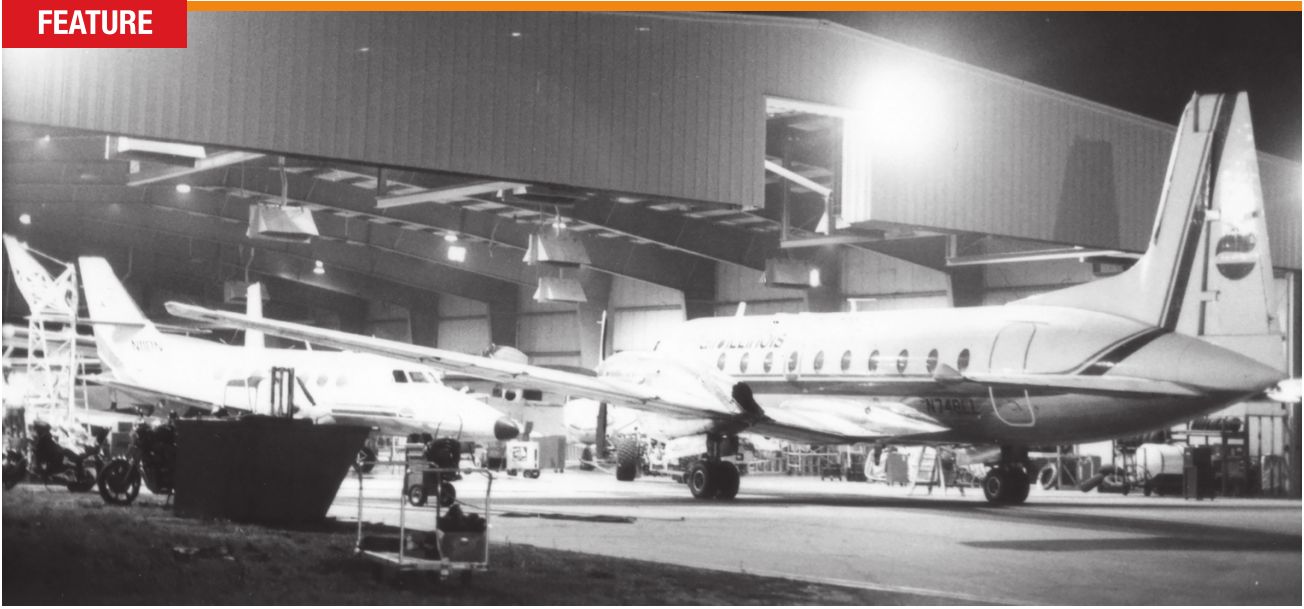
How Flight 710 helped change aviation
We were veritable Jetsons.
Between 1970 and the mid-1980s, scores of propeller-powered planes crisscrossed Illinois, offering daily service between such towns as Jacksonville and Mt. Vernon. No trip was too short. In 1981, a plane ticket from Springfield to Decatur cost $5.
Resort Air. Chicago Suburban Airlines.
Piasa Airlines. The companies came and went, maintaining flight schedules with planes as small as twin-engine Beechcrafts with room for five.
The sky, quite literally, was the limit. “Less individual auto travel is a looming fact of the 1980s, and Capital Airport is headed for the 400,000 to 500,000 passenger totals in the years ahead,” Harry Clark, State Journal-Register aviation columnist, predicted in 1980. Six years earlier, engineers at Crawford, Murphy & Tilly had forecasted that 1.6 million people would pass through the airport in 2005. It never happened. Last year, fewer than 200,000 travelers went through Abraham Lincoln
Capital Airport.
It would be a stretch to attribute the demise of commuter airlines to the final journey of Air Illinois Flight 710. There were greater forces at play than a plane that went down in a pasture near Pinckneyville. But the crash put a national spotlight on small airlines, which were increasing in numbers, and how a dwindling number of regulators rode herd. The picture wasn’t pretty.
“Free enterprise at work”
Air Illinois started flying in 1970 with a few planes and a rule: Flight attendants could not be taller than 5-feet-2-inches. Otherwise, they would not be able to stand in cramped passenger cabins.
Tragedy helped the fledgling airline in 1971, when a Chicago and Southern Airlines plane hit power lines while attempting to land in dense fog at Greater Peoria Airport. All 16 aboard perished. The National Transportation Safety Board blamed the pilot, who also was president of the airline. “We’ll try it…and thank you,” he told controllers after being told that two other planes had landed elsewhere after a combined five attempts.
After being fined the previous year for allowing flight crews to exceed maximum allowable duty hours, CSA had been falsifying records to avoid more citations. Pilots told crash investigators they’d seen colleagues pop pills to stay awake. While running other companies, the owner previously had been cited for such infractions as exceeding weight limits and flying on instruments without passing a required proficiency check.
With the blessing of the Federal Aviation Administration, the doomed plane had been modified, its fuselage extended by seven feet, its engines replaced, its landing gear redone so that it was no longer a tail dragger. “A home-built pig,” one pilot called it after the tragedy. The airline was so strapped that it couldn’t buy fuel in Springfield or Chicago.
The tragedy was the fault of regulators as much as the airline, U.S. Rep. Sidney R. Yates, D-Chicago, thundered from the House floor. “Their record was not good,” Yates told colleagues. “In fact, the city of Springfield, the Springfield Airport Authority and the Springfield Association of Commerce and Industry all fought the decision to award the route to Chicago and Southern.”
The route Yates spoke of was the run between Springfield and Meigs Field in Chicago – Peoria had been a stop along the way for CSA. Unlike folks destined for O’Hare or Midway, passengers who landed at Meigs were instantly in the heart of the Chicago loop. Within weeks of the crash, which put CSA out of business, the state awarded the route to Air Illinois.
Chicago-to-Carbondale, with a stop in Springfield, became the spine of Air Illinois, which expanded throughout the 1970s and early 1980s. “Free Enterprise At Work Here,” a company motto, graced flight schedules and advertising. By 1982, Air Illinois had acquired a pair of jets and was
offering service in Missouri, Indiana, Kentucky and Iowa, taking over
from larger airlines that abandoned smaller markets after deregulation
took effect in 1978.
Ahead of the airplane 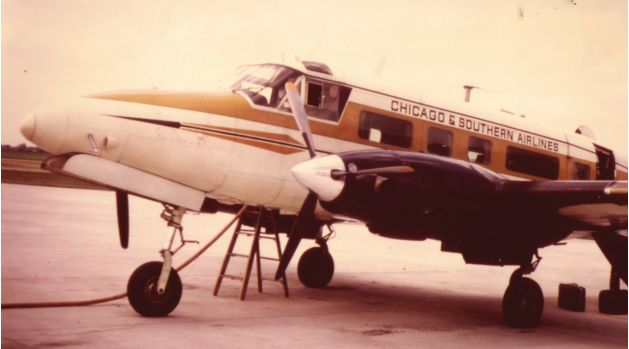
Capt.
Lester Smith reported for duty at 10:50 a.m. on Oct. 11, 1983, at
Southern Illinois Airport in Carbondale, hitching rides on flights to
St. Louis, then Iowa, then Springfield before finally getting into a
cockpit at Capital Airport shortly after 6 p.m. to make the run to Meigs
Field. He would then turn around and pilot Flight 710 back to
Springfield, and finally to Carbondale, where he lived.
Smith,
32, was an average pilot, other Air Illinois pilots would later say. He
didn’t like being late. “It’s not that management was pushing him to do
it, it’s just that it was his own idea,” one pilot told investigators.
To
stay on time, Smith would fly beneath or at the very edge of
thunderstorms that should have been given wider berth, and he exceeded
allowable speeds during descents, ordering first officers to pull
circuit breakers so that warning horns wouldn’t sound. The captain at
least once had allowed a copilot to land at Meigs, even though the
copilot didn’t have sufficient experience to land on the strip that
extended into Lake Michigan, not unlike a moored aircraft carrier. He
was known to anger easily, becoming upset if airline employees weren’t
dressed to company standards.
Smith’s
shortfalls weren’t secrets. Alarmed by his habits, a pilot had once
asked a first officer how “he could just sit there and let him do these
things,” the NTSB ultimately reported. “I just try to keep a close eye
on things,” Frank Tudor, the first officer, answered. “I just try to
monitor the situation and I never let him get into a situation that I
don’t think I could take control of and rectify.”
Tudor was beside Smith in the cockpit when Flight 710 departed Springfield at 8:20 p.m., 45 minutes behind schedule.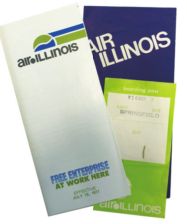
Weather
was fine in Springfield, but was deteriorating south of the capital
city, with rain, fog and two miles of visibility in Carbondale. There
was a chance of thunderstorms. In addition to Tudor, Smith and a flight
attendant, seven passengers were aboard the 44-seat Hawker Siddeley 748
2-A twin-engine turboprop.
Air
Illinois that day had made the final payment on the 10-year-old
British-built plane manufactured by the same company that built
legendary Hawker Hurricanes that helped win the Battle of Britain during
World War II. It was considered rugged – while taking off in
Springfield the previous year, it had sustained nothing more serious
than a bent propeller after hitting a deer on the runway. Long periods
of time would pass without any problems noted in flight logs where
anything amiss was supposed to be reported. But that was on paper.
Mechanics and Air Illinois pilots, it turned out, didn’t always write
things down in logs, instead relying on conversations or notes written
on slips of paper.
The
plane had been having trouble with its right generator, one of two that
provided electricity that powered everything from bathroom lights to
instruments in the cockpit. Problems had included excessive voltage
levels and intermittent generator shutdowns. Pilots didn’t log these
incidents as required, but they did alert mechanics, who corresponded
with the manufacturer eight times during the previous week, attempting
to resolve issues.
Less
than two minutes after takeoff, Capt. Smith radioed controllers in
Springfield, saying he had “a slight electrical problem.” In the
cockpit, he turned to Tudor, a first officer regarded as one of the
airline’s finest. “He knew the regulations, he had a vast knowledge of
the airplane and he was always ‘ahead of the airplane,’” crash
investigators would later report.
The
electrical problem was a generator shutdown, which Tudor tackled while
Smith flew the plane. Since production began in 1962, 39 generator
failures had been reported in 370 Siddeleys, including 17 instances of
both generators going out. None of the planes had crashed.
Instructions
were aboard the plane, telling the crew what to do if generators quit
working. One of the first steps was isolating the faulty generator from
the plane’s electrical system, and so Tudor cut off the right generator
that had been acting up. But the right generator was working fine – the
left generator was broken. Almost immediately, Tudor determined that the
left generator was dead and the right one was functional, but, for some
reason, he couldn’t reconnect the right generator to the plane’s
electrical system.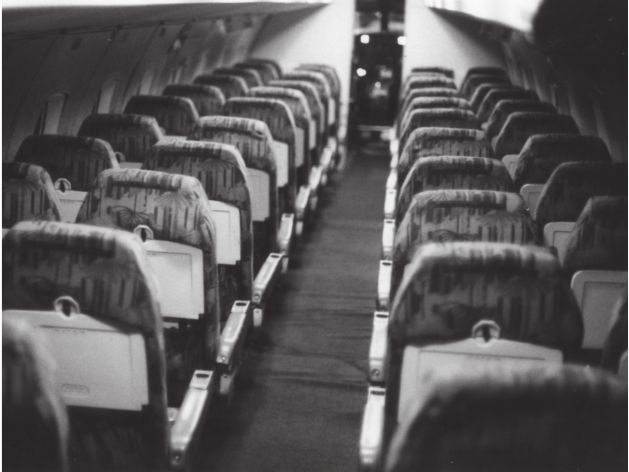
“What are we going to do?” Tudor asked the captain.
At that point, the plane was six minutes away from the Springfield airport. Smith kept flying south.
“This has just not been our day”
Without
generators, the plane relied on batteries. The heavier the electrical
load, the shorter the battery life, and so Smith and Tudor switched off
instruments, exterior navigation lights that made the plane visible to
other aircraft and lights in the main cabin. “She (the flight attendant)
can use the reading lights only back there,” Smith told his copilot.
The
batteries were supposed to last for at least 30 minutes. The flight
from Carbondale to Springfield was scheduled to last 40 minutes.
“Ah,
we are kinda having an unusual request here, ah, we would like to go to
2,000 feet,” the captain told an air traffic controller. “(I)f we have
to go VFR (without instruments) that’s fine, but, ah, like to, ah, like
you to keep an eye on us if you can.”
Normal
cruising altitude was 10,000 feet, but if the plane flew below clouds,
it wouldn’t require instruments powered by electricity. The controller
said no. At 2,000 feet, Flight 710 would disappear from radar, and so he
authorized 3,000 feet.
Tudor
continued trying to restore generators while shutting down nonessential
devices. “Radar’s off, only got one fan on,” he informed the captain.
“OK,” Smith responded. A heater for a pitot tube, a device that measures
airspeed, should stay on, the captain decided.
Twelve
minutes into the journey, flight attendant Barbara Huffman came into
the cockpit, asking why the main cabin was dark. “People want to know,”
she said “We have a little bit of an electrical problem here, but we’re
going to continue to Carbondale,” Smith explained. “We had to shut off
all excess lights.”
“What
time do we get there?” Huffman asked. “Is that rain?” Tudor told her
they’d land at 9 p.m. With Huffman apparently back with passengers,
Smith and Tudor discussed the instruction manual that had proven no
help. It says to flip these switches, Tudor told the captain, “which
I’ve already done.”
“OK,” Smith said. “This has just not been our day, Les,” the first officer responded.
“We’re right on course”
From
the first sign of trouble, Tudor continually checked the batteries’
voltage levels. They were holding steady, with power above 20 amps.
“Still pretty good – 20, 21-and-a-half,” he informed the captain after
16 minutes in the air. “Should last to Carbondale.”
But
Tudor, the man who was always ahead of the plane, apparently didn’t
know that the batteries would maintain normal voltage until nearly dead.
Power levels would dramatically plummet at the first sign of depletion.
Encouraged
by battery readings, Tudor recounted his efforts to restore generator
power. “Well…when you were doing that, you see, I was losing my lighting
here,” the captain said. “I was losing lighting in the cabin, and it
was going pitch dark back there – don’t want to scare the hell out of
the people.”
“Yeah,
that’s for sure,” Tudor agreed. Then a navigation instrument showed
something below. “That looks like Carlyle there,” he told Smith. “Yeah,
that’s it – we’re right on course,” the captain said. “Unbelievable.”
Talk returned to the electrical issue.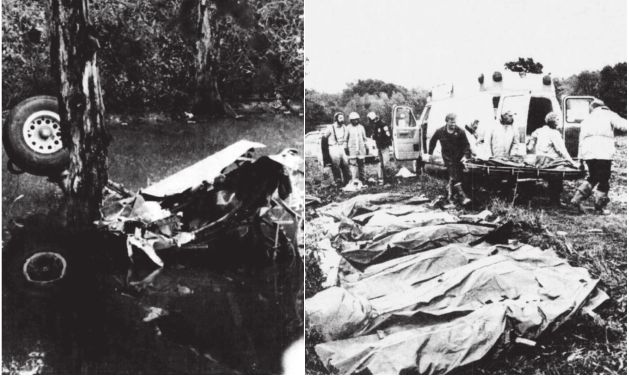
Smith
told his first officer that he thought that a circuit breaker had
tripped. “Yeah, I was thinking the same thing – something popped,” Tudor
said. “Whatever you do… don’t, if you would, don’t say anything to
dispatch,” the captain said. Five seconds of silence ensued. “Don’t say a
fucking thing to them,” Smith repeated. “Roger that,” Tudor replied.
“Not nothing,” Smith said. “You can plan on that, that’s for sure,”
Tudor reassured the captain. “The less you tell them about anything, the
better off you are.” “That’s right,” Smith repied.
Tudor
briefly switched on a navigational aid to get a bearing. “Is that
lightning off to your right side?” Smith asked. “Say again,” Tudor
replied. “Most of that lightning is off to your right side, is it not?”
the captain repeated. “Yeah,” the first officer confirmed.
Twenty-nine
minutes after takeoff, air traffic control instructed Tudor and Smith
to change radio frequencies. Tudor radioed back acknowledgement. “Good
night,” a controller responded, signaling that further communications
would be on a different frequency. It was the last conversation between
the ground and the doomed plane.
“I
don’t know if we got enough juice to get out of this,” Tudor told
Smith, one minute later. Almost simultaneously, the plane disappeared
from air traffic control. “Illinois seven-ten, I’ve lost radar contact,”
a controller radioed in the first of several fruitless attempts to
reach the plane.
The
Siddeley was in deep trouble. Tudor and Smith talked about a radio
failure. The captain told his first officer to watch the altimeter while
he descended to 2,400 feet. The cockpit apparently was dark. “You got a
flashlight?” the captain asked. “Here we go – do you want to shine it
up here?” “We’re losing everything – down to about 13 volts,” Tudor told
the captain while an air traffic controller radioed another Air
Illinois plane. “I got your company seventen inbound from the north at,
ah, 3,000, also, we’ve lost him on radar,” the controller reported. “He
does have electrical problems. I don’t know what extent, but, ah, I
can’t talk to him now.”
Less
than a minute later, Tudor told Smith that the plane was at 2,400 feet.
“Do you have any instruments?” the captain asked. “Say again,” Tudor
responded. “Do you have any instruments, do you have a horizon?” Smith
inquired.
Those were
the last words captured by the cockpit voice recorder, which was powered
by the same batteries as everything else. The plane had been aloft for
34 minutes.
“We were sacrificial victims”
The
man who owned the pasture six miles northeast of Pinckneyville and 40
miles from the Carbondale airport heard the plane circle above his
property twice before it came down, leaving a path of wreckage a
half-mile long.
The biggest piece ended up in a pond. It had been headed northwest when it hit the ground.
The
dead included a Springfield mother and her two-year-old son, who were
setting out for a visit with her parents while her husband, a chef,
stayed home. Also killed were a Chicago computer consultant, the
director of the Southern Illinois University Rehabilitation Institute,
an institute professor, a supervisor with the state Department of Labor
and a Teamster’s official. The airline was insured for $134 million.
According to press accounts, jury verdicts and settlements ranged from
$400,000 to $1.5 million.
“I
feel that she died in the line of duty,” Tom Heagy, husband of Teamster
business agent Regina Polk said in a eulogy, noting that she was flying
to a meeting aimed at finding money to fund job training programs for
displaced workers. Polk, 33, had been born on Valentine’s Day, just like
Jimmy Hoffa, and was, some said, destined to become president of
Teamsters Local 743 in Chicago. She had a gift for organizing women who
held clerical jobs. She called unionbusting executives “bastards with
briefcases.”
Heagy
donated money from a jury award to establish a foundation that has
distributed more than $780,000 in grants to hundreds of women.
Previous
crashes of small commuter planes had gained scant national attention –
the 1971 CSA crash that killed 16 in Peoria barely made the New York Times, which ran a wire story on page 65. Air Illinois was different.
President
Ronald Reagan was winning accolades for his get-tough approach to the
air traffic controllers union, which folded after the president hired
replacements for strikers who had walked off their jobs contrary to
federal law. With less fanfare, Reagan also had slashed the number of
FAA inspectors assigned to keep airlines safe, even though the number of
airlines was increasing due to deregulation. Critics pounced after
Flight 710 went down.
Air Illinois, it turned out, was a scofflaw.
Parts
were inspected by mechanics earlier than required to smooth workloads
and ensure that planes wouldn’t go out of service, with paperwork
postdated to show that the inspections complied with safety regulations.
Mechanics hid records from FAA inspectors. Flight crews hadn’t been
properly trained on how to handle generator failures. Asked how long
batteries would last in the event of total generator failure, the five
Air Illinois pilots qualified to fly Siddeleys gave three different
answers.
The FAA also had failed. After undergoing knee
surgery, an inspector assigned to check electrical equipment hadn’t
visited the airline for five months. The inspector assigned to take his
place didn’t do the work either, telling crash investigators that he was
neither trained nor qualified. FAA inspectors, stretched thin, didn’t
adequately review paperwork, the NTSB reported, and many inspections
“were not performed in an aggressive manner.”
Even
before the report came in, U.S. Rep. Paul Simon, D-Carbondale, who
would be elected to the Senate within the year, demanded that the FAA
hire more inspectors. Citing Air Illinois, Secretary of Transportation
Elizabeth Dole announced a nationwide review of safety procedures and
vowed that airlines that fell short would be grounded. Dole made her
announcement on Meet The Press, two months after the crash and four days after Air Illinois surrendered its operating license in lieu of having it yanked.
Air
Illinois stopped flying after the FAA assigned 10 inspectors to watch
over mechanics and pilots. Four months after the crash, the Department
of Transportation announced that the FAA’s inspection program would be
restored to 1981 levels, and 166 inspectors were hired in six months.
While finding fault with the FAA and airline maintenance procedures, the
NTSB blamed the crash on Smith, who should have returned to Springfield
within minutes of takeoff.
Air
Illinois resumed service one month after surrendering its operating
license, but not for long. The airline went out of business six months
after the tragedy and ended up in bankruptcy.
“This crash got more attention than any other in airline histroy,” Alice Mitchell, vice president of marketing, told the State Journal- Register. “We were sacrificial victims.”


