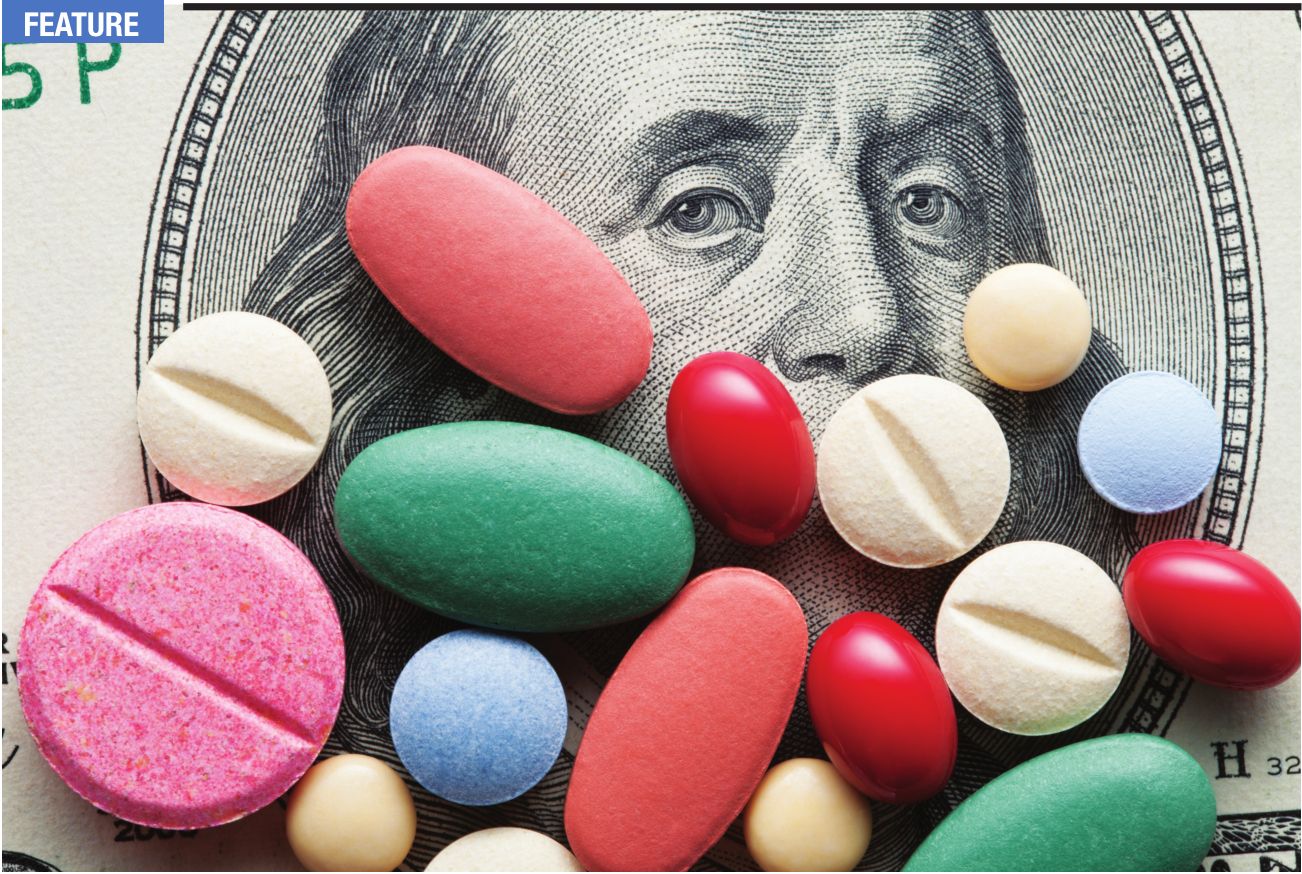
H.D. Smith under fire for opioid sales
H.D. Smith is a titan in the drug industry.
Founded in 1954 on the outskirts of downtown Springfield, the drug wholesaler has grown to become the nation’s fourth largest distributor of prescription drugs, with annual sales surpassing a reported $4 billion in 2015. After years of swallowing competitors to build a nationwide distribution network, owners of the family-run firm cashed out in January, when the company sold for $815 million.
“The company is a business, however, one that deals ultimately in altruism,” reads a history of the company published in 2004, when H.D. Smith celebrated a half-century in business. “The pharmaceuticals and supplies distributed by H.D. Smith are used by people in need, whether ill, uncomfortable or with a desire that must be fulfilled.”
With 360 employees based here and hundreds more working in offices and distribution centers elsewhere, the company is one of Springfield’s largest private employers. But now the company is in crosshairs, accused of distributing potentially deadly opioids to pharmacies in Appalachia and other places with high addiction rates and plenty of red flags signaling that the drugs were being abused and sold on the black market.
Smith, along with other drug wholesalers, are defendants in scores of lawsuits filed by state and local governments across the country that blame the companies for selling addictive drugs like so much candy. The company has already settled one, agreeing last year to pay $3.5 million to the state of West Virginia while admitting no wrongdoing. An investigation is underway by the U.S. House Energy and Commerce Committee, with politicians hinting at the possibility of criminal charges.
“We get the facts, and then we make decisions, whether it goes to the Department of Justice or results in legislative change,” U.S. Rep. Greg Walden, R-Oregon, the committee’s chairman, told the Charleston Gazette-Mail in February, shortly after the committee sent a letter to H.D. Smith, asking for information on the sale of millions of doses of painkillers to tiny pharmacies in West Virginia.
“You have to run faster” This, likely, is not where founder Henry Dale Smith, Sr., expected or wanted his company to end up when he founded H.D. Smith Wholesale Drug Co. in 1954, choosing a modest brick building at 435 North Fourth St. in Springfield as the first headquarters. He was fresh from South Carolina, where his brother Jim ran J.M. Smith Corp., a separate wholesale drug company that’s still in business.
The move to Springfield was equal parts plan and dream. The Smith family is firmly rooted in pharmaceuticals, and James Smith, Sr., who founded J.M. Smith Corp. in 1944, had talked about becoming a national drug wholesaler, something that never had been done. He set his sights on Springfield after visiting relatives in the capital city, but died unexpectedly
in 1951 before he could make the move. Instead, Henry, like his late
father a licensed pharmacist, moved from the South to Springfield to
conquer the drug wholesaling world. He largely succeeded.
The
Smith family chose Springfield for the city’s central location and
comfortable distance from competing wholesalers in Peoria, Chicago and
St. Louis. Early on, sales doubled every five years, according to the
2004 company history, thanks to such innovations as partnering with the
Springfield Register newspaper, whose delivery trucks dropped drugs from H.D. Smith at pharmacies throughout central Illinois.
By
1977, the company had outgrown its building and so moved to a new
warehouse and offices at 4650 Industrial Drive. The building remains a
distribution center, but corporate headquarters moved to a larger
building on Fiat Avenue in 2003. The move came amid a buying spree that
saw H.D. Smith acquire wholesalers throughout the nation so that the
company ultimately became the fourth-largest drug wholesaler in the
United States. It is, top executives have said, a matter of swallowing
competitors or getting swallowed yourself.
“One
of the problems we’ve battled ever since I started in 1980 has been the
declining margins in our business,” J. Christopher Smith, president and
chief executive officer, said in the company’s self-published history.
“Each year, if you do the same amount of buying that you did the year
before, you lose ground because your margin shrinks. So you have to run
faster and faster just to stay even. If you want to grow, you have to
run even faster. It’s the only experience I’ve ever known in our
business: How do you do more with less?” The company’s generosity grew
with its fortunes. Quietly, the H.D. Smith Foundation became one of
Springfield’s biggest charitable enterprises. The foundation in 2016
gave more than $1.6 million to a dizzying array of recipients that
included food banks, Henson Robinson Zoo, Memorial Medical Center
Foundation, the Southern Poverty Law Center, the International Campaign
for Tibet, the Toledo Opera in Ohio and UNICEF. Churches and religious
organizations received nearly one-third of the charity’s donations in
2016, the most recent year for which financial records are available.
Money went to Mormons, Catholics, Baptists and Lutherans in several
states, with Westminster Presbyterian Church in Springfield – where
company founder Henry David Smith, Sr. was a deacon before he died in
2015 – getting $241,200, the second-largest single contribution behind a
$556,000 gift to Bennington College in Vermont.
No
shortage of blame Even as H.D. Smith was acquiring other wholesalers
and opening divisions in Kentucky, New England, Florida and elsewhere,
drugs sold by the company were causing problems. There is no shortage of
blame for the current opioid crisis. Doctors either crooked or clueless
have written prescriptions to addicts. Drug manufacturers suckered
physicians with marketing campaigns that overplayed benefits of
painkillers while soft-pedaling the danger of addiction. Pharmacies
working hand-in hand with pill mills dispensed prescriptions at
breakneck speed. And the government, critics say, enabled it all with
weak enforcement of regulations and laws favoring the drug industry,
which lavished campaign contributions on elected officials.
After
years of near-unchecked production, the Drug Enforcement
Administration, which sets annual ceilings on manufacturing of
prescription drugs, rolled back the 2017 quota by 25 percent. This year,
the DEA dropped the quota by another 20 percent at the urging of
elected officials including Sen. Dick Durbin, who last summer was one of
16 senators, all Democrats, who sent a letter to the DEA noting that
the agency had dramatically increased quotas for addictive painkillers
during the past two decades. According to Durbin’s office, production of
oxycodone increased from 3.5 tons to 150 tons between 1993 and 2015.
During that same time period, the DEA approved a 25-fold increase in
production quotas for fentanyl.
Profits
can be immense – sales of OxyContin last year totaled a reported $1.8
billion, which was down 50 percent from five years ago. The family that
owns Purdue Pharma, the privately held company that invented and sells
the drug, was deemed the 16th richest in the United States by Forbes magazine
in 2015, with most of an estimated $14 billion fortune based on the
exploding popularity of a painkiller blamed for the death and addiction
of tens of thousands of Americans. In 2007, the company pleaded guilty
to criminal charges for misleading the government, physicians and
patients about the dangers of OxyContin. The company was fined $600
million. In addition, three company executives entered guilty pleas as
individuals and were hit with an additional $34.5 million in fines.
Faced with scores of pending lawsuits, Purdue in February announced that
it would end marketing campaigns of OxyContin to doctors.
As
part of the supply chain, drug distributors also have fallen under
scrutiny, and so H.D. Smith and other wholesalers have been hit with
lawsuits and government inquiries, including the letter sent by the
House Energy and Commerce Committee in January.
Citing
data from the Drug Enforcement Administration, the committee wrote that
H.D. Smith in 2008 sold more than 1.1 million hydrocodone doses to
Family Discount Pharmacy in Mount Gay-Shamrock, a West Virgina town that
is home to 1,800 people – it works out to more than 3,000 pills per
day. That same year, H.D. Smith sold more than 1.3 million doses of
hydrocodone and oxycodone to Sav-Rite Pharmacy in Kermit, West Virginia,
a town of 406. According to the congressional letter of inquiry, that’s
five times the amount that such a rural pharmacy would be expected to
need. The company between 2007 and 2008 also sold nearly 5 million
hydrocodone pills to two small pharmacies in Williamson, West Virginia,
where slightly more than 3,000 people live, the committee wrote. The
committee based part of its concerns on stories in the Gazette-Mail, which
has reported that H.D. Smith distributed more than 18 million doses of
oxycodone and hydrocodone in West Virginia between 2007 and 2012.
“Data
provided to the committee by the Drug Enforcement Administration
raises… questions regarding H.D. Smith’s efforts to monitor for, and
mitigate, controlled substance diversion in West Virginia,”
representatives from both parties wrote in the eight-page letter.
Speaking
on background, a staff member for the committee wrote in an email that
the committee has received a partial response from H.D. Smith and is
working to get more answers. Christopher Smith and his brother, Dale,
who together ran the company until its recent sale, declined an
interview request sent via H.D Smith spokeswoman Sarah Kinkade. “H.D.
Smith operates with stringent protection of our nation’s healthcare
supply chain, responding to the inquiry from Congress as necessary,”
Kinkade wrote in an email.
The
letter came one year after H.D. Smith agreed to pay $3.5 million to
settle a lawsuit brought by the West Virginia attorney general’s office,
which accused the company and other wholesalers of pumping millions of
doses of painkillers into a state with one of the highest addiction and
overdose rates in the nation. The company admitted no wrongdoing, nor
did any of the other 11 distributors that last year settled lawsuits
brought by the West Virginia attorney general, which ended litigation in
exchange for more than $40 million in settlements. H.D. Smith agreed to
the thirdhighest amount. Even before the settlement was reached, the
company’s insurer sued in federal court in Springfield, arguing that it
should not have to pay to defend the lawsuit. U.S. District Court Judge
Richard Mills ruled in favor of the insurer in 2016, but was overturned
on appeal.
Lawsuits
keep coming against H.D. Smith and other wholesalers as counties, cities
and states demand that distributors help pay for a public health crisis
the companies helped create. Lawsuits against H.D. Smith have been
concentrated in West Virginia, but the state of Delaware sued in
January, alleging that the company and eight other wholesalers,
manufacturers and pharmacy companies sold far more addictive painkillers
than could possibly be needed for legitimate medical purposes.
One
of the biggest settlements came last year as McKesson Corp., a publicly
traded wholesaler, agreed to pay $150 million to settle federal claims
that the company hadn’t reported suspicious orders for painkillers to
the Drug Enforcement Administration. It was the second settlement for
the company since 2008, when McKesson agreed to pay a $13.25 million
penalty and promised to develop a better system to flag and report
suspicious orders to the DEA. The government says the company didn’t
keep its promise, filling 1.8 million orders from 2008 to 2013 in
Colorado alone and reporting just 16 as suspicious. The company last
year realized $4 billion in profit from revenue of nearly $200 billion.
“The
distributors are important,” Frank Younker, a retired DEA supervisor,
told ProPublica last year. “They’re like the quarterback. They
distribute the ball.”
“We were trying to shut off the flow” While the nationwide opioid epidemic crescendoed,
regulators were lax, according to critics, including a former head of
the DEA’s drug diversion division tasked with keeping prescription
medication off the black market.
The
former director was reportedly forced into retirement three years ago
after telling a congressional staffer that a proposed change in law
aimed at altering enforcement procedures against drug wholesalers
amounted to protecting criminals. Congress amended the statute in 2016
so that the DEA effectively lost the power to immediately suspend
licenses of drug wholesalers, pharmacies and manufacturers deemed by the
agency to have posed a danger to public health by selling opioids
irresponsibly, according to reports last fall by the Washington Post and
“60 Minutes,” which documented reductions in enforcement actions that
corresponded with massive political contributions from the drug
industry, including wholesalers. U.S. Rep. Tom Marino, R-Pennsylvania,
who sponsored the legislation that reined in the DEA, withdrew his name
from consideration as the nation’s drug czar days after the media
reports.
Wholesalers
have said that the law needed to be changed because the DEA had too much
latitude to define what constituted a public health threat and so
suspend licenses and otherwise initiate enforcement proceedings. The
companies say that legitimate patients were at risk of losing access to
opioids due to DEA enforcement actions. Even before the law changed,
enforcement actions dropped as DEA lawyers, starting in 2013, began
demanding a higher standard of proof before field investigators could
take action against wholesalers, according to a 2016 Washington Post report.
“We could not get these cases through headquarters,” Younker, the
retired DEA supervisor, told the newspaper. “We were trying to shut off
the flow, and we just couldn’t do it.”
The
paper found that the government had levied more than $286 million in
fines against 13 opioid wholesalers between 2007 and 2015. H.D. Smith
wasn’t on the list. Indeed, the company came off as diligent in the Post report,
which documented the demise of Gulf Coast Pharmacy in Florida, whose
proprietors were convicted of federal drug charges in 2014.
H.D.
Smith cut off shipments to a Gulf Coast pharmacy in 2010 after a
company investigator, suspicious of orders for painkillers, visited the
pharmacy and found customers standing in line, cash in hand. “They
appeared impaired and lethargic with glassy eyes,” an appellate court
wrote in a 2016 decision upholding the pharmacy’s owners’ convictions on
drug and money laundering charges. By contrast, Cardinal Health, a
competing wholesaler, continued shipping painkillers to Gulf Coast even
after a company investigator visited the pharmacy and recommended that
the DEA be contacted, the Post reported. An
owner of the pharmacy told the Cardinal investigator that he could sell
more opioids if the wholesaler would supply them, according to the
newspaper, which reported that company never called the DEA.

“They’re
in a tough spot” In 2009, H.D. Smith alerted Purdue Pharma, the maker
of OxyContin, that a California pharmacy was ordering large quantities
of the drug. It isn’t clear whether H.D. Smith called the DEA, but the
wholesaler stopped shipping painkillers to the pharmacy. Other
wholesalers, however, continued shipments, and Purdue, which tracked
prescriptions, didn’t tell distributors that the pharmacy was on the
drug manufacturer’s radar screen. Purdue also didn’t contact the DEA,
even though a Purdue investigator had recommended that the company alert
the DEA when the pharmacy’s OxyContin orders increased by 1,400
percent. Ultimately, the pharmacy owner, who had been filling
prescriptions written at a pill mill where the homeless were recruited
as patients, was convicted of criminal charges.
A Purdue lawyer in 2016 told The Los Angeles Times that
it had followed the law and that the company’s failure to contact the
DEA or other authorities about the suspect California pharmacy was
proper. “It would be irresponsible to direct every single anecdotal and
often unconfirmed claim of potential misprescribing to these
organizations,” the lawyer told the paper.
Pressure
on drug wholesalers to curb suspicious sales is coming from
shareholders of publicly traded distributors. Forty-four asset managers,
including the Illinois treasurer’s office and the Diocese of
Springfield, that collectively control more than $2 trillion last year,
formed a coalition called Investors For Opioid Accountability that is
targeting wholesalers, including AmerisourceBergen, which closed the
$815 million deal to buy H.D. Smith in January.
“We
don’t look at the manufacturers or distributors as villains in any way –
they’re providing something that a lot of people have to have,” said
Tom McCaney, associate director of corporate responsibility for the
Sisters of St. Francis in Philadelphia, which owns stock in
AmerisourceBergen. The Sisters of St. Francis recently forced the
company to ask shareholders whether the corporation should prepare a
report on what steps the board of directors has taken to address the
opioid crisis and prevent painkillers from falling into the wrong hands
and what responsibility the board bears for overseeing opioid risks. The
company, which has annual revenue exceeding $150 billion, had fought to
prevent such a vote at its March 1 annual meeting, but the Securities
and Exchange Commission ruled in favor of the nuns.
McCaney
said he’s been impressed during recent talks with AmerisourceBergen
executives. The company, he said, has tightened auditing procedures to
track opioids, but it can be difficult for distributors to know whether
they are shipping excessive amounts of drugs because companies don’t
know what other companies are sending to any given geographic area.
“They have made a lot of strides,” McCaney said. “They were doing more
than we were aware of. …
They’re
in a tough spot. They’re trying to provide medication and then we’re
asking them to be perfect to make sure it doesn’t get to the wrong
people.”
Donna Meyer,
director of shareholder advocacy for Mercy Investment Services that
manages assets for Sisters of Mercy in Houston, said that drug
wholesalers are doing a better job with opioids than in the past.
“I
would say I’m delighted with the progress we’ve made with both the
manufacturers and the distributors,” said Meyer, whose organization owns
stock in Cardinal Health, one of the largest drug wholesalers in the
nation, and is talking with the corporation about opioid oversight.
“We’re not where we want to be, but we’ve made progress. And I should
say they have made progress, too. All of them have expressed a concern
about the epidemic.”
The quantity of painkillers shipped to West Virginia in past years was “outrageous,” Meyer said.
“Frankly,
the distributors have a more direct handle on where drugs go than the
manufacturer,” she said. But solutions, she said, will require
involvement of the entire prescription drug industry as well as
government and shareholders of drug companies.
“Whether
you’re looking at this as a social issue or a public health issue, the
only way to solve these kinds of issues is collective impact,” Meyer
said. “Everyone who has a part needs to play a role.”
Contact Bruce Rushton at [email protected].


