I’m not one for single-use kitchen appliances or gadgets. Bread makers take up too much space, and generally I’m not a fan of slow cookers. They’re fine for making broth or reheating soup, but the inability to sear or brown foods before they settle in for the long braise was a deal breaker. I’d rather sear and braise a dish in one pot than transfer the whole mess from a skillet to the slow cooker.
I knew that one could sear foods in the Instant Pot, but I was still dubious. I’d actually been given one of the much-hyped multi-cookers as a gift, but it sat unopened in the garage for months. As far as I was concerned, I already had an “instant” pot: my workhorse, an enameled cast-iron Dutch oven that had a permanent place on my stove. Voilà! A pot in an instant! It seemed that in the time I spent unpacking the box and reading the manual, I could be halfway through making dinner.
So the Instant Pot sat on a shelf collecting dust, until one rainy Saturday afternoon when I was feeling under the weather. My husband offered to make dinner, and knowing him to be a gadget lover, I suggested he try out the Instant Pot. As I snuggled down on the couch with a book, he kept enthusiastically shouting out facts from the kitchen while reading through the manual.
“Wow! This thing boils water in about two minutes!” “Hey! Did you know that there’s a yogurt setting?” “It says here you can even make cheesecake!” Eventually my book was abandoned and I ventured into the kitchen to see what all the fuss was about. About an hour later there was a very respectable braised brisket with potatoes, carrots and gravy on the table. The Instant Pot succeeded in thoroughly evaporating my cynicism and has since earned a permanent spot on the counter.
This appliance is large (my 8-quart model takes up a 14- x 15-inch footprint on the counter), and it’s heavy. When I redesigned my kitchen, I made a rule for myself that nothing would live on the counter. I’ve made a few exceptions: a few crocks of cooking utensils, a tray of seasonings and oils and a bowl of fruit. Everything
else must have a place on a shelf or in a cabinet. This was one of the
main reasons I was so hesitant regarding the Instant Pot in the first
place. If something was going to take up so much real estate on my
counter, it had to be quite a remarkable appliance.
The
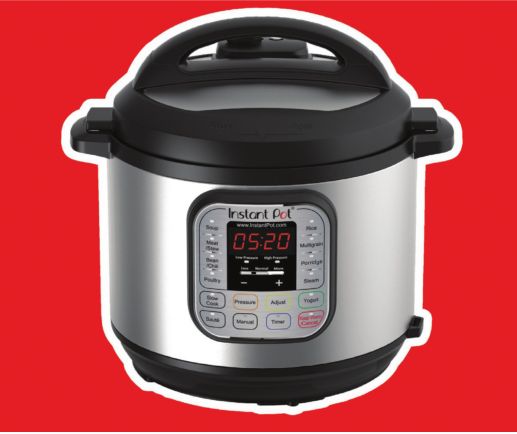
Instant Pot can sauté and serve as a slow cooker, pressure cooker,
steamer, rice cooker and yogurt maker. It performs all of these
functions well, and I’ve been most impressed with how well it cooks
dried beans and grains. Beans are consistently cooked through without
being mushy, and it even seems to reduce beans’ gassy side effects.
Riceboth
polished white rice and various types of whole grains cooked up
beautifully, with much better results than I’ve ever had on the stovetop
or with a regular rice cooker.
We
eat a lot of yogurt in my house, and I use it regularly in cooking and
baking so I’d started making it myself years ago in an effort to cut
back our grocery bill. The yogurt maker I had only made one quart at a
time though, and eventually I quit making my own because it was just too
much fuss. I was thrilled with the yogurt produced in the Instant Pot,
and was especially psyched that I could prepare four wide-mouthed quart
canning jars full of yogurt at one time.
One
drawback to cooking in the Instant Pot is that there is no evaporative
effect. You may find that pressure-cooked stews or chili benefit from a
30-minute simmer on the “Sauté” setting with the lid off to reduce the
broth. Foods are cooked through a combination of pressure and steam, and
consequently
it’s impossible create a roast chicken with delicious, crispy brown
skin. Therefore, when making a traditional roast chicken type meal I
would definitely cook it in my oven. Often though, I cook a whole
chicken with the intent of shredding the meat for another purpose, such
as making chicken salad or soup. The Instant Pot is perfect for this
application, as I’m not terribly concerned about soggy skin. In the
Instant Pot goes the whole chicken, seasoned with salt and pepper and
about a cup of water. Pop on the lid (it makes a reassuring digital
noise when properly locked so you know you’re not going to blow up your
kitchen, a far cry from your grandma’s pressure cooker), and press the
“Meat” button. When finished cooking, I can reserve the shredded chicken
and return the bones and skin back into the Instant Pot to cover with
water and use the slow cook function to make broth.
It
is worth noting that the Instant Pot isn’t quite as ‘instant’ as the
name would suggest. It takes about 10 minutes for the pot to reach an
adequately hot temperature for searing meat, and it takes at least 15
minutes to build up pressure. The manual suggests letting the pressure
release naturally when cooking meats or roasts to prevent it from drying
out, and this step takes about 20 minutes. This means that a dish with a
cook time of 25 minutes will actually take 60 minutes from start to
finish – still super-fast for something like pot roast.
After
weeks of experimenting with the Instant Pot, I would definitely
recommend it to those who are looking to cook more at home from scratch.
It would make an excellent gift for busy young folks just starting out
in life, especially when paired with one of the many excellent cookbooks
that have come out recently in celebration of the Instant Pot. I
particularly enjoyed the recipes (Indian-style butter shrimp!) in
Melissa Clark’s new cookbook Dinner in an Instant: 75 Recipes for your Pressure Cooker, Multicooker, and Instant Pot.
Contact Ashley Meyer at [email protected].